October 5 was an historic day, hailed President Obama, as nations responsible for emitting more than 55 percent of world carbon emissions have now signed the Paris climate agreement, the threshold needed for the accord to take effect in 30 days.



"Germany, France, Austria, Hungary, Slovakia and Malta - European Union nations which have completed domestic ratification and account for about four percent of emissions - formally signed up on Wednesday," report
By contrast, it took eight years for the previous U.N. climate deal, the 1997 Kyoto Protocol, to gain enough backing to take effect. It obliged only rich nations to cut emissions and the United States stayed out of it.
On Oct. 2, "India, the planet’s fourth-largest emitter of greenhouse gases, formally joined the accord," reported Chris Mooney and Brady Dennis for The Washington Post.
"China represents just over 20 percent of global emissions while the United States accounting for 17.9 percent, Russia 7.5 percent and India 4.1 percent," notes an earlier Reuters article.
As of Oct. 6, Signatories: 191. Parties: 74 parties of the 191 signatories have ratified or approved the agreement according to the United Nations Framework Convention on Climate Change tracker.
President Obama called Wednesday a "turning point for our planet" in this short video.
Doyle reports on Oct. 3 that the real test will be enforcement.
"The key question will be implementing the agreement. There's no legal enforcement of pledges," said Robert Watson, a British-American scientist and former head of the U.N.'s panel of climate experts.
Under the Paris Agreement, almost 200 states have set their own national targets for emissions, with five-yearly national reviews and promises to set ever tougher goals.
The Paris Agreement aims to limit a rise in world temperatures to "well below" 2 degrees Celsius (3.6 Fahrenheit) above those in pre-industrial times. The United Nations says current pledges are too weak to reach that goal.
On Sept. 29, Doyle reported that scientists warned that "[g]lobal warming is on track to breach a 2 degrees Celsius threshold by 2050 unless governments at least double their efforts to limit greenhouse gas emissions."
"The Agreement will now enter into force in time for the Climate Conference (COP 22) in [Marrakesh] Morocco in November, where countries will convene the first Meeting of the Parties to the Agreement," according to the UN News Centre.
Related on Planetizen:
-
Paris Climate Agreement Signed, but Troubles Loom in the U.S., April 23, 2016
- Big News From Paris: A New International Climate Accord, December 13, 2015
Read the full story: Paris climate accord to take effect; Obama hails 'historic day'

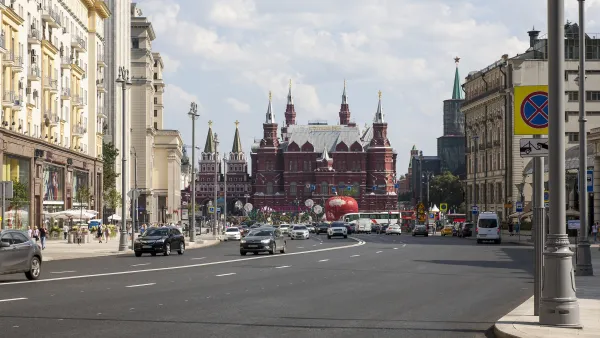
Banning Russian Oil, Part II
Part I occurred when President Biden banned the importation of all Russian fossil fuels on March 8. A month later, Congress passed legislation to codify the embargo. Getting the European Union onboard is proving cumbersome.
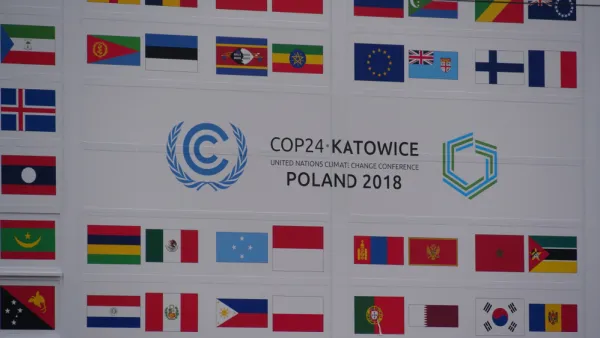
Implementing the Paris Climate Agreement in Katowice, Poland
Representatives from nearly 200 nations have been attending the U.N. Climate Change Conference in Katowice since Dec. 2 to work on implementing the 2015 Paris climate agreement. Scheduled to end Friday, it will be extended two days due to discord.
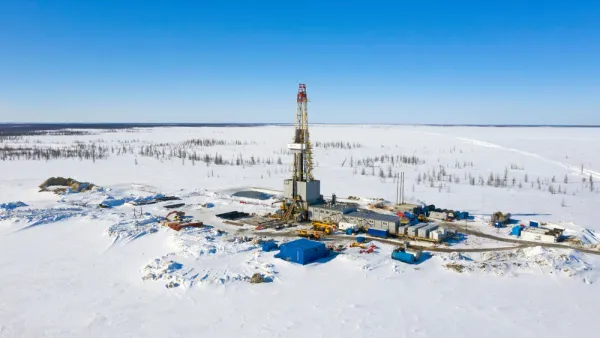
Hooked on Russian Gas
The EU relies on Russia for 45% of its natural gas imports and 27% of its crude oil imports. Germany's dependency is a major reason why it won't ban these imports despite Russia's war in Ukraine. Two natural gas pipelines explain part of the problem.

Planetizen Federal Action Tracker
A weekly monitor of how Trump’s orders and actions are impacting planners and planning in America.

California plans to bury El Niño’s downpour
If the state plays its cards right, it may be able to store a billion acre-feet of El Niño’s water in aquifers.

Chicago breaks ground on $3 billion megadevelopment
The new neighborhood, titled Foundry Park, will one day host 3,700 residences.

California High-Speed Rail Authority CEO resigns after $600,000 scandal
Under Ian Choudri, the authority used taxpayer dollars to fund first class flights and trips to nightclubs.

Want to study the Missouri River? Soon, you may need unanimous approval from 10 states
Legislation would require 10 governors’ permission to study or build projects moving water outside the basin.

Desperate measures: Advocates weigh draining Lake Powell to fill Colorado River
Draining the reservoir could reduce evaporation losses by a couple hundred thousand acre-feet.

FREE Course: Walkable City 1: Why Walkability?
After describing his path towards focusing on walkability as the essence of good planning, Jeff Speck marches through his five principal reasons for making more walkable places.
Reinventing Malls: Planning Alchemy—Turning Gray Fields Into Gold
The course focuses on the opportunities and imperatives that shape reinvention of mall sites.

City of Rosemead
Rutgers University, Edward J. Bloustein School of Planning and Public Policy
One Hundred Miles
Hunter College, City University of New York (CUNY)
The Architects Foundation
University of Cincinnati Online
City of Cambridge
Montrose County
The Pocatello Development Authority