Transit consultant Jarrett Walker argues that Uber's ads betray dark aspirations for the future of transit.


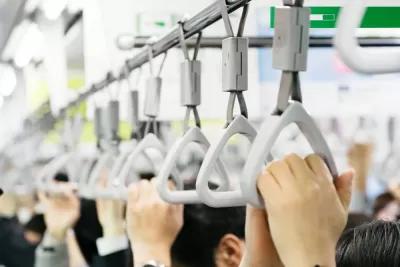
In a recent blog post, transit consultant Jarrett Walker, took issue with an Uber ad showing a woman who had recently missed a train. This ad is one of a number of billboards and bus advertisements that compare mass transit with Uber, and while these ads may seem innocuous to the average person, Walker saw something more pernicious at work. "I reminded readers of what it would mean to shift large numbers of people from big transit vehicles, like the subway pictured here, to individual Uber cars — in terms of outcomes for cities, society, and the environment."
For their part, Uber contacted Walker to tell him that the ad was being removed. Walker noted this as a good move, but emphasized that his original complaints were still valid. "This ad also had a context, as part of a torrent of messages — from many parts of the culture including the tech industry — that encourage contempt for public transit, or at least apathy about it, among the relatively fortunate."
The argument is that the danger of these ads is in part their feigned light-heartedness, "Advertising always wants to engage us with a wink and a nod, so that we’ll forgive it for implying things that the company wouldn’t want to defend having said directly."
This ad may be going away, but the tension between ride sharing and mass transit isn't going anywhere.
FULL STORY: Speech Has Consequences, or Why I Called Out Uber Yesterday

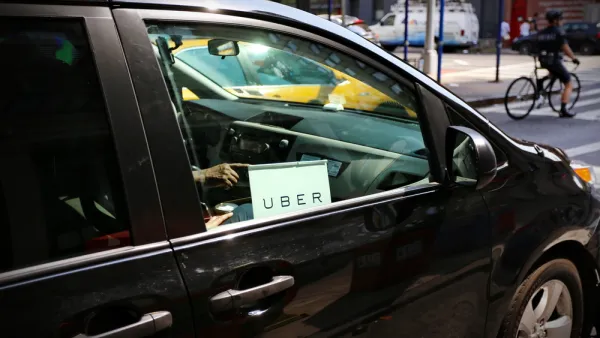
Uber an Unreliable Partner for Transit
Cities using Uber to supplement or replace public transit may find their dependence on the service detrimental to their cities, when prices rise and alternatives aren't available.
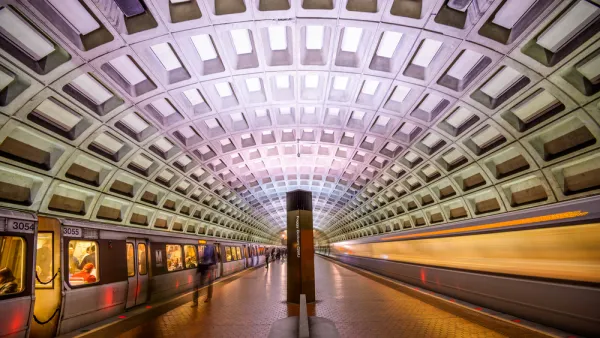
Where Have D.C.'s Metro Riders Gone?
Following an 11 percent drop in ridership in the last quarter, transportations experts are left scratching their heads as to where D.C.'s Metrorail riders have gone.
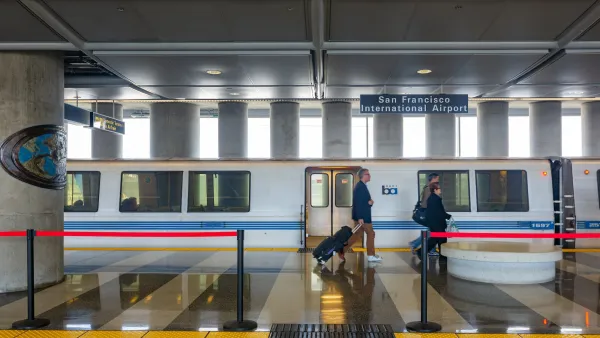
BART Adds Uber to its App Without Board Approval
Riders will now see a link to the Uber app at the top of BART’s own transit planning app.

Planetizen Federal Action Tracker
A weekly monitor of how Trump’s orders and actions are impacting planners and planning in America.

The state-sanctioned urbicide of Austin
People don’t kill cities. Freeways do.

US to reduce Colorado River water deliveries to Mexico
A new Colorado Treaty amendment reduces Mexico’s Colorado River water allocation by 250,000 acre feet.

5 New England states march closer to 800 megawatt wind energy project
Securing federal approval for the project may be complicated under the Trump administration, which has historically been hostile towards domestic wind power.

Baltimore to break ground on $50 million Transit Priority Project
The project will bring faster bus trips, safer streets and better bike connections to Baltimore.

Airbnb launches $250 million 'last-dollar financing' housing accelerator, makes first investment in Austin
The company will put $6.4 million towards affordable housing development in Texas’ capital.

FREE Course: Walkable City 1: Why Walkability?
After describing his path towards focusing on walkability as the essence of good planning, Jeff Speck marches through his five principal reasons for making more walkable places.
Reinventing Malls: Planning Alchemy—Turning Gray Fields Into Gold
The course focuses on the opportunities and imperatives that shape reinvention of mall sites.

Eagle County Government
Harvard University Graduate School of Design
Nashville Planning Department
The Architects Foundation
University of Cincinnati Online
The Pocatello Development Authority
The Urban Renewal Agency of the City of Pocatello
Journal of the American Planning Association