A report from the American Medical Association says LED lights are bad for our health, inspiring some cities to re-evaluate the technology.


Cities all over the country are adding LED lights to streets and roadways all over the country, seeking energy efficiency and reduced maintenance requirements. A new report, however, raises alarms about the health impacts of the lights. Michael Ollove reports:
The American Medical Association issued a warning in June that high-intensity LED streetlights — such as those in Seattle, Los Angeles, New York, Houston and elsewhere — emit unseen blue light that can disturb sleep rhythms and possibly increase the risk of serious health conditions, including cancer and cardiovascular disease.
According to Ollove, nearly 13 percent of roadway lighting now use LED lights, with many more plans planning to switch to the technology in the near future, so the AMA's report applies to a huge swath of the country.
And that's not the only concern. "The AMA also cautioned that those light-emitting-diode lights can impair nighttime driving vision," adds Ollove.
The good news is that the AMA does approve of lower-intensity version of the bulbs. New York City, for example, has switched to a lower-intensity version of LED lights in efforts to retrofit its streetlights. Ollove details the efforts of cities like Phoenix and Lake Worth, Florida to find a solution that still installs new lights, but with the AMA's concerns in mind. Other cities have been far more dismissive of the report's findings.
FULL STORY: Some cities are taking another look at LED lighting after AMA warning

The Surprising Ways Cities Work to Clean the Environment
Municipal programs and urban design offer cities multiple, perhaps surprising ways, to clean the environment.
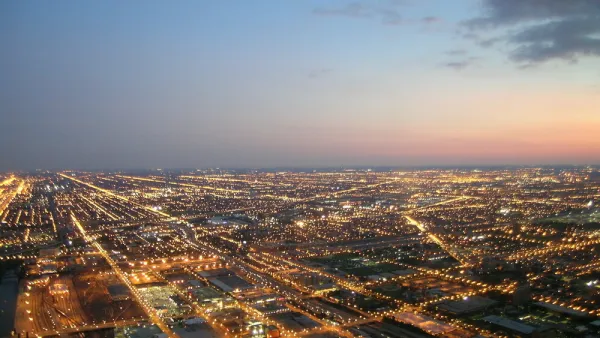
LEDs, Downward Lights Changing the Night in Chicago
The nighttime illumination of Chicago is almost finished with a complete overhaul of its streetlights, producing a dramatic effect in the nighttime environment of the city.
How the Lights in Our Cities Became Too Bright
“Why are lighting designers and experts nearly unified in their belief that outdoor lighting in past years has been excessive?”

Planetizen Federal Action Tracker
A weekly monitor of how Trump’s orders and actions are impacting planners and planning in America.

The state-sanctioned urbicide of Austin
People don’t kill cities. Freeways do.

US to reduce Colorado River water deliveries to Mexico
A new Colorado Treaty amendment reduces Mexico’s Colorado River water allocation by 250,000 acre feet.

5 New England states march closer to 800 megawatt wind energy project
Securing federal approval for the project may be complicated under the Trump administration, which has historically been hostile towards domestic wind power.

Baltimore to break ground on $50 million Transit Priority Project
The project will bring faster bus trips, safer streets and better bike connections to Baltimore.

Airbnb launches $250 million 'last-dollar financing' housing accelerator, makes first investment in Austin
The company will put $6.4 million towards affordable housing development in Texas’ capital.

FREE Course: Walkable City 1: Why Walkability?
After describing his path towards focusing on walkability as the essence of good planning, Jeff Speck marches through his five principal reasons for making more walkable places.
Reinventing Malls: Planning Alchemy—Turning Gray Fields Into Gold
The course focuses on the opportunities and imperatives that shape reinvention of mall sites.

Eagle County Government
Harvard University Graduate School of Design
Nashville Planning Department
The Architects Foundation
University of Cincinnati Online
The Pocatello Development Authority
The Urban Renewal Agency of the City of Pocatello
Journal of the American Planning Association