Autonomous vehicles are already in production and big city taxi drivers could be out of a job in 10 years, including those for Uber and Lyft.



It may take 5, 10, or in some cases 20 years, but the taxi driver’s job is destined to disappear. By 2025 most major cities in Europe, Asia and North America will be served by autonomous vehicles that will take the traditional role of taxis.
Autonomous ride-sharing and ride-hailing services are the future for Uber and Lyft, too. Both companies are actively investing millions of dollars, through partnerships with technology companies, car manufacturers, and academic institutions, to develop and launch driverless taxi services in five years. Trials and pilot programs –with human drivers as a backup– are already underway. The arrival of driverless vehicles is the end game for the ride-sharing companies, as they will no longer need to deal with the burden of having to pay drivers, nor face strikes and protests over fares and terms of employment.
While autonomous buses could be an interesting solution for cities, the same way that driverless metro trains are already operating in many places and becoming the new standard, I believe the real creative disruption of mobility will come in the form of driverless taxis and car sharing services.
Read the full story: Taxi Drivers, Your Job has an Expiry Date
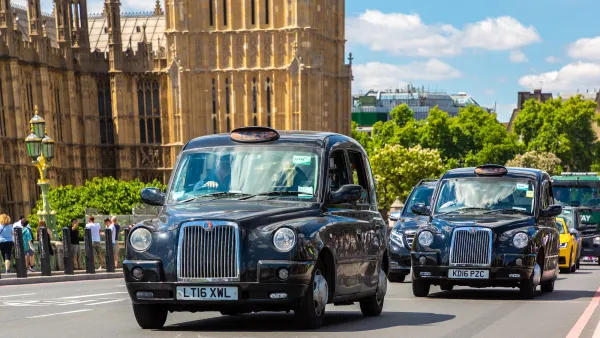
Can Robotaxis Handle London's Famously Tangled Streets?
Black Cab drivers say autonomous cars won’t be able to handle London’s unique conditions.
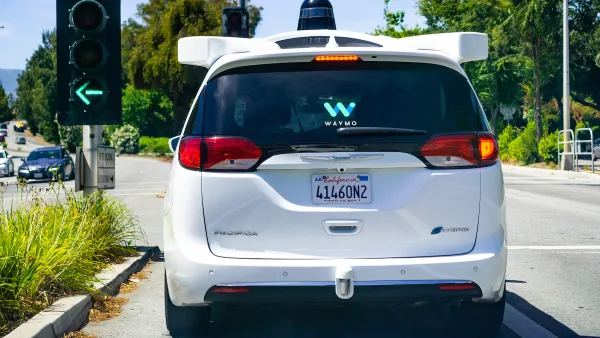
Advice for Autonomous Cars
Drivers for Uber and Lyft in San Francisco express their concerns and advice for self-driving taxi services.
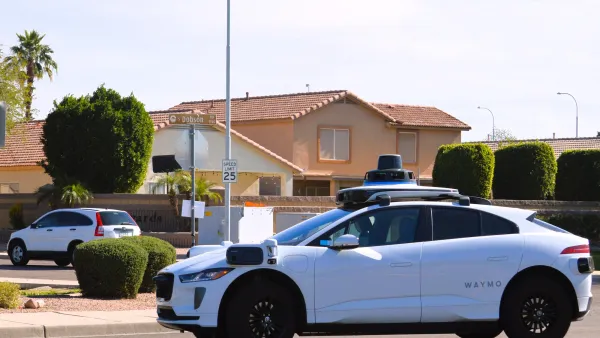
Uber and Waymo part ways in Phoenix
The companies ended a three-year pilot program, with Waymo saying it plans to keep its Phoenix robotaxi fleet available through its own app.

Planetizen Federal Action Tracker
A weekly monitor of how Trump’s orders and actions are impacting planners and planning in America.

California plans to bury El Niño’s downpour
If the state plays its cards right, it may be able to store a billion acre-feet of El Niño’s water in aquifers.

Desperate measures: Advocates weigh draining Lake Powell to fill Colorado River
Draining the reservoir could reduce evaporation losses by a couple hundred thousand acre-feet.

US buildings threatened, destroyed by fires set to triple by 2060
Researchers found a high fire risk for socioeconomically vulnerable neighborhoods in the American West.

LA residents may be allowed to paint their own crosswalks
Councilwoman Katy Yaroslavsky put out a motion instructing the Los Angeles Department of Public Transportation to study the feasibility of allowing volunteers to paint crosswalks.

Dallas moves to overhaul its zoning code
The city's zoning reform will allow more multi-family and mixed-use developments.

FREE Course: Walkable City 1: Why Walkability?
After describing his path towards focusing on walkability as the essence of good planning, Jeff Speck marches through his five principal reasons for making more walkable places.
Reinventing Malls: Planning Alchemy—Turning Gray Fields Into Gold
The course focuses on the opportunities and imperatives that shape reinvention of mall sites.

City of Rosemead
Rutgers University, Edward J. Bloustein School of Planning and Public Policy
One Hundred Miles
Hunter College, City University of New York (CUNY)
The Architects Foundation
University of Cincinnati Online
City of Cambridge
Montrose County
The Pocatello Development Authority