A well organized opposition to a planned Bus Rapid Transit line in Albuquerque, New Mexico has stalled the beginning of construction on the new transit line with lawsuits.



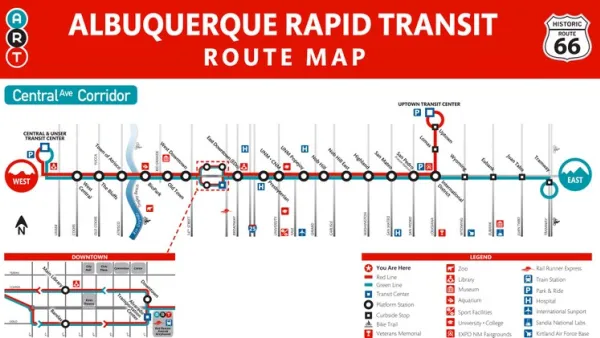
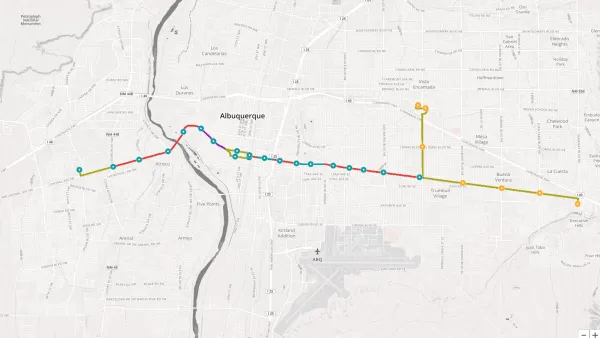
The $119 million, nine-mile long bus rapid transit system planned for the city of Albuquerque, New Mexico continues to hit stumbling blocks as opponents seek to block the project. The Albuquerque Journal's Dan McKay reports that opponents have brought on University of New Mexico professor Gregory Rowangould, who has issued a 31-page report that found the project will "do more harm than good." Rowangould's analysis found that the proposed ART (Albuquerque Rapid Transit) line running down Central Avenue through the city's historic area would provide slower service than the 66 Line it's designed to replace.
...to make way for the dedicated ART lanes, the city would remove a lane now used by general traffic. In Nob Hill, for instance, there would be only one lane each way for regular traffic, not two as there are now – a 50 percent reduction in traffic capacity, Rowangould says, leading to increased congestion.
Rowangould argues that the extra traffic will harm the regular “66” bus service that runs up and down Central. Those buses are supposed to use the general lanes of traffic, not the dedicated ART-only lanes.
And the larger ART buses can’t entirely avoid the traffic, either, Rowangould said. That’s because there are points in the route – under Interstate 25 and in the Downtown area – where the ART vehicles don’t have a dedicated lane and must operate amid regular traffic.
Last week, following more legal wrangling over actions of the city's Landmarks Board a judge issued an emergency writ "directing the City Council to make time to hear an appeal in the case before the landmarks board considers it." The issue revolves around procedural actions regarding hearings and appeals for the decision to place one stop on Central Avenue in the city's historic area. City officials see the action as a minor delay.
Read the full story: ART won’t improve bus service, professor says

Albuquerque's Recently Opened Bus Rapid Transit Line Sets a New Standard
Overcoming lawsuits and controversy, Albuquerque opened the Albuquerque Rapid Transit to partial service over the holiday weekend.
Bus Rapid Transit Opens to the Public in Albuquerque
A long-awaited bus rapid transit system has opened to the public this weekend, a cause for celebration in Albuquerque,.
The Feds Finally Come Through for Albuquerque Rapid Transit
The city of Albuquerque has finally received the $75 million it needed to complete an ambitious plan for electric bus rapid transit along Central Avenue.

Planetizen Federal Action Tracker
A weekly monitor of how Trump’s orders and actions are impacting planners and planning in America.

California plans to bury El Niño’s downpour
If the state plays its cards right, it may be able to store a billion acre-feet of El Niño’s water in aquifers.

Chicago breaks ground on $3 billion megadevelopment
The new neighborhood, titled Foundry Park, will one day host 3,700 residences.

Desperate measures: Advocates weigh draining Lake Powell to fill Colorado River
Draining the reservoir could reduce evaporation losses by a couple hundred thousand acre-feet.

This road in NYC is infamously dangerous — and Mamdani can't fix it
New York City's Ocean Parkway is known for reckless driving, but the power to implement safety measures lies with the state rather than the city.

One of Denver’s busiest corridors to gain BRT
The project will span 18 miles and contain 74 bus rapid transit stations.

FREE Course: Walkable City 1: Why Walkability?
After describing his path towards focusing on walkability as the essence of good planning, Jeff Speck marches through his five principal reasons for making more walkable places.
Reinventing Malls: Planning Alchemy—Turning Gray Fields Into Gold
The course focuses on the opportunities and imperatives that shape reinvention of mall sites.

City of Rosemead
Rutgers University, Edward J. Bloustein School of Planning and Public Policy
One Hundred Miles
Hunter College, City University of New York (CUNY)
The Architects Foundation
University of Cincinnati Online
City of Cambridge
Montrose County
The Pocatello Development Authority