The Denver Business Journal editor spoke out in opposition to a proposal to add bike lanes to Broadway in Denver. Streetsblog responded.


The city of Denver is preparing to implement a reconfiguration of Broadway and Lincoln corridor. David Sachs describes the scope of the project:
Denver Public Works, backed by elected officials, will install avtwo-way, parking-protected bike lane on four blocks of Broadway next month — a temporary measure intended to lay the groundwork for a permanent bikeway between I-25 and Colfax. Broadway and its northbound counterpart, Lincoln, would both receive more effective bus lanes and safer pedestrian crossings as part of the project.
Yet, Neil Westergaard, editor of the Denver Business Journal, recently wrote an editorial critiquing the project [paywall], describing it, among other things, as "politically dead on arrival." He compares the project to a project in Boulder to add protected bike lanes on a section of Folsom Street. Boulder abandoned that project after two months "because of outcry from Boulder motorists." According to Westergaard, "If this idea can’t fly in Boulder, I doubt it can grow wings in Denver."
Westergaard's arguments don't sit with Sachs, who offers a detailed rebuttal, citing the case made by Denver Public Works about the inefficiency of Broadway, the support of the business community for the project, and some lessons from Copenhagen.
Read the full story: Westergaard: The Key to Bike Progress in Denver Is to Give Up on Bike Lanes

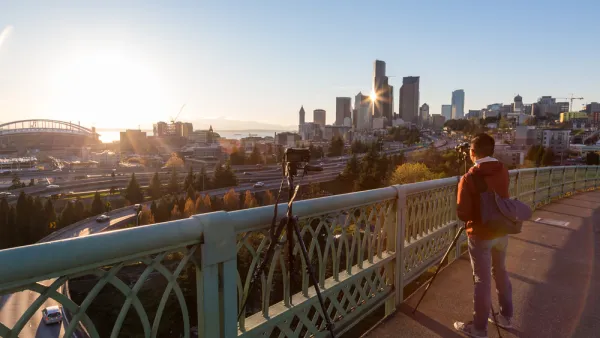
A Thorough, Mixed Review for a New Protected Bike Lane in Seattle
So many highly anticipated bike facilities finally deliver only to fall short of real game changing status. Seattle provides the latest example of the phenomenon in the wild.

Denver Could Add Bike Lanes to Major Streets
City planners say limiting protected bike infrastructure to smaller streets isn’t enough to create a safe, connected bikeway network that reaches all parts of the city.
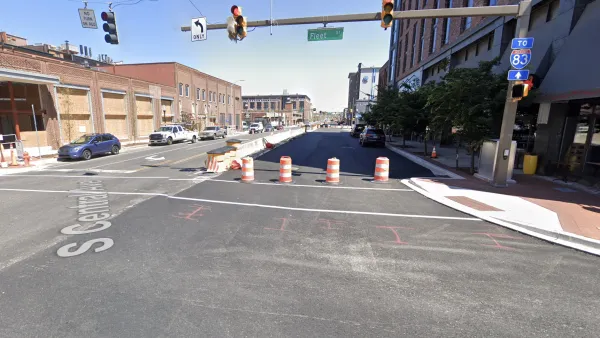
Protected Bike Lanes, Vehicle Lane Reductions Cause Stir in Baltimore
Residents and business operators say they weren’t warned about a road diet planned for a major thoroughfare in Baltimore. Planners and advocates say the changes have been a long time coming.

Planetizen Federal Action Tracker
A weekly monitor of how Trump’s orders and actions are impacting planners and planning in America.

California plans to bury El Niño’s downpour
If the state plays its cards right, it may be able to store a billion acre-feet of El Niño’s water in aquifers.

Chicago breaks ground on $3 billion megadevelopment
The new neighborhood, titled Foundry Park, will one day host 3,700 residences.

California High-Speed Rail Authority CEO resigns after $600,000 scandal
Under Ian Choudri, the authority used taxpayer dollars to fund first class flights and trips to nightclubs.

Want to study the Missouri River? Soon, you may need unanimous approval from 10 states
Legislation would require 10 governors’ permission to study or build projects moving water outside the basin.

Desperate measures: Advocates weigh draining Lake Powell to fill Colorado River
Draining the reservoir could reduce evaporation losses by a couple hundred thousand acre-feet.

FREE Course: Walkable City 1: Why Walkability?
After describing his path towards focusing on walkability as the essence of good planning, Jeff Speck marches through his five principal reasons for making more walkable places.
Reinventing Malls: Planning Alchemy—Turning Gray Fields Into Gold
The course focuses on the opportunities and imperatives that shape reinvention of mall sites.

City of Rosemead
Rutgers University, Edward J. Bloustein School of Planning and Public Policy
One Hundred Miles
Hunter College, City University of New York (CUNY)
The Architects Foundation
University of Cincinnati Online
City of Cambridge
Montrose County
The Pocatello Development Authority