U.S. cities leave a lot to be desired for raising a family. However, is it really a worthwhile goal to make cities family friendly? Marin Gertler, a San Diego architect ponders the question after a recent visit to New York City.


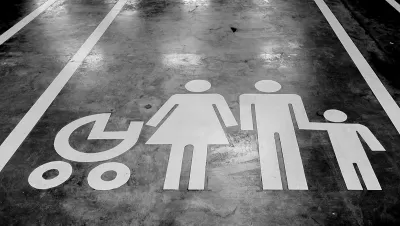
On a recent trip with his family—kids included—San Diego Gensler architect Marin Gertler enjoyed the trip immensely. In reflecting on the trip however, he noticed few children, and few children's amenities.
He pondered, if NYC, our most vibrant city and home of the "ballet of the sidewalk"—of which children were a significant factor—can't get it right, is there hope for other U.S. cities? Is it even a worthwhile goal to make cities family friendly? In NYC, he noticed, among other things:
The sheer density was another expected challenge, but the physical distance between the various open spaces, parks and pedestrian plazas really was magnified as a family. There is no “green necklace” to move from mid-town to downtown, the Highline does a good job for a short time on the west side but that’s about it.
In reflecting on San Diego, he writes:
We hope that San Diego can learn from the mistake of others and borrow innovation from the best with the goal of being leaders in this aspect. San Diego city is young and there is still time to shape it, but we need to move fast.
For more of his observations regarding New York City, please read the main article.
Read the full story: Should we plan for families in the ‘new’ city?


Kids and Urbanization
The question of whether there is space for children in rapidly changing cities was under investigation in two recent studies with somewhat contradictory findings.
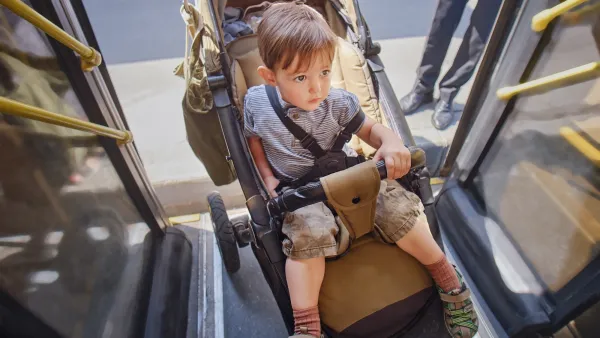
MTA plans to outfit all buses with stroller storage by next year
All buses will have seats that flip up to allow for stroller storage or more standing room.
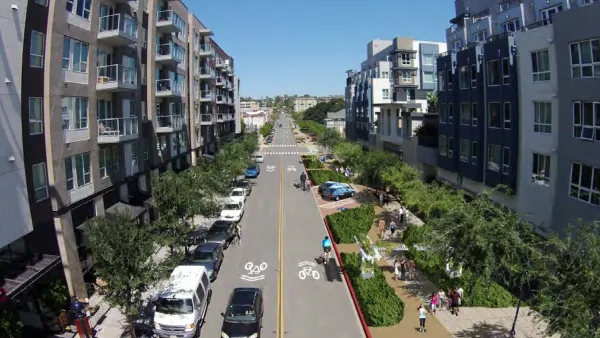
San Diego Swaps Parking Lane for Kid-Friendly Mini Park
The block-long greenway will feature interactive play equipment and landscaping.

Planetizen Federal Action Tracker
A weekly monitor of how Trump’s orders and actions are impacting planners and planning in America.

Amtrak, CN end decades-long dispute with eight-year agreement
The new operating agreement establishes an updated framework for the companies to work together, including processes to resolve disputes.

Judges permit Denver to divert 77,000 acre feet from the Colorado River for reservoir expansion
Overuse and climate change have caused the Colorado River’s water levels to plummet.

Boston has spent millions making the Green Line more accessible — and there’s no end in sight
While the city has invested millions into expanding and adding platforms to the Green Line to make it more accessible, new train cars set to arrive next year will be too tall for disabled passengers to board without raising the current platforms.

Idaho may see an 18% drop in federal surface transit funding — the largest estimated cut in the US
Transit systems in rural communities are much more reliant on federal funding to provide their services.

How ‘post-disaster gentrification’ alters neighborhoods after natural calamities
After hurricanes, fires or other calamities, the original residents of a community are often replaced by younger, wealthier residents.

FREE Course: Walkable City 1: Why Walkability?
After describing his path towards focusing on walkability as the essence of good planning, Jeff Speck marches through his five principal reasons for making more walkable places.
Reinventing Malls: Planning Alchemy—Turning Gray Fields Into Gold
The course focuses on the opportunities and imperatives that shape reinvention of mall sites.

Harvard University Graduate School of Design
KFH Group Inc.
Greater Baltimore Committee
The Architects Foundation
University of Cincinnati Online
The Pocatello Development Authority
The Urban Renewal Agency of the City of Pocatello