Indianapolis officials including Mayor Joe Hogsett gathered this week to celebrate the installation of the city's first new streetlight in 35 years.



"Indianapolis will end a 35-year moratorium on new streetlights by installing 100 lights in areas with high accident and crime rates, and in growing neighborhoods," reports John Russell.
The new streetlights are a response to rising homicide rates in the city and calls by community leaders to make neighborhoods safer. The decision to invest in new streetlights as a public safety measure runs counter to the findings of a recent study published in the Journal of Epidimeology & Community Health, which found that streetlights do not deter crime.
Indianapolis, however, will rely on its own study, by Indianapolis Power & Light Co., to make the decisions about where to install the new traffic lights. The study will consider "crime statistics, population density and existing utility infrastructure…" The answer to the burning trivia question: the streetlight moratorium "was put in place in 1981 under former Mayor Bill Hudnut as a money-saving measure."
FULL STORY: Indianapolis to turn on first new streetlight in 35 years


Indianapolis: Where the Streets Have No Lights
The IndyStar shines a light on the city of Indianapolis' neglect of its infrastructure.
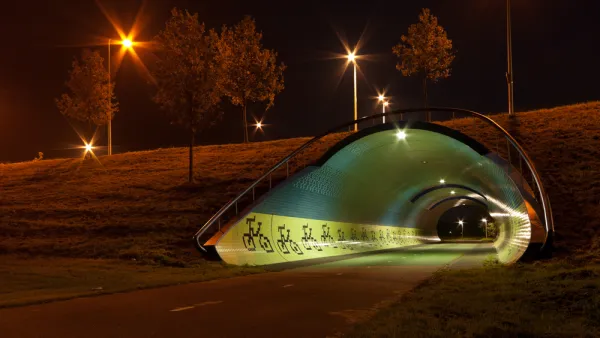
Study: Street Lights Don't Reduce Crime
Pacific Standard shares news of a study that debunks a long-held assumption of public safety.

Report: American Downtowns Safer Than You Think
A Brookings Institution study reveals that crime rates in major cities have risen, but downtown districts account for a negligible part of the growth.

The state-sanctioned urbicide of Austin
People don’t kill cities. Freeways do.

US to reduce Colorado River water deliveries to Mexico
A new Colorado Treaty amendment reduces Mexico’s Colorado River water allocation by 250,000 acre feet.

New Jersey’s second-largest city bans standalone data centers
Jersey City will continue to allow co-location facilities, such as those meant for research institutions that store their own data.

Amtrak not solely to blame for New Jersey commuter rail's unreliability, report finds
A new study from the Garden State Initiative found that NJ Transit’s budget grew 20% across a 4 year period, but reliability declined significantly over the same period.

EPA erases limits on planet-warming pollution from power plants
Under Monday’s plan, power plants would still have some limits on how much mercury, arsenic and other contaminants they can emit.

Phoenix announces new on-demand transit service, more frequent RAPID buses
Both new services will launch in October, and are part of Phoenix's Project Effective Access Solutions for Easing Congestion.

FREE Course: Walkable City 1: Why Walkability?
After describing his path towards focusing on walkability as the essence of good planning, Jeff Speck marches through his five principal reasons for making more walkable places.
Reinventing Malls: Planning Alchemy—Turning Gray Fields Into Gold
The course focuses on the opportunities and imperatives that shape reinvention of mall sites.

Eagle County Government
Harvard University Graduate School of Design
Nashville Planning Department
The Architects Foundation
University of Cincinnati Online
The Pocatello Development Authority
The Urban Renewal Agency of the City of Pocatello
Journal of the American Planning Association