As Pittsburgh moves forward on a parking management program to fund neighborhood improvements, take a look at how other cities have adapted this Shoup-inspired redevelopment strategy.


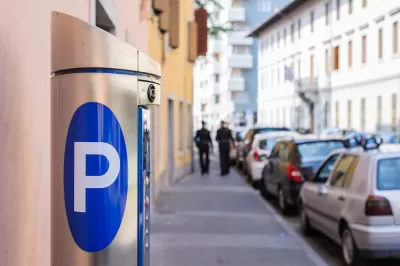
Pittsburgh plans to extend parking meter hours in an area known for its nightlife, and put the added revenue toward public safety improvements and services.
Los Angeles is considering a pilot program to use meter revenue for transportation and streetscape improvements in the neighborhoods where it's generated.
These are only some of the most recent iterations of Parking Benefit Districts. Championed by UCLA Professor Donald Shoup, PBDs can vary in structure and size, but the underlying principle is relatively simple: Use revenue from parking meters to fund local improvements.
Keynote Crossroads compares PBDs in four U.S. cities to see how the basic concept can be adapted and refined to meet local needs. "A parking benefit district isn't just a revenue-raiser, but smart transportation management as well," the article notes.
And the effects can be transformative:
The prospect of a dedicated, ongoing local revenue stream for neighborhood projects becomes enticing enough to residents and businesses, and they become a countervailing force in support of parking meters. Those public improvements in turn attract even more visitors, which generates more parking revenue in a virtuous cycle of redevelopment.
Old Pasadena, also explored here, is a frequently cited success story.
Read the full story: Ideas Worth Stealing: Parking Benefit Districts
Editorial: Pittsburgh Fails to Provide Adequate Parking Around Downtown
New development coming to Downtown Pittsburgh lacks sufficient parking, according to the Pittsburgh Post-Gazette.
7 'Smart Cities Challenge' Proposals
The Washington Post details each of the seven proposals competing for $40 million in the U.S. Department of Transportation's Smart Cities Challenge.

Has Anyone at USDOT Read Donald Shoup?
USDOT employees, who are required to go back to the office, will receive free parking at the agency’s D.C. offices — flying in the face of a growing research body that calls for pricing parking at its real value.

Desperate measures: Advocates weigh draining Lake Powell to fill Colorado River
Draining the reservoir could reduce evaporation losses by a couple hundred thousand acre-feet.

Eastern Nebraska is running out of electricity
Data centers and electrification are straining eastern Nebraska’s grid, throttling economic development.

Malls are becoming the midtowns of the future
Mall and office park redevelopments are a generational opportunity to create new nodes of urbanity.

NYC breaks ground on anti-flooding infrastructure project
New York City's new system will reduce stormwater flows to local sewers by 90%.

One Kentucky town’s secret to affordable housing
The Smoketown Community Land Trust has already built seven affordable homes for community members.

Houston gains petal-shaped cooling infrastructure to make streets more ‘delightful’
The city has installed the pavilions along 15 blocks in Houston.

FREE Course: Walkable City 1: Why Walkability?
After describing his path towards focusing on walkability as the essence of good planning, Jeff Speck marches through his five principal reasons for making more walkable places.
Reinventing Malls: Planning Alchemy—Turning Gray Fields Into Gold
The course focuses on the opportunities and imperatives that shape reinvention of mall sites.

City of Rosemead
Rutgers University, Edward J. Bloustein School of Planning and Public Policy
One Hundred Miles
University of Michigan School for Environment and Sustainability (SEAS)
Hunter College, City University of New York (CUNY)
The Architects Foundation
City of Cambridge
Montrose County
The Pocatello Development Authority