A paradoxical encomium of sorts for the benefits of ugly buildings to the experience of cities.


"Does the city need ugly buildings?" asks a column by Edward Keenan. "The shabby and unfashionable, the weirdo huts and half-abandoned malls and rundown plazas. Could it be they actually serve a valuable purpose in the life and evolution of the city?"
These seemingly counter-intuitive questions are raised by the "imminent demolition of a strip of stores near Yonge and Eglinton" in Toronto. The news of destruction of the strip mall has brought two strong reactions: those who believe the building is a blighted failure and those who relied on it for work or entertainment.
Keenan notes that Lloyd Alter has already written about the demise of the Yonge and Eglinton strip plaza, as has Amy Grief. Alter and Keenan concur that there is in fact a place for ugly buildings in cities, and for the eccentricity that tends to locate there, even while the rest of surrounding city gentrifies and takes on a corporate sheen.
Read the full story: In praise of ugly old buildings: Keenan

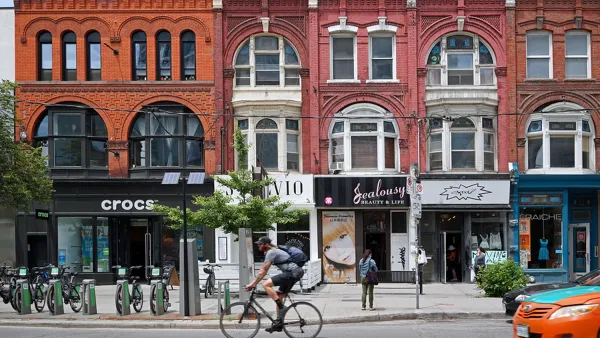
Study: Mixed-Use Neighborhoods Fail Affordability
A study published recently in the Journal of the American Planning Association finds that mixed-use neighborhoods in Toronto are only delivering benefits to those who can afford to pay a premium.
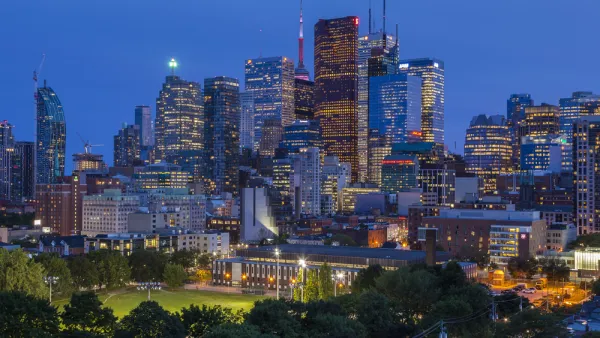
Redevelopment Plans and Gentrification Concerns for Toronto's Moss Park
Urban renewal of the 1960s built large amounts of public housing in the formerly industrial neighborhood of Moss Park in Toronto. Now, the neighborhood and its eponymous park have become home to some of the most impoverished people in the city.
Neighborhood's Unchecked Facelift Highlights Poor Planning
Poor planning is allowing uncontrolled and rapid gentrification to destroy Toronto's Liberty Village neighborhood, according to this article from The Toronto Star.

Planetizen Federal Action Tracker
A weekly monitor of how Trump’s orders and actions are impacting planners and planning in America.

‘Going backwards:’ Baltimore mayor, students rally against state's transit funding plan
Maryland's proposed six-year plan provides no funding for Baltimore’s BMORE bus program and reduces its road maintenance funding.
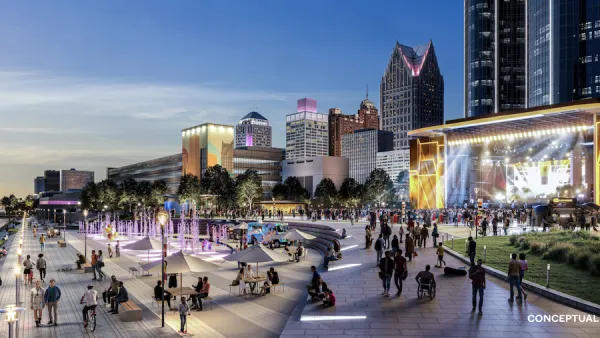
Detroit to transform waterfront with $2.2 billion investment
Developers will convert about 18 acres of unused parking lot space into civic spaces.

HUD, USDA agree on framework to simplify housing environmental review standards
Their agreement is a requirement of the 21st Century ROAD to Housing Act.

Cost of water rising at a faster pace than inflation, median household income
California and Maryland residents have seen their water bills grow especially high.

NYC building owners overwhelmingly comply with new emissions limits
The New York City Department of Buildings is fining owners who did not file emissions reports.

FREE Course: Walkable City 1: Why Walkability?
After describing his path towards focusing on walkability as the essence of good planning, Jeff Speck marches through his five principal reasons for making more walkable places.
Reinventing Malls: Planning Alchemy—Turning Gray Fields Into Gold
The course focuses on the opportunities and imperatives that shape reinvention of mall sites.

planning NEXT
City of Thousand Oaks
City of Wisconsin Rapids
The Architects Foundation
University of Cincinnati Online
Northern Illinois Transit Authority (NITA)
The Pocatello Development Authority
The Urban Renewal Agency of the City of Pocatello