The Safe Sleep Policy, enacted by the mayor in February without City Council approval, allows homeless people to sleep in tents in select public areas and on sidewalks. Now a coalition of business groups says the policy was an overreach of power.


"A coalition of Portland business groups, neighborhood associations, and a food cart pod are suing Mayor Charlie Hales and the city," reports Amelia Templeton.
The groups filed the lawsuit in Multnomah County circuit court, claiming "the mayor’s new policy allowing homeless camping on some public property violates state law and city code."
Brad Schmidt also provides coverage of the lawsuit, offering more details on the possible outcomes of the lawsuit and soundbites from the lawyers representing the coalition of business and neighborhood organizations that filed the laswsuit.
According to Schmidt, "The lawsuit is a remarkable event in the city's checkered history dealing with homelessness. In the past, civil-rights advocates have successfully sued Portland over unconstitutional sidewalk rules and anti-camping laws that didn't account for the belongings of homeless Portlanders."
For more information on the policy behind the lawsuit, see the city of Portland website devoted to the Safe Sleep Policy, as it's called. The policy is intended as a six-month pilot project.
FULL STORY: Portland sued over homeless camping

Moving Day for Portland's 'Right to Dream Too' Homeless Camp Delayed
Two years of work by the city to move the location of the Right 2 Dream Too homeless encampment, including the purchase of land for a new location, has stalled in the final hour.
Portland to Buy Land for Homeless Camp
The city of Portland has allocated funding for the purchase of land reported to be under consideration as the new location of a large homeless camp called Right 2 Dream Too.
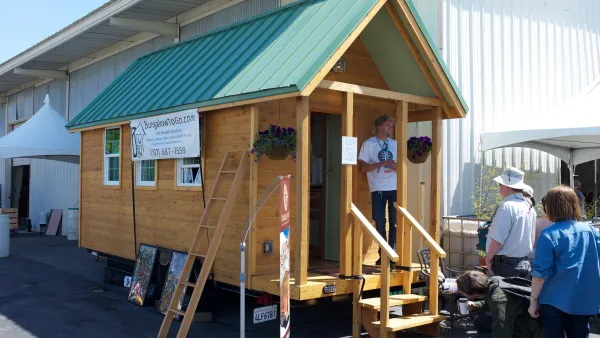
Tiny House Communities Popping Up to Shelter Homeless
Villages of tiny homes are being prepared in Portland and Denver to help individuals transition out of homelessness

The state-sanctioned urbicide of Austin
People don’t kill cities. Freeways do.

US to reduce Colorado River water deliveries to Mexico
A new Colorado Treaty amendment reduces Mexico’s Colorado River water allocation by 250,000 acre feet.

New Jersey’s second-largest city bans standalone data centers
Jersey City will continue to allow co-location facilities, such as those meant for research institutions that store their own data.

Amtrak not solely to blame for New Jersey commuter rail's unreliability, report finds
A new study from the Garden State Initiative found that NJ Transit’s budget grew 20% across a 4 year period, but reliability declined significantly over the same period.

EPA erases limits on planet-warming pollution from power plants
Under Monday’s plan, power plants would still have some limits on how much mercury, arsenic and other contaminants they can emit.

Phoenix announces new on-demand transit service, more frequent RAPID buses
Both new services will launch in October, and are part of Phoenix's Project Effective Access Solutions for Easing Congestion.

FREE Course: Walkable City 1: Why Walkability?
After describing his path towards focusing on walkability as the essence of good planning, Jeff Speck marches through his five principal reasons for making more walkable places.
Reinventing Malls: Planning Alchemy—Turning Gray Fields Into Gold
The course focuses on the opportunities and imperatives that shape reinvention of mall sites.

Eagle County Government
Harvard University Graduate School of Design
Nashville Planning Department
The Architects Foundation
University of Cincinnati Online
The Pocatello Development Authority
The Urban Renewal Agency of the City of Pocatello
Journal of the American Planning Association