With BART showing its age and struggling to meet growing demand, water-borne vehicles a potential panacea for transit in the San Francisco Bay Area?


"Twenty public ferries serving eight cities shuttle thousands of people across the [San Francisco Bay] every day, but there used to be many more," according to an article by Bryan Goebel. The question posed by Goebel, then, is how the amount of ferry service offered around the Bay Area might be increased to meet historical levels of service, or, for that matter, contemporary demand.
Interestingly, the biggest blow to ferry service in the bay occurred when the Bay Bridge opened in 1936, which also included a train, known as the Key System, when it first opened. In 2016, Goebel reports, "the Golden Gate and San Francisco Bay ferry systems carry more than 16,000 passengers each weekday," and overwhelmed transit and freeway systems in the region might provide the reason for improved ferry service.
Evidence of the growth of ferry service in the Bay Area includes two new ferry terminals expected to open by 2022, the new operations of private ferry companies, and a 20-year draft strategic plan created by planners at the Water Emergency Transportation Authority, according to Goebel.
Read the full story: Why Isn’t There More Ferry Service in the Bay Area?


San Francisco Leans in Hard to Embrace its Transit ‘Superfans’
Bay Area transit nerds show their love in some unique ways.
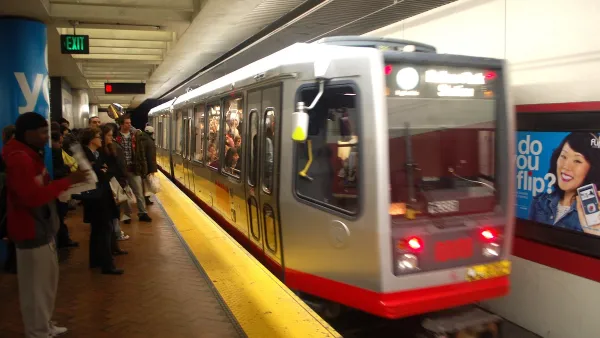
California Revives $750M Loan to Save Bay Area Transit
The state approved a $750 million loan as a stopgap measure to fund regional transit agencies until a 2026 ballot measure that could bring more permanent funding.
California Rejects Loan to Save Bay Area Transit
The state’s Department of Finance wants to extend negotiations about the loan, making it unlikely transit agencies will receive any assistance before the end of the year.

Planetizen Federal Action Tracker
A weekly monitor of how Trump’s orders and actions are impacting planners and planning in America.

California plans to bury El Niño’s downpour
If the state plays its cards right, it may be able to store a billion acre-feet of El Niño’s water in aquifers.

Chicago breaks ground on $3 billion megadevelopment
The new neighborhood, titled Foundry Park, will one day host 3,700 residences.

California High-Speed Rail Authority CEO resigns after $600,000 scandal
Under Ian Choudri, the authority used taxpayer dollars to fund first class flights and trips to nightclubs.

Want to study the Missouri River? Soon, you may need unanimous approval from 10 states
Legislation would require 10 governors’ permission to study or build projects moving water outside the basin.

Desperate measures: Advocates weigh draining Lake Powell to fill Colorado River
Draining the reservoir could reduce evaporation losses by a couple hundred thousand acre-feet.

FREE Course: Walkable City 1: Why Walkability?
After describing his path towards focusing on walkability as the essence of good planning, Jeff Speck marches through his five principal reasons for making more walkable places.
Reinventing Malls: Planning Alchemy—Turning Gray Fields Into Gold
The course focuses on the opportunities and imperatives that shape reinvention of mall sites.

City of Rosemead
Rutgers University, Edward J. Bloustein School of Planning and Public Policy
One Hundred Miles
Hunter College, City University of New York (CUNY)
The Architects Foundation
University of Cincinnati Online
City of Cambridge
Montrose County
The Pocatello Development Authority