Kristen Jeffers writes that she's changed her mind about the existence of hierarchies among U.S. cities.


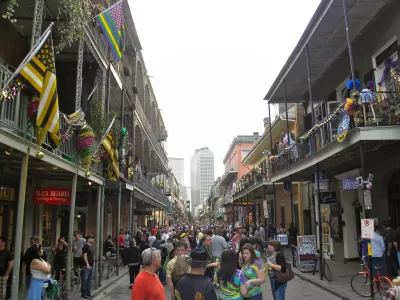
Back in 2012, Kristen Jeffers, who blogs as The Black Urbanist, wrote an opinion piece proclaiming the death of the urban hierarchy. The pith of her argument at the time:
The point is, we are no longer in a rigid, true hierarchy of urban areas. Yes, media outlets, the federal government, stock traders, car companies and film stars may concentrate in certain areas, but these areas are more concentrations and gatherings than they are true indicators of influence.
Fast forward to 2016, and Jeffers has seen too much evidence to the contrary to hold onto that view. "The Urban Hierarchy Was Never Dead" reads the headline, as Jeffers explains the circumstances that led to her changing opinion:
After all, this was before I graduated from my MPA program, before I rented an apartment that almost bankrupted me, before I moved halfway across the country to improve my job prospects, before police brutalities, school failures, high rents and student debts, and finally bad local and state leadership could come in and cloud my view of the ability for all cities to be equal.
The post goes on to detail more of the ways hierarchies between cities are possible, concluding with a note of optimism.
Read the full story: The Urban Hierarchy Was Never Dead

Is Inequality Destroying American Cities?
A recent video claimed that high income inequality is the “Thing That Will Destroy Our Cities.” Is this true?

Census Releases New Interactive Dashboard to Identify Underserved Communities
The new "My Community Explorer" interactive dashboard is intended to help drive data-based solutions to inequality in and between communities.
19 of 1,036 Majority-Black ZIP Codes Are 'Prosperous,' Report Says
The Economic Innovation Group has released its 2020 Distressed Communities Index.

Planetizen Federal Action Tracker
A weekly monitor of how Trump’s orders and actions are impacting planners and planning in America.

Washington state to charge fee to drivers with fuel-efficient cars
Revenue from the fee will go towards supporting the state’s highways.

Illinois considers spending $1 billion in taxpayer money on data center
A quantum computing campus and data center are currently under construction in Chicago.

Senate passes bill overhauling permitting
The bill still needs to pass the House.

Did data centers change how voters cast their ballots?
Texas, Ohio, and Georgia all flipped party control. But in rural counties, the effect of local data centers was mixed.

Amtrak invests in eight new Airo trainsets
The new trainsets will begin serving passengers in 2031.

FREE Course: Walkable City 1: Why Walkability?
After describing his path towards focusing on walkability as the essence of good planning, Jeff Speck marches through his five principal reasons for making more walkable places.
Reinventing Malls: Planning Alchemy—Turning Gray Fields Into Gold
The course focuses on the opportunities and imperatives that shape reinvention of mall sites.

City of Charlotte
City of Rosemead
Rutgers University, Edward J. Bloustein School of Planning and Public Policy
University of Michigan School for Environment and Sustainability (SEAS)
Hunter College, City University of New York (CUNY)
The Architects Foundation
University District Partnership