A big data dump from the federal government earlier this week predicts drastic increases in the amount of freight that will be moving around the country in the next few decades.


A U.S. Department of Transportation press release shares its predictions for the future of freight:
New projections released today by the U.S. Department of Transportation’s Bureau of Transportation Statistics (BTS) and Federal Highway Administration (FHWA) show that freight tons moving on the nation’s transportation network will grow 40 percent in the next three decades while the value of the freight will almost double, increasing by 92 percent…
In total by 2045, "total freight on all modes – air, vessel, pipeline, rail, and trucks – is projected to reach 25 billion tons while the value is expected to grow to $37 trillion."
The press release includes a lot of tables to illustrate the statistics include in the Freight Analysis Framework, as the report is officially called.
Read the full story: DOT Releases 30-Year Freight Projections


USDOT Repeals Emissions Monitoring Rule
A Biden-era regulation required states to report and plan to reduce transportation-related emissions.
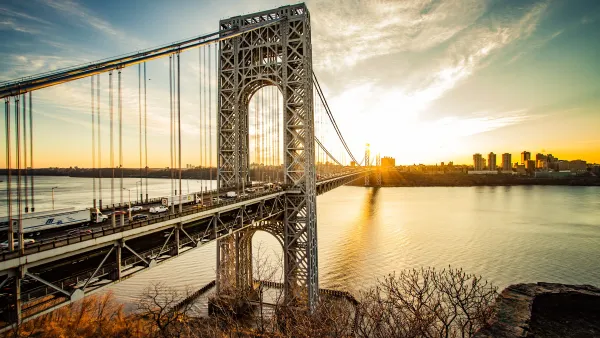
NJ v. U.S. DOT: Cordon Pricing in Manhattan
The State of New Jersey filed a federal lawsuit against the U.S. Department of Transportation on Friday to halt the Manhattan cordon pricing project approved in June by the FHWA, charging that they violated the National Environmental Protection Act.
National Mileage Fee Pilot Program Late to Launch
EV sales are increasing–good news for the environment but bad news for road funding, as they pay no fuel taxes. Fortunately, the bipartisan infrastructure law has $125 million earmarked to "demonstrate a national motor vehicle per-mile user fee."

Planetizen Federal Action Tracker
A weekly monitor of how Trump’s orders and actions are impacting planners and planning in America.

Amtrak, CN end decades-long dispute with eight-year agreement
The new operating agreement establishes an updated framework for the companies to work together, including processes to resolve disputes.

Northwest rail fans eager for Sept. 30 debut of Amtrak’s Airo fleet
Get ready for that new train smell and more seats. But they won’t go faster or run more frequently on the Cascades route in Washington and Oregon.

LAX SkyLink opening delayed again, contractor won’t commit to new deadline
The project was supposed to open its doors to the public in 2023.

Caltrain may slash over one-third of its stations
If Bay Area voters reject two transit tax measures, Caltrain, BART and AC Transit will see steep service cuts.

A 'dangerous' precedent: North Carolina successfully pressures communities into voting for toll roads
Two mayors resigned from the Charlotte Regional Transportation Planning Organization after it voted in favor of the toll roads.

FREE Course: Walkable City 1: Why Walkability?
After describing his path towards focusing on walkability as the essence of good planning, Jeff Speck marches through his five principal reasons for making more walkable places.
Reinventing Malls: Planning Alchemy—Turning Gray Fields Into Gold
The course focuses on the opportunities and imperatives that shape reinvention of mall sites.

City of Thousand Oaks
City of Wisconsin Rapids
Harvard University Graduate School of Design
The Architects Foundation
University of Cincinnati Online
The Pocatello Development Authority
The Urban Renewal Agency of the City of Pocatello