The Massachusetts Bay Transportation Authority board voted to shut down late night transit service on the T this week, finding that ridership did not justify the cost of the long operation hours.


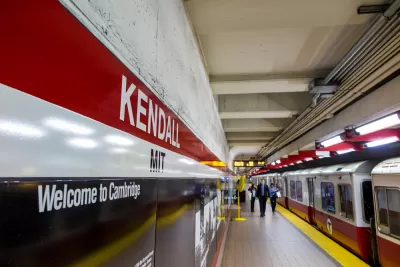
"Late-night hours on the MBTA will end March 18," reports Nicole Dungca, "after board members voted unanimously Monday to ax the service."
"The 4-0 vote was met with consternation by supporters of late-night service," adds Dungca. "The move represents the second time in 15 years that Massachusetts Bay Transportation Authority officials have given up on extended hours for the nation’s fifth-largest transit system."
Concern was especially expressed on behalf of restaurant and service employees who rely on transit service and end work late at night (i.e., "a lot of folks that need it the most," as described in the article by Bob Luz, chief executive of the Massachusetts Restaurant Association).
What is know described as a necessity began its life as an amenity. In December 2013, the pilot project was heralded by riders, business leaders, and public officials "as a crucial element in maintaining a vibrant and attractive city," according to a post by Jonathan Nettler.
Read the full story: MBTA to end late-night service by mid-March

Bridj Wants to Offer Late Night Transit Service in Boston
A proposal by on demand bus and shuttle company Bridj would fill a gap in late night service in the Boston area.
MBTA extends commuter rail discounts and lowers express bus fare to keep passengers riding into the fall
Boston-area commuters can access half-price monthly passes through November.
MBTA threatens to use eminent domain to pedestrianize Boston streets during World Cup
Boston city hall has been unusually reluctant to align with MassDOT and MBTA's proposed crowd management plans.

Planetizen Federal Action Tracker
A weekly monitor of how Trump’s orders and actions are impacting planners and planning in America.

Amtrak, CN end decades-long dispute with eight-year agreement
The new operating agreement establishes an updated framework for the companies to work together, including processes to resolve disputes.

Judges permit Denver to divert 77,000 acre feet from the Colorado River for reservoir expansion
Overuse and climate change have caused the Colorado River’s water levels to plummet.

NYC DOT wants faster, more permanent street upgrades
The city is examining ways to build more concrete infrastructure without getting entangled in 'decades-long' projects.

'Something we’ve never seen before:' rising utility rates could strain city finances nationwide
Data centers, climate change and other factors have caused utility rates in the United States to increase by 38% since 2020.

Trump to overrule local leaders, lease millions of acres of America’s Pacific Island territories’ seafloors to mining companies
International law says that the Indigenous people of America’s territories have a right to prior and informed consent regarding projects that impact their countries.

FREE Course: Walkable City 1: Why Walkability?
After describing his path towards focusing on walkability as the essence of good planning, Jeff Speck marches through his five principal reasons for making more walkable places.
Reinventing Malls: Planning Alchemy—Turning Gray Fields Into Gold
The course focuses on the opportunities and imperatives that shape reinvention of mall sites.

Harvard University Graduate School of Design
KFH Group Inc.
Greater Baltimore Committee
The Architects Foundation
University of Cincinnati Online
The Pocatello Development Authority
The Urban Renewal Agency of the City of Pocatello