A petition and a lawsuit are so far the tactics used by local advocates to oppose a plan by the Alabama Department of Transportation to widen an interstate that runs through the heart of Birmingham.


Sarah Kuper reports on pushback to a plan by the Alabama Department of Transportation (ALDOT) "to reconfigure and widen" Interstate 20/59 through Downtown Birmingham. The proposal has met stiff resistance from a local non-profit, which argues that " the plan will have long-term, detrimental effects on the city."
The plan would widen stretches of the interstate from six lanes to ten lanes and upgrade on- and off-ramps. The initial plans have been in circulation since 2013, reports Kuper, inspiring a local opposition group called Move I-20/59 to file a lawsuit against ALDOT, "contending it had not adequately considered environmental issues and asking that it consider economic issues as well." According to Kuper, "On Jan. 19, the Federal Highway Administration and ALDOT responded by denying all claims."
The article focuses mostly on the advocacy of Darrell O’Quinn, the advocate leading Move I-20/59, who lays out several arguments against the highway-widening project.
Read the full story: I-20/59 Expansion Under Fire: Birmingham Business Community Keeps Pushing Against ALDOT Plans
Should Birmingham Double Down on Downtown-Dividing Interstate?
A innovative approach to I-20/59 could thrust downtown Birmingham past other revitalizing cities, but the state has been reluctant to think outside the box.
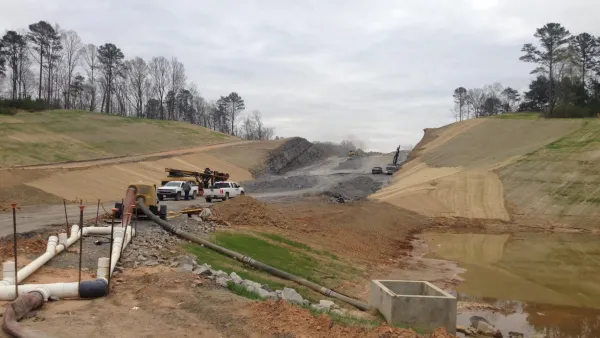
Alabama DOT wants to fill wetlands for interstate project
The Birmingham Northern Beltline would run roughly 52 miles through forests and wetlands that are home to multiple endangered species.
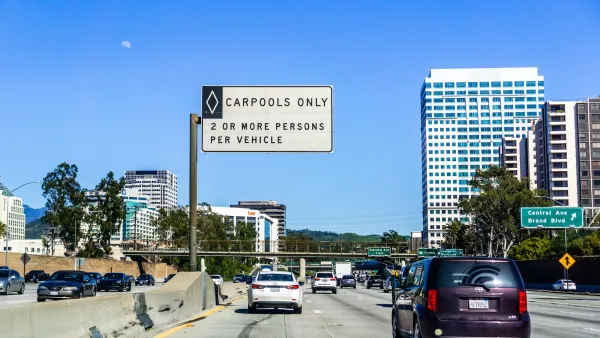
Another Reminder of the Futility of Carpool Lanes
What's the great 'fix' for the flawed Highway 101 carpool lanes in Marin and Sonoma counties in the Bay Area? Reduce the HOV time by two and a half hours during the peak commutes to enable solo drivers greater access to 52 miles of widened freeway.

Planetizen Federal Action Tracker
A weekly monitor of how Trump’s orders and actions are impacting planners and planning in America.

Washington state to charge fee to drivers with fuel-efficient cars
Revenue from the fee will go towards supporting the state’s highways.

Illinois considers spending $1 billion in taxpayer money on data center
A quantum computing campus and data center are currently under construction in Chicago.

Senate passes bill overhauling permitting
The bill still needs to pass the House.

Did data centers change how voters cast their ballots?
Texas, Ohio, and Georgia all flipped party control. But in rural counties, the effect of local data centers was mixed.

Amtrak invests in eight new Airo trainsets
The new trainsets will begin serving passengers in 2031.

FREE Course: Walkable City 1: Why Walkability?
After describing his path towards focusing on walkability as the essence of good planning, Jeff Speck marches through his five principal reasons for making more walkable places.
Reinventing Malls: Planning Alchemy—Turning Gray Fields Into Gold
The course focuses on the opportunities and imperatives that shape reinvention of mall sites.

City of Charlotte
City of Rosemead
Rutgers University, Edward J. Bloustein School of Planning and Public Policy
University of Michigan School for Environment and Sustainability (SEAS)
Hunter College, City University of New York (CUNY)
The Architects Foundation
University District Partnership