Proof that words matter—especially in court—came when Chicago tried to redefine bike lanes as recreational facilities.


Brendan Kevenides shares news on an interesting anecdote from the legal annals of Chicago's bike infrastructure that speaks to the contested definitions of multi-modal transportation. "In a hearing last week in the Circuit Court of Cook County the City of Chicago sought to have all of the bicycle lanes installed throughout the City declared 'recreational facilities.'"
"The effect of this creative legal maneuver would have been to immunize the municipality for injuries to bicyclists caused by the City’s failure to keep its bike lanes safe for riders," adds Kevenides.
Kevenides is an attorney at Freeman Kevenides, a law firm that represents "bicyclists, pedestrians, and other vulnerable road users." The law firm represented a bicyclist "injured when she struck a large water filled hole located in the middle of a marked bike lane at 1124 North Damen Avenue," which prompted the city's semantic defense.
In the end, a Cook County judge denied the city's attempt to define bike lanes as recreational facilities, and upheld the city's responsibility to maintain bike lanes under the penalty of actionable liability.
FULL STORY: Chicago Cannot Deny Responsibility For Bike Lane Hazards


Chicago bike lane projects spark backlash from businesses, gentrification fears
A battle is brewing over Chicago's street space.
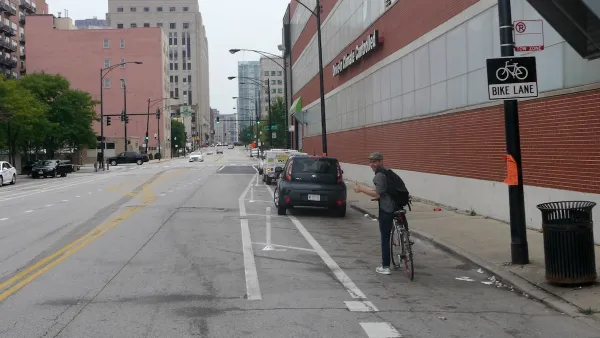
Chicago Pilot Would Keep Bike and Bus Lanes Clear — Without the Police
A proposal supported by many city officials and road safety advocates would shift right-of-way enforcement to ‘Rapid Response Aides’ to free up police resources and clear blocked lanes more quickly.
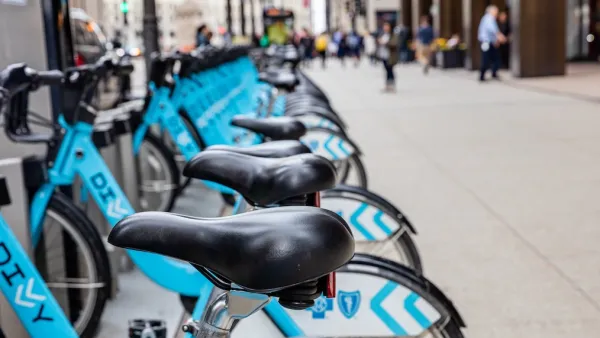
Chicago Sees Record Shared Bike, Scooter Use
Riders took over 11 million bike share and scooter trips in 2024.

The state-sanctioned urbicide of Austin
People don’t kill cities. Freeways do.

US to reduce Colorado River water deliveries to Mexico
A new Colorado Treaty amendment reduces Mexico’s Colorado River water allocation by 250,000 acre feet.

New Jersey’s second-largest city bans standalone data centers
Jersey City will continue to allow co-location facilities, such as those meant for research institutions that store their own data.

Amtrak not solely to blame for New Jersey commuter rail's unreliability, report finds
A new study from the Garden State Initiative found that NJ Transit’s budget grew 20% across a 4 year period, but reliability declined significantly over the same period.

EPA erases limits on planet-warming pollution from power plants
Under Monday’s plan, power plants would still have some limits on how much mercury, arsenic and other contaminants they can emit.

Phoenix announces new on-demand transit service, more frequent RAPID buses
Both new services will launch in October, and are part of Phoenix's Project Effective Access Solutions for Easing Congestion.

FREE Course: Walkable City 1: Why Walkability?
After describing his path towards focusing on walkability as the essence of good planning, Jeff Speck marches through his five principal reasons for making more walkable places.
Reinventing Malls: Planning Alchemy—Turning Gray Fields Into Gold
The course focuses on the opportunities and imperatives that shape reinvention of mall sites.

Eagle County Government
Harvard University Graduate School of Design
Nashville Planning Department
The Architects Foundation
University of Cincinnati Online
The Pocatello Development Authority
The Urban Renewal Agency of the City of Pocatello
Journal of the American Planning Association