Advocates are concerned that too many of Denver's new retail marijuana business are locating in neighborhoods with mostly minority and low-income residents.


"Recreational marijuana businesses have proliferated so rapidly in some of Denver's poorer neighborhoods during the past two years that city officials are exploring ways to disperse future growth more evenly," report David Migoya and Ricardo Baca.
Businesses connected to the marijuana industry have taken off in neighborhoods like Elyria Swansea, Globeville, Northeast Park Hill, and Overland, according to the article. Business owners claim that they're located where the city's zoning allows.
The Denver Post completed an analysis of the concentration of marijuana businesses in the city, the findings for which are shared in the article. Migoya and Baca also report that policy makers have already taken steps to limit the concentration of marijuana businesses certain areas: "In November, the City Council placed a four-month moratorium on new licenses until officials can have a closer look at where shops are today, including taking walking tours of neighborhoods. There is talk of extending the moratorium for at least two years, perhaps up to four."
FULL STORY: Denver's pot businesses mostly in low-income, minority neighborhoods


Marijuana Businesses Spiking Commercial Rents in Low-Income, Minority Neighborhoods
Marijuana production comes down to a question of the availability of industrial zoning. Denver is the poster child, but other cities are seeing similar trends.
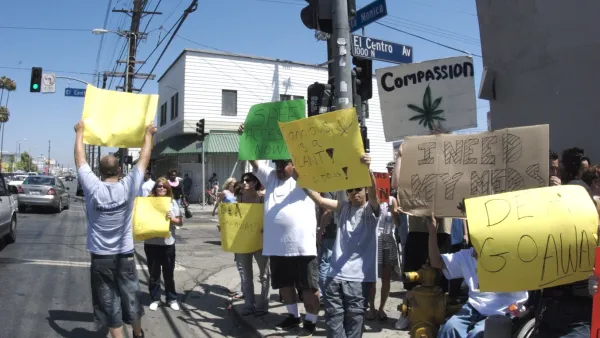
Over 500 Medical Marijuana Shops Shuttered in Los Angeles
In Los Angeles, Proposition D has done its job over the past two years, putting a damper on new medical marijuana shops and dispensaries. Meanwhile, California inches toward decriminalization.
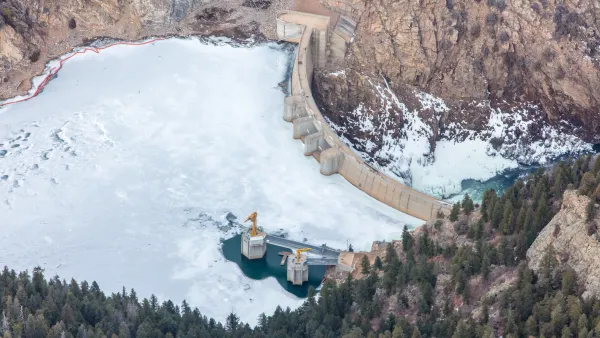
Instead of water, sediment from droughts and wildfire is choking U.S. dams
Sediment has filled 8% of dam storage capacity in the United States. Because of climate change, researchers expect it will only accumulate quicker.

The state-sanctioned urbicide of Austin
People don’t kill cities. Freeways do.

US to reduce Colorado River water deliveries to Mexico
A new Colorado Treaty amendment reduces Mexico’s Colorado River water allocation by 250,000 acre feet.

New Jersey’s second-largest city bans standalone data centers
Jersey City will continue to allow co-location facilities, such as those meant for research institutions that store their own data.

Amtrak not solely to blame for New Jersey commuter rail's unreliability, report finds
A new study from the Garden State Initiative found that NJ Transit’s budget grew 20% across a 4 year period, but reliability declined significantly over the same period.

EPA erases limits on planet-warming pollution from power plants
Under Monday’s plan, power plants would still have some limits on how much mercury, arsenic and other contaminants they can emit.

Phoenix announces new on-demand transit service, more frequent RAPID buses
Both new services will launch in October, and are part of Phoenix's Project Effective Access Solutions for Easing Congestion.

FREE Course: Walkable City 1: Why Walkability?
After describing his path towards focusing on walkability as the essence of good planning, Jeff Speck marches through his five principal reasons for making more walkable places.
Reinventing Malls: Planning Alchemy—Turning Gray Fields Into Gold
The course focuses on the opportunities and imperatives that shape reinvention of mall sites.

Eagle County Government
Harvard University Graduate School of Design
Nashville Planning Department
The Architects Foundation
University of Cincinnati Online
The Pocatello Development Authority
The Urban Renewal Agency of the City of Pocatello
Journal of the American Planning Association