Indonesia's capital, population 10 million, is slowly sinking below sea level. To protect itself and drive the economy, the city is building a 25-mile bird-shaped seawall, to be topped with luxury development.


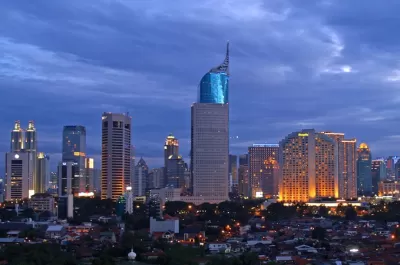
Shaped like Garuda, a bird-like national emblem of Indonesia, Jakarta's new seawall will cost a cool $40 billion. But it may be worthwhile. According to an article by Amy X. Wang: "Jakarta sinks an average of three inches a year, and parts of the coast are going down as much as 11 inches a year, according to geodynamic experts. Around 40% of the city is already below sea level."
"In an attempt to halt the damage, authorities are building a gigantic wall off the coast, measuring 25 miles (40 kilometers) long and 80 feet (24 meters) high, National Geographic reports. To fund the $40 billion and 30-year-long project, the city will also create 17 artificial islands, on which developers can build luxury homes, offices, and shopping malls."
The project isn't without controversy, including environmental concerns and accusations of corruption. The cause of the sinking might also be correctable: illegal groundwater extractions by citizens seeking fresh water.
Read the full story: To save itself, Jakarta is building one of the biggest sea walls on Earth
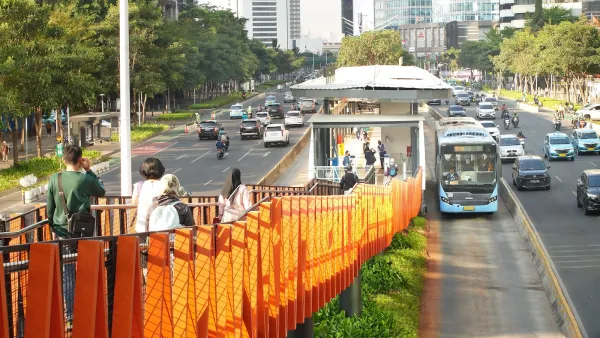
How Jakarta built the world's largest BRT system
Once known for total gridlock, the Indonesian capital has transformed itself into a public transit leader.
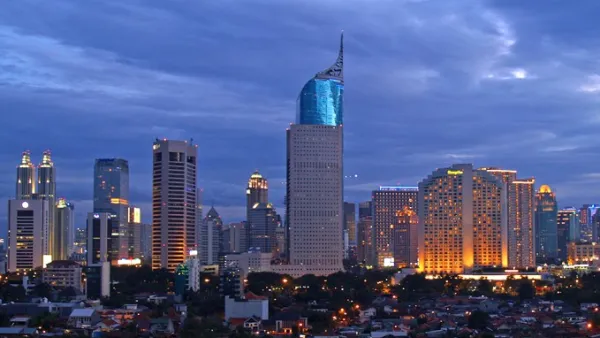
Jakarta's Suburb in the Sky
A rooftop housing development in the Indonesian capital takes the suburb to new heights.
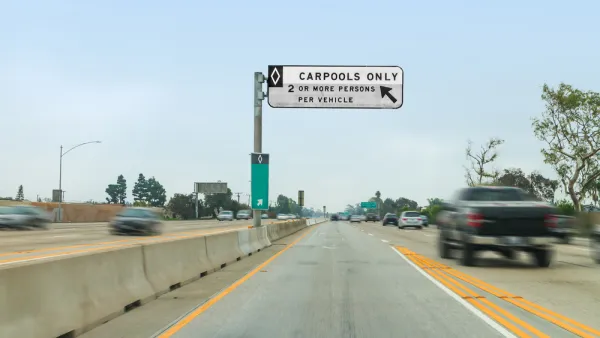
Before and After Carpool Lanes
The Guardian shares news of a new study of a Jakarta lane that could prove that carpool requirements work to reduce driving and congestion.

Planetizen Federal Action Tracker
A weekly monitor of how Trump’s orders and actions are impacting planners and planning in America.

California plans to bury El Niño’s downpour
If the state plays its cards right, it may be able to store a billion acre-feet of El Niño’s water in aquifers.

Desperate measures: Advocates weigh draining Lake Powell to fill Colorado River
Draining the reservoir could reduce evaporation losses by a couple hundred thousand acre-feet.

US buildings threatened, destroyed by fires set to triple by 2060
Researchers found a high fire risk for socioeconomically vulnerable neighborhoods in the American West.

LA residents may be allowed to paint their own crosswalks
Councilwoman Katy Yaroslavsky put out a motion instructing the Los Angeles Department of Public Transportation to study the feasibility of allowing volunteers to paint crosswalks.

Dallas moves to overhaul its zoning code
The city's zoning reform will allow more multi-family and mixed-use developments.

FREE Course: Walkable City 1: Why Walkability?
After describing his path towards focusing on walkability as the essence of good planning, Jeff Speck marches through his five principal reasons for making more walkable places.
Reinventing Malls: Planning Alchemy—Turning Gray Fields Into Gold
The course focuses on the opportunities and imperatives that shape reinvention of mall sites.


City of Rosemead
Rutgers University, Edward J. Bloustein School of Planning and Public Policy
One Hundred Miles
Hunter College, City University of New York (CUNY)
The Architects Foundation
University of Cincinnati Online
City of Cambridge
Montrose County
The Pocatello Development Authority