A new app called Walc makes navigating while walking easier to do. Even more ambitiously, Walc aims to make it easier to make the choice to walk, rather than drive.


"A navigation app called Walc, designed for pedestrians, was built on the idea that someone walking could use different directions than someone in a car," according to an article by Adele Peters.
Peters quotes Allison McGuire, founder of Walc, for insights into the concepts behind the pedestrian navigation app. McGuire makes this excellent point: "Time passes differently when you're walking—all of your senses are engaged and you gravitate toward visual cues to guide your way…You measure distance with time, blocks, steps, and even calories burned. When you're driving, you look out for signs and measure distance in miles."
So instead of receiving directions to turn north, the app uses more readily apparent landmarks, such as, for example, a McDonalds or a Starbucks, to provide its directions. Another helpful feature of the app: "With a new hands-free 'pocket' mode, you can leave your phone in a coat or bag and listen to directions as you look around, instead of staring at a screen."
FULL STORY: This Navigation App Is Designed For Pedestrians, Not Drivers

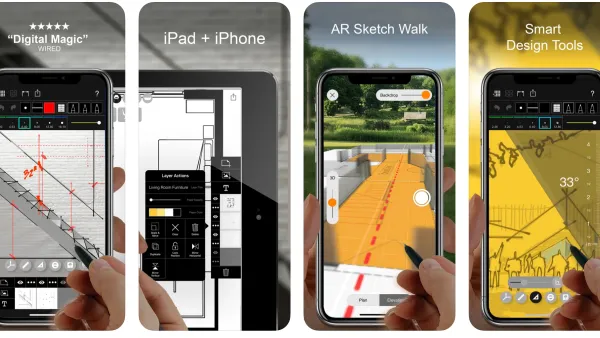
Best Apps for Urban Planning in 2022
Mobile apps continue to redefine the practices of planning—urban planning, regional planning, transportation planning, community planning, and rural planning included.
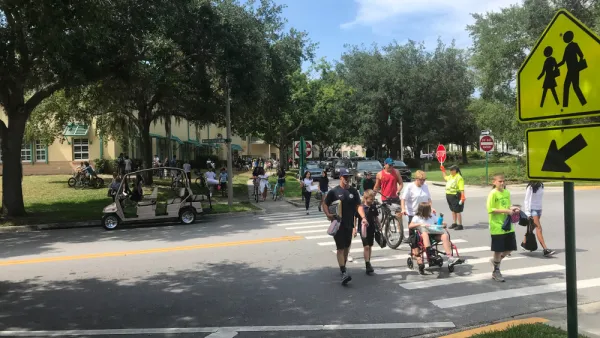
Earn Rewards for Traveling for by Foot, Bike, Bus, or Train
The city of Orlando is partnering with the Miles app.

New Google Map Layer Shows COVID-19 Infection Rates
A new layer showing the seven-day average of confirmed COVID-19 cases started rolling out to Android and iPhones last week.

Planetizen Federal Action Tracker
A weekly monitor of how Trump’s orders and actions are impacting planners and planning in America.

The state-sanctioned urbicide of Austin
People don’t kill cities. Freeways do.

US to reduce Colorado River water deliveries to Mexico
A new Colorado Treaty amendment reduces Mexico’s Colorado River water allocation by 250,000 acre feet.

5 New England states march closer to 800 megawatt wind energy project
Securing federal approval for the project may be complicated under the Trump administration, which has historically been hostile towards domestic wind power.

Baltimore to break ground on $50 million Transit Priority Project
The project will bring faster bus trips, safer streets and better bike connections to Baltimore.

Airbnb launches $250 million 'last-dollar financing' housing accelerator, makes first investment in Austin
The company will put $6.4 million towards affordable housing development in Texas’ capital.

FREE Course: Walkable City 1: Why Walkability?
After describing his path towards focusing on walkability as the essence of good planning, Jeff Speck marches through his five principal reasons for making more walkable places.
Reinventing Malls: Planning Alchemy—Turning Gray Fields Into Gold
The course focuses on the opportunities and imperatives that shape reinvention of mall sites.

Eagle County Government
Harvard University Graduate School of Design
Nashville Planning Department
The Architects Foundation
University of Cincinnati Online
The Pocatello Development Authority
The Urban Renewal Agency of the City of Pocatello
Journal of the American Planning Association