From ALPR cameras mounted on garbage trucks to IMSI catchers such as Dirtboxes and Stingrays, local authorities have increased exponentially the amount of electronic surveillance, with little regard for the basic principles of privacy.


In 1972, the US Supreme Court ruled that an individual's right to privacy could only be breached by a court order, not at the discretion of law enforcement agencies. The majority in the case wrote: "The Fourth Amendment contemplates a prior judicial judgment, not the risk that executive discretion may be reasonably exercised."
A lot has happened in the 40-plus years since that decision.
Recently, in San Jose, CA, city leaders approved a study of a plan to place license-plate readers on garbage trucks. Since garbage trucks go around every street of the city at least once a week, the trucks can be used to locate parked vehicles in places where police cruisers usually don’t go. Garbage truck drivers wouldn’t see the information collected.
The ALPR (Automatic License Plate Recognition) device would send its data directly to the police, who could then build a massive database of cars parked on the street. San Jose already has six ALPR systems mounted on police cars and has set aside $68,400 for more units next year.
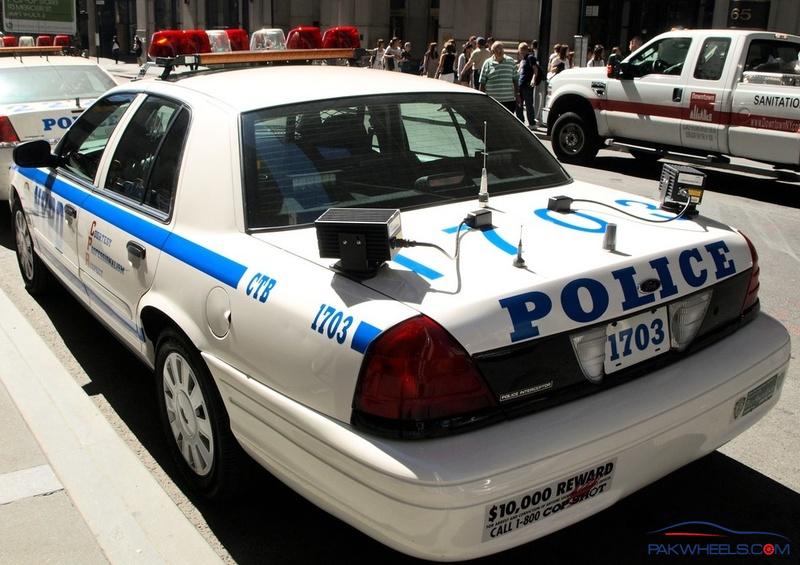
Read the full story: Cities Should Stop Electronic Warrantless Surveillance

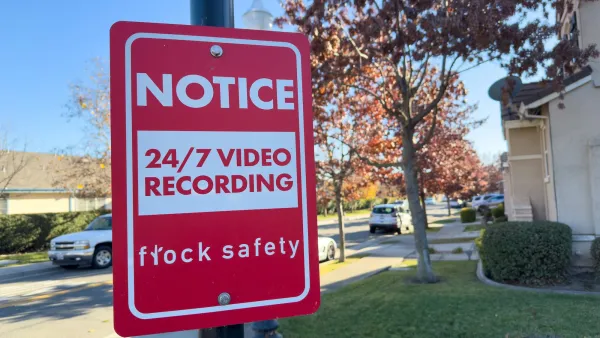
Flock cameras are now in 6,000 US communities
The automated license plate readers are causing backlash from community members concerned about surveillance and privacy.
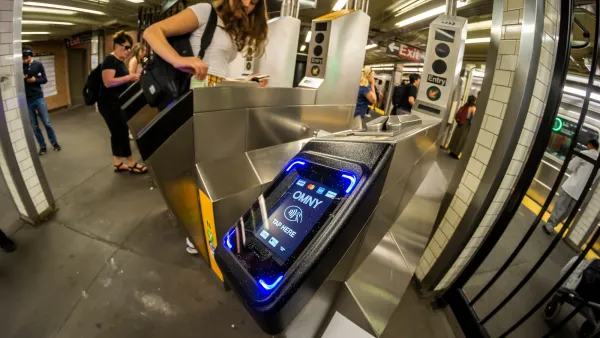
Popular transit payment system linked to Palantir could give ICE access to rider data
The tap-to-pay system is being used widely in transit systems including New York City, Boston and Chicago.
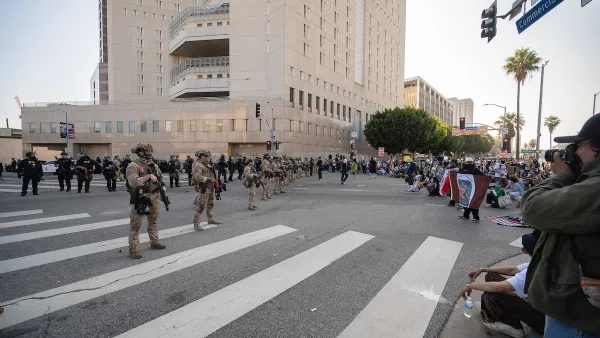
Opinion: Far From Cauldrons of Violence, Cities are Anti-Crime Innovators
Rather than funding the performative militarization of law enforcement, the federal government could instead support programs that prevent poverty and crime before it happens.

Planetizen Federal Action Tracker
A weekly monitor of how Trump’s orders and actions are impacting planners and planning in America.

Amtrak, CN end decades-long dispute with eight-year agreement
The new operating agreement establishes an updated framework for the companies to work together, including processes to resolve disputes.

Judges permit Denver to divert 77,000 acre feet from the Colorado River for reservoir expansion
Overuse and climate change have caused the Colorado River’s water levels to plummet.

NYC DOT wants faster, more permanent street upgrades
The city is examining ways to build more concrete infrastructure without getting entangled in 'decades-long' projects.

'Something we’ve never seen before:' rising utility rates could strain city finances nationwide
Data centers, climate change and other factors have caused utility rates in the United States to increase by 38% since 2020.

Trump to overrule local leaders, lease millions of acres of America’s Pacific Island territories’ seafloors to mining companies
International law says that the Indigenous people of America’s territories have a right to prior and informed consent regarding projects that impact their countries.

FREE Course: Walkable City 1: Why Walkability?
After describing his path towards focusing on walkability as the essence of good planning, Jeff Speck marches through his five principal reasons for making more walkable places.
Reinventing Malls: Planning Alchemy—Turning Gray Fields Into Gold
The course focuses on the opportunities and imperatives that shape reinvention of mall sites.

Harvard University Graduate School of Design
KFH Group Inc.
Greater Baltimore Committee
The Architects Foundation
University of Cincinnati Online
The Pocatello Development Authority
The Urban Renewal Agency of the City of Pocatello