Looking for the perfect holiday gift for a planner? Check out these new map books.



Joshua Hammer reviews four coffee-table treasures that illustrate the many entertaining and intellectual cartographic forms.
Map: Exploring the World is a collection of 300 celebrated maps spanning 3,000 years: "the most captivating of several new books that explore the power of spatial representations and how they shape our perceptions of reality," according to Hammer.
The Curious Map Book explores the more playful side of maps, with illustrations of puzzles from 18th century Britain, hand-woven rugs from wartime Afghanistan, and Hammer's favorite—a series of anthropomorphic satires. Among these "one exquisite creation, drawn by the lithographic artist and caricaturist Joseph John Goggins, probably in Dublin, in 1870, [that] portrays Europe as a menagerie of grotesque humans and beasts in sometimes bellicose poses."
In his book, Restless Empire: A Historical Atlas of Russia, Ian Barnes narrates a cartographic history of Russia and the Soviet Empire. "Most powerful are his maps of the wars that repeatedly threatened to tear the empire apart, from Napoleon’s doomed invasion in 1812 to Hitler’s Operation Barbarossa in 1941," opines Hammer.
Tim Marshall's ambitious claim to explain everything about the world in ten maps (Prisoners of Geography: Ten Maps That Explain Everything About the World) may seem at times reductionist. However, Hammer finds that Marshall's "insistence on seeing the world through the lens of geography compels a fresh way of looking at maps — not just as objects for orientation or works of art, but as guideposts to the often thorny relations between nations."
Read the full story: ‘Map: Exploring the World,’ ‘The Curious Map Book’ and More
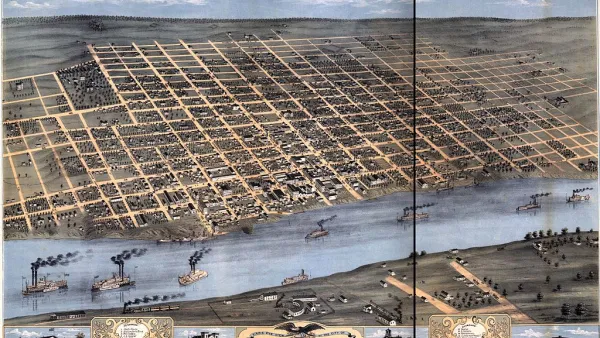
Mapped: Every Building in the United States
Using data from Microsoft, the New York Times has published an online map showing the placement of every building in the country, in a simple black and white format.
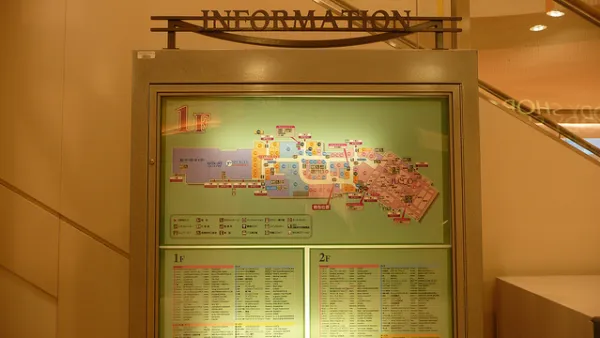
The Future of Mapping is Going Indoors
Cartographers have a new world to map, as technology opens up the interiors of malls, museums, and other large spaces to online exploration.
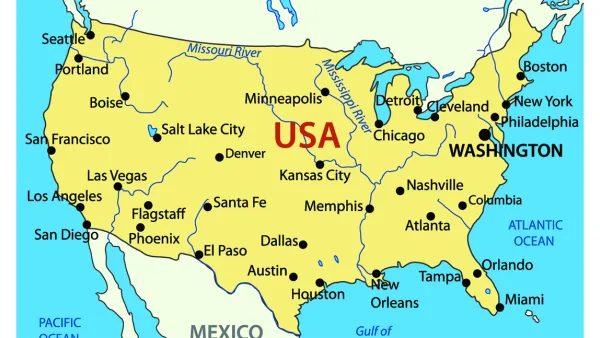
Today's Cartographers Are Database Engineers
Modern maps are visual representations of millions of points of standardized data.

Desperate measures: Advocates weigh draining Lake Powell to fill Colorado River
Draining the reservoir could reduce evaporation losses by a couple hundred thousand acre-feet.

Eastern Nebraska is running out of electricity
Data centers and electrification are straining eastern Nebraska’s grid, throttling economic development.

Move over, LA: St. Louis gears up for Olympics, invests millions in downtown redevelopment
The Missouri city will host the 2028 Olympic soccer group stage and knockout matches.

Mass. votes against statewide minimum lot size for single-family homes
Over 2 million residents voted on Question 7; it was decided by just over 30,000 votes.

Maryland’s $15 billion bridge project gains key approval
The Maryland Transit Authority said the project will create over 60,000 jobs and add $23 billion to the local economy.

‘No clear next steps’ for Chicago's permanent festival grounds
Eleventh Ward Ald. Nicole Lee has suggested Soldier Field as a possible location for the permanent event space.

FREE Course: Walkable City 1: Why Walkability?
After describing his path towards focusing on walkability as the essence of good planning, Jeff Speck marches through his five principal reasons for making more walkable places.
Reinventing Malls: Planning Alchemy—Turning Gray Fields Into Gold
The course focuses on the opportunities and imperatives that shape reinvention of mall sites.

City of Rosemead
Rutgers University, Edward J. Bloustein School of Planning and Public Policy
One Hundred Miles
University of Michigan School for Environment and Sustainability (SEAS)
Hunter College, City University of New York (CUNY)
The Architects Foundation
City of Cambridge
The Pocatello Development Authority
The Urban Renewal Agency of the City of Pocatello