Draft regulations under consideration in Anchorage "would prohibit building large cellphone towers next to homes in dense urban settings."


"The draft regulations encourage 'small-cell' technologies, or low-powered wireless base stations that can be mounted to light poles and typically help boost coverage in high-use areas like stadiums or malls."
"Other proposed changes include reducing the separation distance required between a cellphone tower and the nearest home. Current city law requires a separation distance equal to 200 percent of the height of the tower, but phone companies can get around that through loopholes. The new regulations are designed to close that loophole, officials said, through new guidelines for minimum separation distances. They would also set a maximum height of 65 feet for a tower in a residential district."
"Since they were released in mid-November, the draft regulations have gotten mixed reviews. Community activists said they’d like to see clearer definitions for certain types of towers and more ways for neighbors to weigh in on projects near their homes."
Read the full story: Anchorage weighs new rules on cell towers in neighborhoods

Anchorage Releases Draft Land Use Regs for Marijuana
Commercial marijuana operations to be restricted to industrial areas.
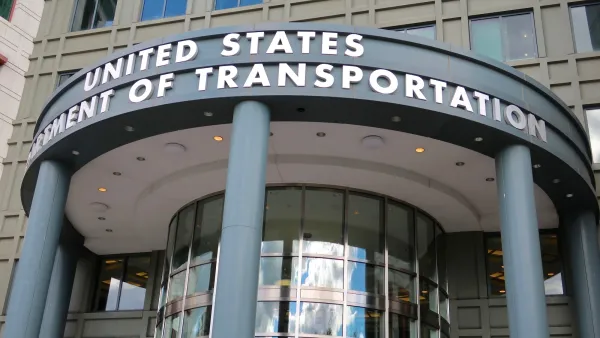
DOT Will Use AI to Write “Good Enough” Regulations: “We’re Flooding the Zone”
The agency wants to speed up the rulemaking process to as little as 30 days.

Land Use: Chasing Utopia, 2025?
History has taught us the risks of undervaluing the power of planning decisions. Overvaluing them might be just as dangerous.

Desperate measures: Advocates weigh draining Lake Powell to fill Colorado River
Draining the reservoir could reduce evaporation losses by a couple hundred thousand acre-feet.

Eastern Nebraska is running out of electricity
Data centers and electrification are straining eastern Nebraska’s grid, throttling economic development.

Malls are becoming the midtowns of the future
Mall and office park redevelopments are a generational opportunity to create new nodes of urbanity.

NYC breaks ground on anti-flooding infrastructure project
New York City's new system will reduce stormwater flows to local sewers by 90%.

One Kentucky town’s secret to affordable housing
The Smoketown Community Land Trust has already built seven affordable homes for community members.

Houston gains petal-shaped cooling infrastructure to make streets more ‘delightful’
The city has installed the pavilions along 15 blocks in Houston.

FREE Course: Walkable City 1: Why Walkability?
After describing his path towards focusing on walkability as the essence of good planning, Jeff Speck marches through his five principal reasons for making more walkable places.
Reinventing Malls: Planning Alchemy—Turning Gray Fields Into Gold
The course focuses on the opportunities and imperatives that shape reinvention of mall sites.

City of Rosemead
Rutgers University, Edward J. Bloustein School of Planning and Public Policy
One Hundred Miles
University of Michigan School for Environment and Sustainability (SEAS)
Hunter College, City University of New York (CUNY)
The Architects Foundation
City of Cambridge
Montrose County
The Pocatello Development Authority