Four major cities in Texas are either considering or constructing convention center upgrades.


Austin joins other major cities in Texas in considering substantial upgrades to its convention center this month, as the City Council contemplated a master plan to add 321,680 square feet of leasable space, a private hotel, and a three-acre roof-top park. Joe Lanane reports that after considering the master plan, the City Council decided to postpone approval of the project o study "what alternative projects, including a potential arena, could be funded using the city’s hotel occupancy tax, or HOT tax, revenue."
In total, the "expansion would cost $405.3 million and another $45 million to $50 million for land acquisition." The convention center was last upgraded in 2002.
Making the case for the expansion is Mark Tester, the director of the convention center. Lanane paraphrases Tester's case for investing in upgrades for the facility: "Until a convention center expansion occurs, the facility risks losing new and existing events because of lack of availability and space."
If that argument sounds familiar, it's because convention center officials in Dallas are hitting similar points in arguing for an upgrade of that city's convention center. Dallas officials, in fact, invoked Austin's efforts in an article by Karen Robinson-Jacobs earlier this month.
Lest we leave any cities in Texas out of this arms race. San Antonio is wrapping up a $325 million expansion of its convention center, recently moving up the opening date from February to January 2016. Houston is also spending $175 million to spiff up some of the on-site facilities at its convention center.
Read the full story: Effort to expand convention center on hold for now

City vs. State: Mayors Want Power to Require Mask Wearing to Slow Coronavirus Spread
Coronavirus cases are surging in the Lone Star State's urban areas, so mayors of nine of its largest cities asked Greg Abbott for the power to mandate the wearing of masks or facial coverings, prohibited by executive order, to slow viral spread.
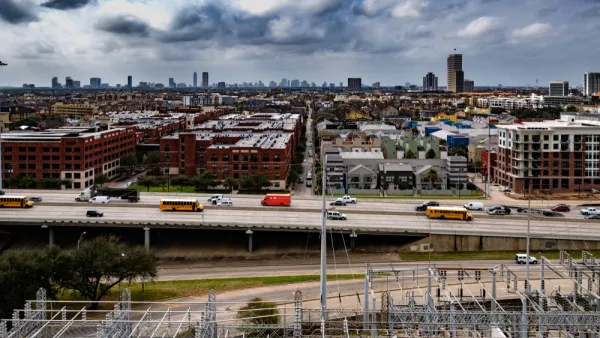
Texas Losing its Housing Affordability Advantage
Trends pre-dating Covid-19 showed housing affordability slipping away from many residents in Texas. The pandemic will likely only exacerbate the trend, according to this analysis.
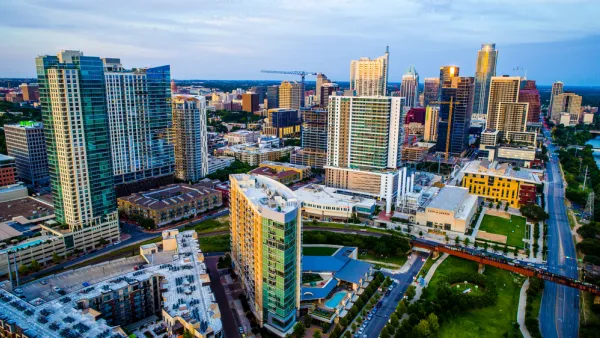
'Urban Luxury' Housing Skyrockets in Texas and Beyond
An explosion of upscale multifamily development in Texas cities reflects trends in the national housing market.

Planetizen Federal Action Tracker
A weekly monitor of how Trump’s orders and actions are impacting planners and planning in America.

California plans to bury El Niño’s downpour
If the state plays its cards right, it may be able to store a billion acre-feet of El Niño’s water in aquifers.

Desperate measures: Advocates weigh draining Lake Powell to fill Colorado River
Draining the reservoir could reduce evaporation losses by a couple hundred thousand acre-feet.

Los Angeles just elected an urban planner as its mayor
Transportation analysts are optimistic that Raman will be more aggressive in addressing transit issues than Bass.

Mamdani’s pied-à-terre tax survives legal challenge
A panel of judges found that the plaintiffs failed to demonstrate injury as a result of New York City's implementation of the tax.

Eastern Nebraska is running out of electricity
Data centers and electrification are straining eastern Nebraska’s grid, throttling economic development.

FREE Course: Walkable City 1: Why Walkability?
After describing his path towards focusing on walkability as the essence of good planning, Jeff Speck marches through his five principal reasons for making more walkable places.
Reinventing Malls: Planning Alchemy—Turning Gray Fields Into Gold
The course focuses on the opportunities and imperatives that shape reinvention of mall sites.

City of Rosemead
Rutgers University, Edward J. Bloustein School of Planning and Public Policy
One Hundred Miles
University of Michigan School for Environment and Sustainability (SEAS)
Hunter College, City University of New York (CUNY)
The Architects Foundation
City of Cambridge
Montrose County
The Pocatello Development Authority