A lot of promises get made in the hopes of building political support in transit options like light rail. Perhaps, however, officials in Los Angeles should stop promising that transit will alleviate congestion.


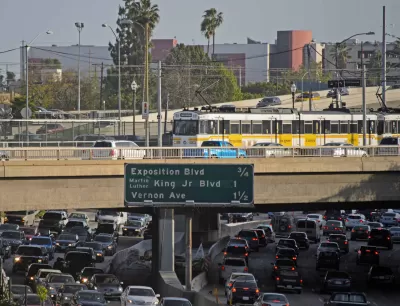
"Contrary to predictions used to promote the first phase of the Expo light rail line between downtown and Los Angeles' Westside, a new study has found that the $930-million project has done little to relieve traffic congestion in the area," according to an article by Dan Weikel and Alice Walton.
But wait, before anyone accuses the line of being all-for-naught, the study also found that the Expo Line boosted transit ridership.
Which brings up a fair point: maybe "political and transportation leaders should rethink the way they market such transit investments to the public." The report's authors even go so far as to suggest some more valid and deliverable talking points for supporting transit, "such as providing transportation for low-wage earners, increasing links to job centers and providing more travel options." Earlier studies showed the willingness of people to use Expo Line instead of cars—residents living within a half-mile of stations on the Expo Line drive 40 percent less than they did before the line opened.
Weikel and Walton provide a lot more detail about the findings of the study, which precedes the forthcoming opening of the extension of the Expo Line farther west into Santa Monica.
Read the full story: L.A. Expo Line hasn't reduced congestion as promised, a study finds

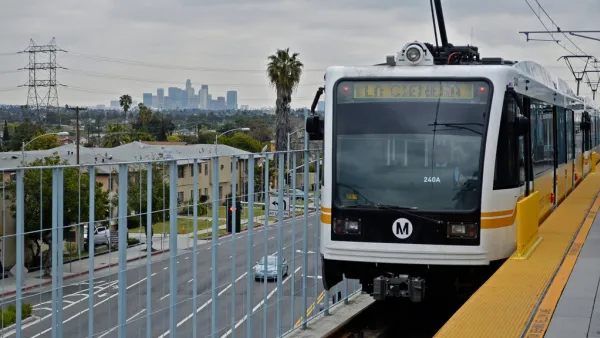
New Bike and Bus Lanes Coming to Culver City, California
The MOVE Culver City project will connect downtown Culver City with the E Line train, giving residents easier access to downtown Los Angeles and beach communities.
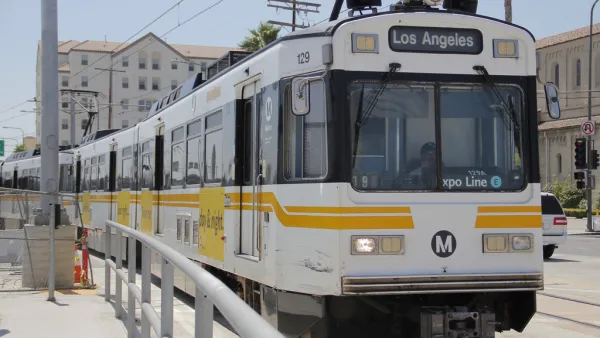
What L.A.'s New Expo Line Extension Won't Do
The $1.5 billion, 6.6-mile light rail extension from Culver City to Santa Monica is projected to double trips on the line by 2030, giving commuters a viable alternative to driving. Just the same, don't expect the extension to reduce congestion.
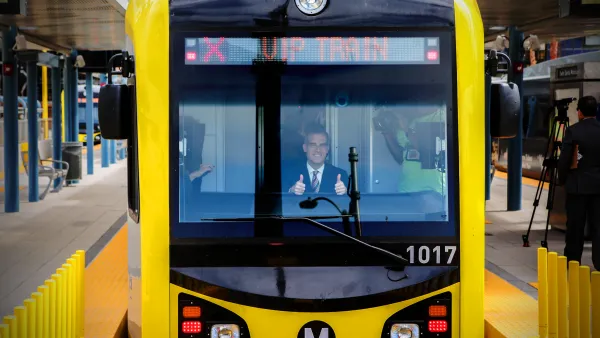
What It's Like to Ride the New Expo Line to Santa Monica
For a bit of fun, take this animated ride on the Los Angeles County Metropolitan Transportation Authority's new Expo Line extension.

Planetizen Federal Action Tracker
A weekly monitor of how Trump’s orders and actions are impacting planners and planning in America.

The state-sanctioned urbicide of Austin
People don’t kill cities. Freeways do.

US to reduce Colorado River water deliveries to Mexico
A new Colorado Treaty amendment reduces Mexico’s Colorado River water allocation by 250,000 acre feet.

Nation's most wind-powered state turns to coal as data centers increase energy demand
For the first time in decades, Iowa has increased its generation of coal power.

NYC cools commuters with city's first rain garden above a bus stop
New York City officials say the plants in the rain garden can absorb 16 gallons of rainwater during heavy storms.

Brightline West’s future may rely on $6 billion federal loan
The company has until Nov. 2 to make a $400 million equity investment into its proposed high-speed rail line.

FREE Course: Walkable City 1: Why Walkability?
After describing his path towards focusing on walkability as the essence of good planning, Jeff Speck marches through his five principal reasons for making more walkable places.
Reinventing Malls: Planning Alchemy—Turning Gray Fields Into Gold
The course focuses on the opportunities and imperatives that shape reinvention of mall sites.

Eagle County Government
Harvard University Graduate School of Design
Nashville Planning Department
The Architects Foundation
University of Cincinnati Online
The Pocatello Development Authority
The Urban Renewal Agency of the City of Pocatello
Journal of the American Planning Association