The potential for offshore wind power along the Atlantic Coast has moved closer to reality in fits and starts. Recent leases, however, indicate what the future of the industry could looks like.


"Two energy firms will spend more than $1.8 million to potentially develop wind farms in federal waters off the coast of New Jersey," reports Devin Henry.
"The companies — RES America Developments and U.S. Wind Inc.— won the rights in a lease auction on Monday. Combined, the firms bought up leases for nearly 344,000 acres of space, the Department of Interior announced."
The 344,000 acres is located seven miles of the coast of New Jersey, extending about 21 miles into the Atlantic Ocean. Department of the Interior Secretary Sally Jewell is quoted in the article describing the auction as the first step toward a "sustainable offshore wind program" for communities located on the Atlantic Coast.
Following that news, came an announcement this week that Denmark-based DONG Energy A/S, "is proposing what could be North America’s largest offshore wind farm 15 miles south of Martha’s Vineyard…" Jay Fitzgerald reports on that proposal, noting that the plans for 100 wind turbines would more than double the output of the Cape Wind project, which is stalled after a financial setback in January 2015.
DONG has already acquired the lease for the area—one of the offshore stretches approved by the federal government for offshore wind power generation. The next steps in approval, along with construction, are expected to require patience. According to Fitzgerald, "DONG Energy faces lengthy Massachusetts and US permitting processes that include environmental reviews and approvals for where its power lines would come ashore. Once those approvals are in hand, DONG Energy said, it would take about three years to build the wind farm, and the first phase could include 30 to 35 turbines and be in service by early next decade."
Read the full story: Feds auction 340,000 acres for offshore wind power

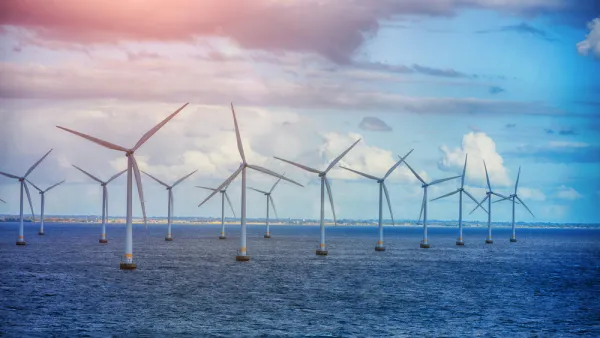
Proposed Offshore Wind Project Could Be the West Coast’s Largest
If approved, the plan to build a 2,000-megawatt facility off the coast of Washington State would be a milestone for floating offshore wind production in the United States.
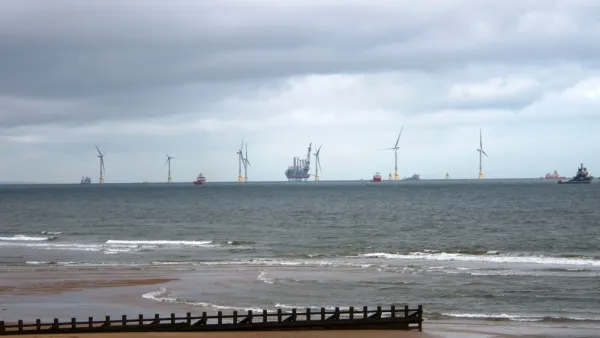
Offshore Wind Energy Blowing Up in the United States
The U.S. offshore wind industry has gained momentum in the past year and a half.
Morro Bay Could be Home to West Coast's First Offshore Wind Farm
If a Seattle company gets its way, in a few years there will be 100 floating wind turbines about 15 miles off San Luis Obispo County on the central California coast, generating about 1 gigawatt of electricity.

Planetizen Federal Action Tracker
A weekly monitor of how Trump’s orders and actions are impacting planners and planning in America.

Amtrak, CN end decades-long dispute with eight-year agreement
The new operating agreement establishes an updated framework for the companies to work together, including processes to resolve disputes.

Judges permit Denver to divert 77,000 acre feet from the Colorado River for reservoir expansion
Overuse and climate change have caused the Colorado River’s water levels to plummet.

Idaho may see an 18% drop in federal surface transit funding — the largest estimated cut in the US
Transit systems in rural communities are much more reliant on federal funding to provide their services.

How ‘post-disaster gentrification’ alters neighborhoods after natural calamities
After hurricanes, fires or other calamities, the original residents of a community are often replaced by younger, wealthier residents.

Maryland local governments examine if they should have more power to raise property taxes
Maryland’s housing market is out of reach for the majority of moderate-income residents.

FREE Course: Walkable City 1: Why Walkability?
After describing his path towards focusing on walkability as the essence of good planning, Jeff Speck marches through his five principal reasons for making more walkable places.
Reinventing Malls: Planning Alchemy—Turning Gray Fields Into Gold
The course focuses on the opportunities and imperatives that shape reinvention of mall sites.

Harvard University Graduate School of Design
KFH Group Inc.
Greater Baltimore Committee
The Architects Foundation
University of Cincinnati Online
The Pocatello Development Authority
The Urban Renewal Agency of the City of Pocatello