Rankings from the International Association of Public Transport have Tokyo on top, followed by Beijing and Shanghai. New York comes in seventh.


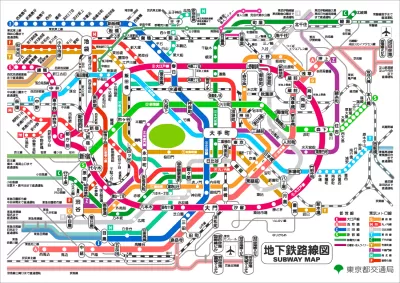
The New York subway gets pretty crowded, as does the London Tube. But the world's busiest lines operate in Asia. "New analysis from UITP, the international association of public transport, has produced a list of the ten busiest metro networks in the world, and London isn't even on it." New York places seventh by number of annual journeys.
Tokyo remains in first place with Beijing close behind. An alternate set of numbers from City Metric places Beijing ahead of Tokyo in total ridership.
Another observation from the UITP report: "One surprising result here is New York. It, too, comes in the top five in terms of stations and length of network, but drops to seventh in terms of passenger numbers. This means it's practically empty compared to the packed networks in Shanghai, Seoul, Tokyo and Beijing."
Read the full story: Most of the world's busiest metros are in Asia
The Sad Saga of Three East Coast Subways
With so much attention placed on the woes facing D.C. Metro, it's important to recognize that it is hardly the only subway facing critical infrastructure investment needs.
New York Subway Reaches One Billion Ride Milestone
The system’s 2024 performance is on track for its fastest growth since the pandemic.
L.A. Transit Surpasses 1M Weekday Riders for First Time Since Pandemic
Rail and bus ridership in the Los Angeles metropolitan area is recovering at a faster rate than the national average.

Planetizen Federal Action Tracker
A weekly monitor of how Trump’s orders and actions are impacting planners and planning in America.

California plans to bury El Niño’s downpour
If the state plays its cards right, it may be able to store a billion acre-feet of El Niño’s water in aquifers.

Desperate measures: Advocates weigh draining Lake Powell to fill Colorado River
Draining the reservoir could reduce evaporation losses by a couple hundred thousand acre-feet.

Chicago voters approve permanent festival grounds, penalty for vacant property owners
Currently, major summer and fall festivals take over public parks for weeks at a time, drawing criticism from nearby residents

NYC votes to cut outdoor dining red tape, speed up permitting
New York City also voted to allow the Department of Transportation to begin work on urgent projects before notifying elected officials.

California appears to reject Prop. 45
The proposition would have expanded the projects that qualify for a streamlined environmental review, effectively paring down the California Environmental Quality Act.

FREE Course: Walkable City 1: Why Walkability?
After describing his path towards focusing on walkability as the essence of good planning, Jeff Speck marches through his five principal reasons for making more walkable places.
Reinventing Malls: Planning Alchemy—Turning Gray Fields Into Gold
The course focuses on the opportunities and imperatives that shape reinvention of mall sites.

City of Rosemead
Rutgers University, Edward J. Bloustein School of Planning and Public Policy
One Hundred Miles
Hunter College, City University of New York (CUNY)
The Architects Foundation
University of Cincinnati Online
City of Cambridge
Montrose County
The Pocatello Development Authority