London Mayor Boris Johnson has tabled strict air-pollution controls until 2020 despite evidence of increasing pollution levels in the city's center.


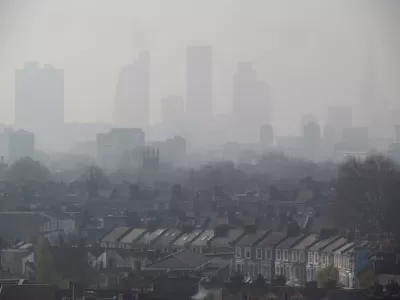
Christine L. Corton writes in The New York Times about the potential return of London's infamous pea-soup fog—a combination of natural fog and "sulfur-laden smoke" from industrial chimneys and home coal fires. The culprit this time appears to come from car exhaust.
…after several decades of cleaner air, we seem to be sliding back. Motor vehicles are now the main cause of air pollution, and campaigners are trying to create some urgency around the debate to reduce car emissions. But people are as wedded to cars now as they were tied to their open fires a century or more ago.
The last recorded case of London’s "great yellow fog" was in 1962, following the adoption of a clean Air Act in 1956 that required residents to switch from coal to cleaner sources of energy, such gas or electricity. The Clean Air Act arose after a 1952 incident, which Corton describes as a "great killer fog" that lasted five days and resulted in the deaths of an estimated 4,000 people.
Read the full story: The Return of London’s Fog

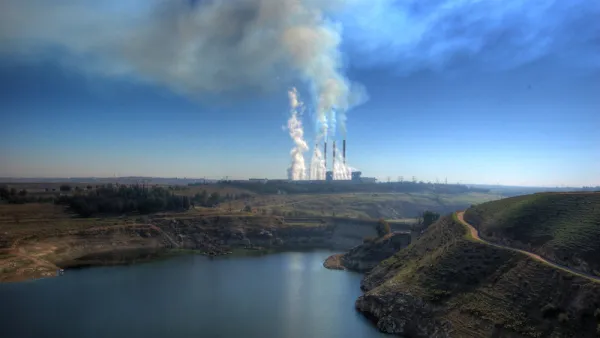
The Trump Administration's Environmental Policies Have Consequences for Black Lives
A Trump administration decision not to tighten Clean Air Act restrictions on soot pollution will have more consequences for Black Americans.
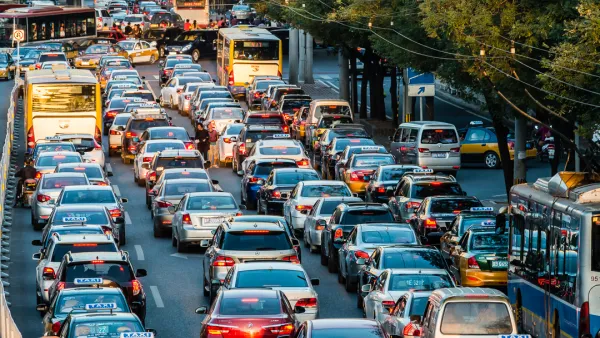
Cities Have Tried to Rein in Cars, and the Results Have Been Mixed
Vehicle pollution is making cities around the world unlivable. Some cities have taken steps to curb auto use and emissions, with varying levels of success.
Poverty and Pollution Blowing East
A new study shows how pollution and poverty can create a persistent cycle in poor neighborhoods.

Planetizen Federal Action Tracker
A weekly monitor of how Trump’s orders and actions are impacting planners and planning in America.

Amtrak, CN end decades-long dispute with eight-year agreement
The new operating agreement establishes an updated framework for the companies to work together, including processes to resolve disputes.

Judges permit Denver to divert 77,000 acre feet from the Colorado River for reservoir expansion
Overuse and climate change have caused the Colorado River’s water levels to plummet.

Atlanta City Council unanimously backs $3.5 billion Beltline light rail project
The resolution was drafted after Atlanta Mayor Andre Dickens pulled support for the Atlanta Streetcar extension last year.

SEPTA to bring nearby frequent transit to over 1 million new riders as part of decade-long plan
The agency's Accelerate plan will also bring frequent transit to twice the amount of jobs that are currently located near it.

NYC plants over 18,000 trees, the most new foliage in a decade
Many of the trees were planted in communities vulnerable to extreme heat.

FREE Course: Walkable City 1: Why Walkability?
After describing his path towards focusing on walkability as the essence of good planning, Jeff Speck marches through his five principal reasons for making more walkable places.
Reinventing Malls: Planning Alchemy—Turning Gray Fields Into Gold
The course focuses on the opportunities and imperatives that shape reinvention of mall sites.

City of Thousand Oaks
City of Wisconsin Rapids
Harvard University Graduate School of Design
The Architects Foundation
University of Cincinnati Online
The Pocatello Development Authority
The Urban Renewal Agency of the City of Pocatello