As part of the city's long-term Go Boston 2030 plan, residents were consulted about what improvements they would like to see. Answers included an end to fatal crashes and better-integrated, more frequent transit.


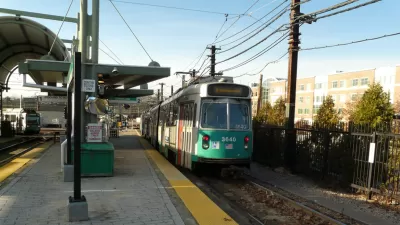
Boston is making an effort to include the opinions of a broad range of citizens in its long-range transportation planning, according to an article by Nicole Dungca. The effort involved sending "a van to different areas of the city and held several events to gather feedback on transportation; more than 6,000 residents responded. Officials then boiled down the comments to formulate respondents' most important transportation goals."
"Boston residents want the city to eliminate fatal traffic crashes, make sure every household is within a 10-minute walk of public transportation, and ensure that MBTA trains and buses arrive on time at least 90 percent of the time," writes Dungca. Additional requests included a lower default speed limit as well as train stations with adjacent bus, shuttle, and bikeshare service.
Overall, Bostonians appear eager for major transit investment, some of which would require support from state agencies. "The plan also suggests relatively inexpensive improvements, such as repainting streets and placing planters to mark bike lanes on the street. Doing so can help slow drivers in corridors and intersections known for traffic accidents."
Read the full story: Report lays out Boston’s transit wish list

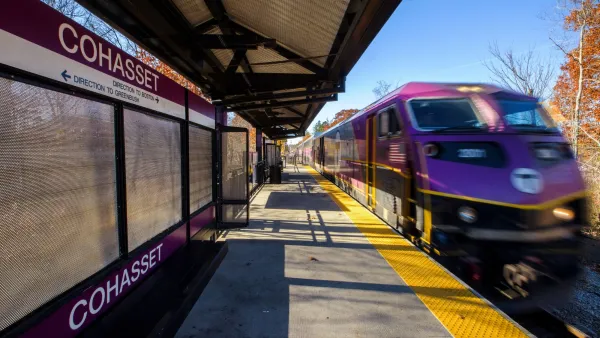
MBTA extends commuter rail discounts and lowers express bus fare to keep passengers riding into the fall
Boston-area commuters can access half-price monthly passes through November.
MBTA threatens to use eminent domain to pedestrianize Boston streets during World Cup
Boston city hall has been unusually reluctant to align with MassDOT and MBTA's proposed crowd management plans.
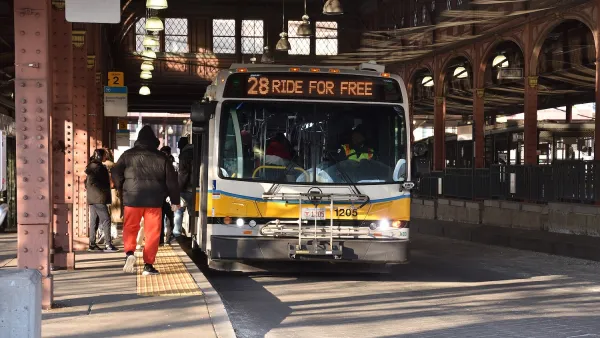
Boston’s Free Buses are Also its Slowest
Two fare-free bus lines have seen a sharp increase in travel times.

Planetizen Federal Action Tracker
A weekly monitor of how Trump’s orders and actions are impacting planners and planning in America.

Amtrak, CN end decades-long dispute with eight-year agreement
The new operating agreement establishes an updated framework for the companies to work together, including processes to resolve disputes.

Judges permit Denver to divert 77,000 acre feet from the Colorado River for reservoir expansion
Overuse and climate change have caused the Colorado River’s water levels to plummet.

NYC DOT wants faster, more permanent street upgrades
The city is examining ways to build more concrete infrastructure without getting entangled in 'decades-long' projects.

'Something we’ve never seen before:' rising utility rates could strain city finances nationwide
Data centers, climate change and other factors have caused utility rates in the United States to increase by 38% since 2020.

Trump to overrule local leaders, lease millions of acres of America’s Pacific Island territories’ seafloors to mining companies
International law says that the Indigenous people of America’s territories have a right to prior and informed consent regarding projects that impact their countries.

FREE Course: Walkable City 1: Why Walkability?
After describing his path towards focusing on walkability as the essence of good planning, Jeff Speck marches through his five principal reasons for making more walkable places.
Reinventing Malls: Planning Alchemy—Turning Gray Fields Into Gold
The course focuses on the opportunities and imperatives that shape reinvention of mall sites.

Harvard University Graduate School of Design
KFH Group Inc.
Greater Baltimore Committee
The Architects Foundation
University of Cincinnati Online
The Pocatello Development Authority
The Urban Renewal Agency of the City of Pocatello