A growing coalition of education and transit advocates are calling for a program that would allow Philadelphia-area college students to access transit for free with their student IDs.


Malcolm Burnley writes an op-ed calling for the Southeastern Pennsylvania Transportation Authority to provide free (or nearly free) transit to college students in the area—following similar models in Rhode Island and Pittsburgh.
"Beyond the improved town-and-gown connectivity, both cities and universities benefit from these programs in myriad ways. They increase sustainability goals, help retain graduates and reduce brain drain, and even curb gentrification (more on this later)," according to Burnley.
The idea to bring SEPTA to college students isn't Burnley's alone, a change.org petition is circulating, already gathering 1,080 signatures at the time of the article. According to Burnley, the petition is "calling for SEPTA to sell semester- or year-long passes to universities and colleges at a steeply discounted rate of 50 to 75 percent. In turn, the universities would charge students a nominal fee in their tuition payment—or potentially, nothing at all."
As for the earlier reference about the potential of such a program to curb gentrification, Burnl;ey shares the argument in favor of the program presented by Michael Noda of Sic Transit Philly in a post from earlier this year. Here's Noda's writing on the subject:
"Free transit for students and faculty would radically change the incentives for housing and land use in West Philadelphia and North Philadelphia, where the first few blocks beyond the campuses are increasingly an academic monoculture, rendering them unaffordable even as entire neighborhoods suffer through disinvestment and neglect a mere half-mile away. While not many students or faculty are specifically looking to move to Kingsessing or Carroll Park, a handful willing to try could do wonders for the stability of those neighborhoods, encouraging investment and slowing the displacement that is actually occurring in our city, which is driven much more by blight than by gentrification."
Read the full story: IDEAS WE SHOULD STEAL: FREE SEPTA FOR STUDENTS

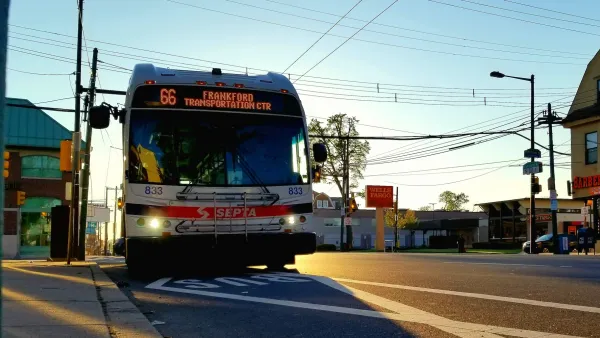
SEPTA's bus-mounted lane enforcement cameras cut travel times by up to 6%
The AI-assisted cameras have issued nearly 200,000 citations to drivers blocking bus lanes.
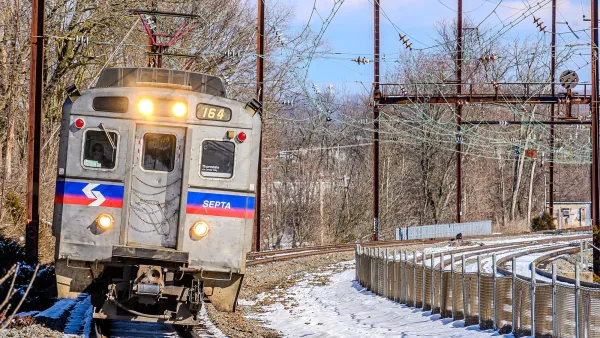
SEPTA Borrows Maryland's Rail Cars to Replace Fleet That Kept Catching Fire
The agency’s efforts to repair its Silverliner fleet is being hampered by supply chain delays.
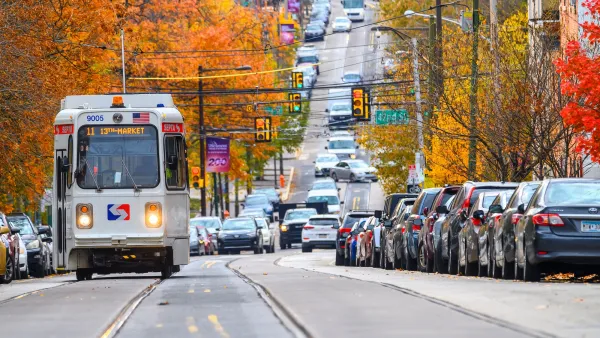
SEPTA Narrowly Avoids Strike, Walkout Still Possible
Negotiations continue this week between SEPTA officials and union leaders.

Planetizen Federal Action Tracker
A weekly monitor of how Trump’s orders and actions are impacting planners and planning in America.

The state-sanctioned urbicide of Austin
People don’t kill cities. Freeways do.

US to reduce Colorado River water deliveries to Mexico
A new Colorado Treaty amendment reduces Mexico’s Colorado River water allocation by 250,000 acre feet.

Nation's most wind-powered state turns to coal as data centers increase energy demand
For the first time in decades, Iowa has increased its generation of coal power.

NYC cools commuters with city's first rain garden above a bus stop
New York City officials say the plants in the rain garden can absorb 16 gallons of rainwater during heavy storms.

Brightline West’s future may rely on $6 billion federal loan
The company has until Nov. 2 to make a $400 million equity investment into its proposed high-speed rail line.

FREE Course: Walkable City 1: Why Walkability?
After describing his path towards focusing on walkability as the essence of good planning, Jeff Speck marches through his five principal reasons for making more walkable places.
Reinventing Malls: Planning Alchemy—Turning Gray Fields Into Gold
The course focuses on the opportunities and imperatives that shape reinvention of mall sites.

Eagle County Government
Harvard University Graduate School of Design
Nashville Planning Department
The Architects Foundation
University of Cincinnati Online
The Pocatello Development Authority
The Urban Renewal Agency of the City of Pocatello
Journal of the American Planning Association