Fayetteville, Arkansas, home to the University of Arkansas and neighbor to Bentonville, home of Walmart, has taken a national leadership role in parking policy by ending minimum parking requirements for non-residential uses.


City Council members in Fayetteville, Arkansas, recently "approved a proposal to completely eliminate minimum parking requirements for nonresidential properties," reports Todd Gill. "The change means new businesses in commercial areas will no longer be required to provide a set number of parking spaces for their customers."
Gill lays out the way the old parking requirements worked, as well as some of the arguments made by city planners to explain the change. Among the arguments in support of dropping the city's commercial parking requirements: "Planning Commissioners last month criticized the laws for not considering the location of the business and for seemingly being set to satisfy peak demand instead of normal, everyday traffic," and, "[t]he old laws, planners said, made it difficult to start small businesses and discouraged people from walking or riding bikes."
The article includes ore detail about the legal and political debate that produced the final, approved version of the new parking requirements.
Read the full story: Fayetteville eliminates minimum parking requirements

Indianapolis rents grew by 30% since 2020
The metro area has a shortage of roughly 137,000 affordable homes for the lowest-income households.
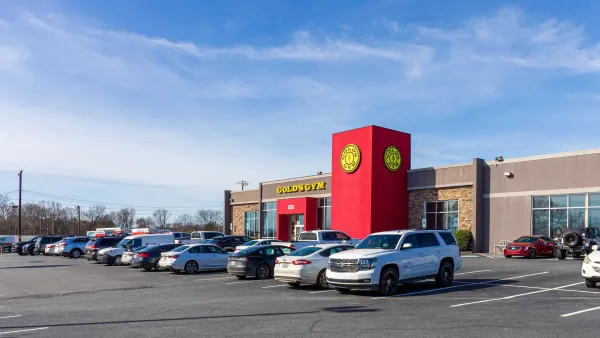
North Carolina eliminates parking minimums in most of state
A new state law prevents cities from requiring a certain number of parking spaces for new developments.
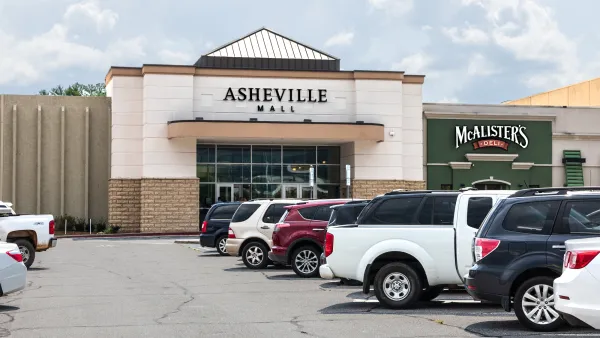
Asheville reconsiders parking minimums as surface parking eats up over a third of downtown real estate
Housing advocates say parking requirements are unnecessary and induce sprawl.

Planetizen Federal Action Tracker
A weekly monitor of how Trump’s orders and actions are impacting planners and planning in America.

Washington state to charge fee to drivers with fuel-efficient cars
Revenue from the fee will go towards supporting the state’s highways.

Illinois considers spending $1 billion in taxpayer money on data center
A quantum computing campus and data center are currently under construction in Chicago.

Senate passes bill overhauling permitting
The bill still needs to pass the House.

Did data centers change how voters cast their ballots?
Texas, Ohio, and Georgia all flipped party control. But in rural counties, the effect of local data centers was mixed.

Amtrak invests in eight new Airo trainsets
The new trainsets will begin serving passengers in 2031.

FREE Course: Walkable City 1: Why Walkability?
After describing his path towards focusing on walkability as the essence of good planning, Jeff Speck marches through his five principal reasons for making more walkable places.
Reinventing Malls: Planning Alchemy—Turning Gray Fields Into Gold
The course focuses on the opportunities and imperatives that shape reinvention of mall sites.

City of Charlotte
City of Rosemead
Rutgers University, Edward J. Bloustein School of Planning and Public Policy
University of Michigan School for Environment and Sustainability (SEAS)
Hunter College, City University of New York (CUNY)
The Architects Foundation
University District Partnership