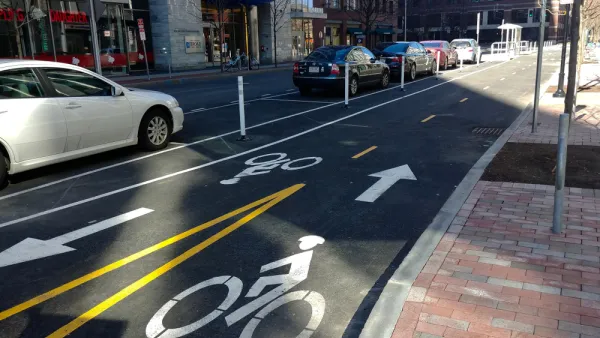
A new study of the benefits of a bike lane project in Salt Lake City adds to the body of work suggesting that complete streets overhauls are a good investment for both the public and the private sectors.


"A growing body of evidence suggests that if bike lanes and parking removal are part of a general plan to slow traffic, everybody can win," according to a post by Michael Anderson. The latest example: Salt Lake City, where a recently released study "found that when parking removal was done as part of a wide-ranging investment in the streetscape — including street planters, better crosswalks, public art and colored pavement — it converted parking spaces to high-quality bike lanes and boosted business at the same time."
Anderson provides details on the nine-block bike lane project, located in the city's historic downtown business corridor, as well as some of the findings of the report. The bike lane required parking reductions, parking reconfigurations, and fewer vehicle travel lanes. The kicker on the difference the new bike lane made: sales rose 8.8 percent along the corridor after the street configuration overhaul, compared to 7 percent citywide.
Anderson is also careful to note, that the jump in bike traffic on the street that came as a result of the new bike lane is probably not solely responsible for the jump in sales: "But that's probably not the main reason for the sales jump. Instead — as on New York City streets, which found extremely similar results in a similar 2013 study of sales tax data — Salt Lake City's experience shows that bike lanes are typically best for business when they're part of a general rethinking of the street to make it a more pleasant place to linger."
Read the full story: SALT LAKE CITY STREET REMOVES PARKING, ADDS BIKE LANES AND SALES GO UP
Nation's Top Safety Board Recommends Protected Bike Lanes
The NTSB chair issued a stark warning on Nov. 5: "If we do not improve roadway infrastructure for bicyclists, bicyclists will die who otherwise would not," stated Robert Sumwalt in introducing their first report in 47 years devoted to bike safety.
Denver Divvying Up More of its Street Space for Not Cars
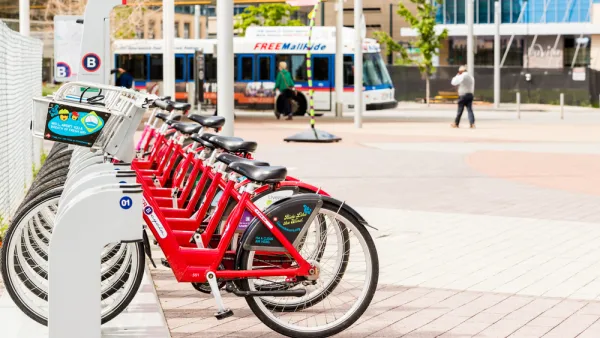
Denver is in the process of rolling out a transportation experiment to the residents of the region: separating street space for transit and active transportation can serve all users and doesn't have to be the end of the world for drivers either.
America's Second Protected Intersection Now Open
The first protected intersection opened in August in Davis, Calif., a university town with the nation's highest percentage of bike commuters. Salt Lake City's new protected intersection is explained on NPR's "Here & Now" report with audio and videos.

Planetizen Federal Action Tracker
A weekly monitor of how Trump’s orders and actions are impacting planners and planning in America.

Eastern Nebraska is running out of electricity
Data centers and electrification are straining eastern Nebraska’s grid, throttling economic development.

Move over, LA: St. Louis gears up for Olympics, invests millions in downtown redevelopment
The Missouri city will host the 2028 Olympic soccer group stage and knockout matches.

Dallas releases zoning code overhaul to officials
The drafted overhaul is over 400 pages long.

NYC renovations for dangerous, ‘mercilessly crammed’ street delayed until 2027
Construction was supposed to begin this fall.

San Diego’s Midway Rising project gets greenlight from city council
The project looks to become the largest affordable housing development in California's history.

FREE Course: Walkable City 1: Why Walkability?
After describing his path towards focusing on walkability as the essence of good planning, Jeff Speck marches through his five principal reasons for making more walkable places.
Reinventing Malls: Planning Alchemy—Turning Gray Fields Into Gold
The course focuses on the opportunities and imperatives that shape reinvention of mall sites.

City of Rosemead
Rutgers University, Edward J. Bloustein School of Planning and Public Policy
One Hundred Miles
University of Michigan School for Environment and Sustainability (SEAS)
Hunter College, City University of New York (CUNY)
The Architects Foundation
City of Cambridge
The Pocatello Development Authority
The Urban Renewal Agency of the City of Pocatello