In what is described as a "Penn Station moment," Dallas has approved a demolition delay ordinance for historic buildings downtown. This is an uncharacteristic victory for preservation.


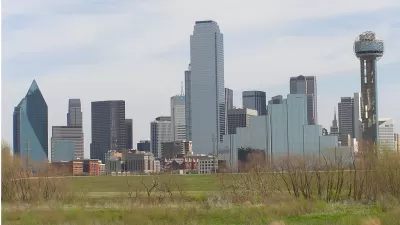
Architecture critic Mike Lamster compares what's happening in Dallas to New York's 1964 demolition of the old Pennsylvania Station. "When it was razed, and then replaced with a lifeless office tower and a subterranean rats-nest for commuters, the public finally began to grasp what it had been losing in the name of progress."
A year ago, Lamster reports, "developer Tim Headington began demolition of a series of century-old downtown buildings listed on the National Register of Historic Places [...] That outrage prompted Mayor Mike Rawlings to form the Downtown Historic Preservation Task Force."
Recently, acting on the Task Force's recommendation, "City Council has approved a demolition delay ordinance that will place a 10-day moratorium on razings to allow for review by the city's Landmarks Commission, which can halt proceedings further if a property is determined to be of historic significance."
Despite the ordinance's limits, Lamster writes that it is sorely needed in a city that often replaces classic buildings with something bigger, but not necessarily better.
Read the full story: Has Dallas had its Penn Station moment?

Planetizen Federal Action Tracker
A weekly monitor of how Trump’s orders and actions are impacting planners and planning in America.

Eastern Nebraska is running out of electricity
Data centers and electrification are straining eastern Nebraska’s grid, throttling economic development.

Study reveals best places in the U.S. for cycling, walking
New research from Streetlight Data examines bicycle and pedestrian miles per capita in the 100 largest U.S. cities by population.

Federal government nominates new FTA administrator
Mark Aesch is currently the founder and CEO of a transportation management consulting firm.

Developers reveal $10 billion stadium plan as ‘Hail Mary’ to keep Bears in Chicago
The plan would also boast a public park, high- and mid-rise buildings and a youth sports complex.

As Texas embraces carbon storage, a Black community questions the risks
Texas now issues permits for companies to store carbon dioxide underground. East Texas residents fear safety risks, and skeptics doubt the climate benefits.

FREE Course: Walkable City 1: Why Walkability?
After describing his path towards focusing on walkability as the essence of good planning, Jeff Speck marches through his five principal reasons for making more walkable places.
Reinventing Malls: Planning Alchemy—Turning Gray Fields Into Gold
The course focuses on the opportunities and imperatives that shape reinvention of mall sites.

City of Charlotte
City of Rosemead
Rutgers University, Edward J. Bloustein School of Planning and Public Policy
University of Michigan School for Environment and Sustainability (SEAS)
Hunter College, City University of New York (CUNY)
The Architects Foundation
City of Cambridge
The Pocatello Development Authority
The Urban Renewal Agency of the City of Pocatello