An op-ed in The Globe and Mail expresses animosity for the wave of skyscraper construction in old world cities like London.


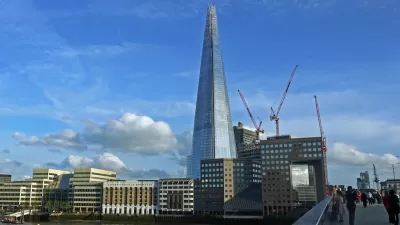
Eric Reguly laments the construction of skyscrapers in the European Union, especially in London, where locals have assigned pejorative nicknames, like the Gherkin, the Cheesegrater and the Walkie Talkie, to the skyline's newcomers.
"The problem isn’t modern architecture per se. When the modern complements the old, it can enhance a city—the Blackfriars station, the Sainsbury Wing of London’s National Gallery and even the glass pyramid at the Louvre are all examples. But when the scale is enormous, and when it has no connection to the features that have given the city its personality for hundreds of years, it overshadows that city’s character. The new look is bland and homogenized."
Reguly notes that Toronto, Paris, and other European capitals are joining the "vertical sweepstakes" and identifies a few problems with the trend. The talking points in the anti-skyscraper argument, as listed by Reguly, include environmental concerns, the single-purpose nature of many of the structures, and the loss of urban identity.
Read the full story: Why skyscrapers are killing great cities
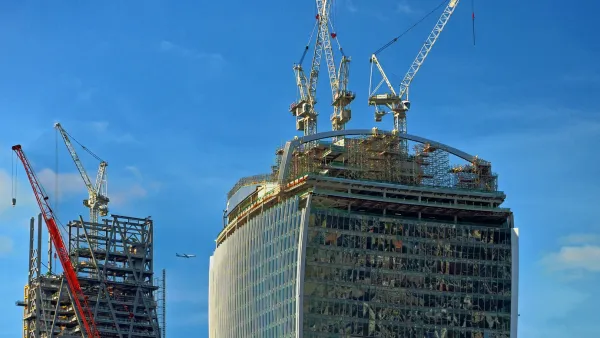
New Skyscraper Blooming on London's Skyline
A new tulip-shaped tower designed by Foster + Partners is planned for London. Approval is still pending.
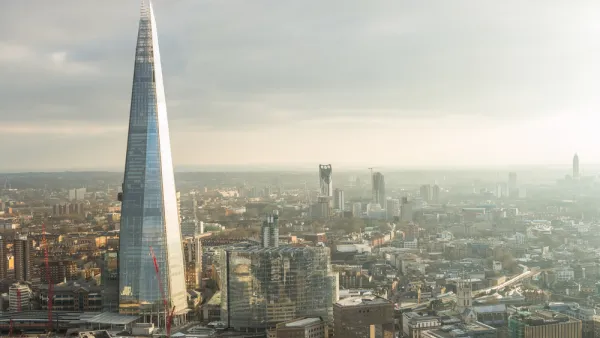
London's Skyline Getting a Tall Makeover
The Diamond will be the third tallest building in London when it's complete. The two taller buildings aren't built yet either.
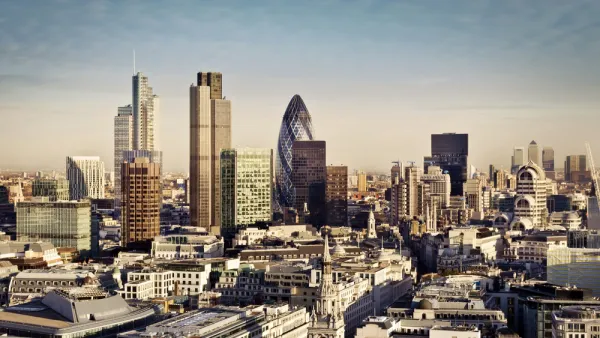
London's Tallest Buildings Currently Under Construction
In a growing London, skyscrapers seem to be popping up everywhere, We Plan London catalogs the ten tallest.

Planetizen Federal Action Tracker
A weekly monitor of how Trump’s orders and actions are impacting planners and planning in America.

California plans to bury El Niño’s downpour
If the state plays its cards right, it may be able to store a billion acre-feet of El Niño’s water in aquifers.

Desperate measures: Advocates weigh draining Lake Powell to fill Colorado River
Draining the reservoir could reduce evaporation losses by a couple hundred thousand acre-feet.

Housing is the top priority of Seattle’s sole new councilmember
Jenks campaigned on building 1,000 new units of affordable housing.

New tax cuts may slash $1.5 billion in funding for Miami transit, public parks
Amendment 3 will save Miami-Dade homeowners $2,700 in 2028.

Arizona, Wisconsin, Pennsylvania hope to finally advance climate goals post-midterms
The three states have spent years under Republican or divided control.

FREE Course: Walkable City 1: Why Walkability?
After describing his path towards focusing on walkability as the essence of good planning, Jeff Speck marches through his five principal reasons for making more walkable places.
Reinventing Malls: Planning Alchemy—Turning Gray Fields Into Gold
The course focuses on the opportunities and imperatives that shape reinvention of mall sites.

City of Rosemead
Rutgers University, Edward J. Bloustein School of Planning and Public Policy
One Hundred Miles
University of Michigan School for Environment and Sustainability (SEAS)
Hunter College, City University of New York (CUNY)
The Architects Foundation
City of Cambridge
Montrose County
The Pocatello Development Authority