An analysis of infill transit stations built since 2012 along "L" routes in Chicago shows clear increases in ridership and transit oriented development.


"Over the past few years, Chicago has invested in three new 'infill' stations located along existing ‘L’ tracks, filling service gaps between stops and expanding access to the transit system," according to an article by Yonah Freemark and Mengwei Sun that credits those infill station with some of the increased ridership on the system as well as new opportunities for transit oriented development.
The CTA opened two infill stations in 2012, according to the article, "one at Morgan Street on the Green and Pink Lines and one at Oakton Street on the Yellow Line." Another station "opened at Cermak Road on the Green Line near the McCormick Place convention center in the South Loop neighborhood."
As Freemark and Sun note, "Morgan Station has been particularly effective in bringing new development to the West Loop and now attracts more than 2,300 daily riders as of March 2015." TheCermak-McCormick Place station, though brand new, has had an immediate impact on ridership. The article digs deeper into the initial data available for analysis in the wake of the new station's opening, on ridership on the "L" line, its effect on nearby bus lines, and its effect on the local real estate market.
FULL STORY: How the Cermak-McCormick ‘L’ station could create a real estate boom in the South Loop

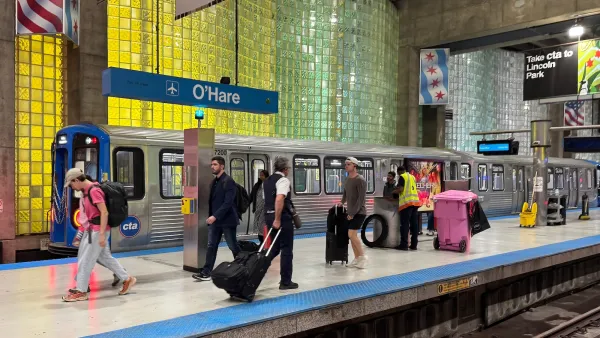
CTA underestimated Chicago transit ridership by 19 million trips
The agency is moving from using farebox data and manual video reviews to automatic counters that more accurately measure the total number of riders, whether or not they pay full fares.
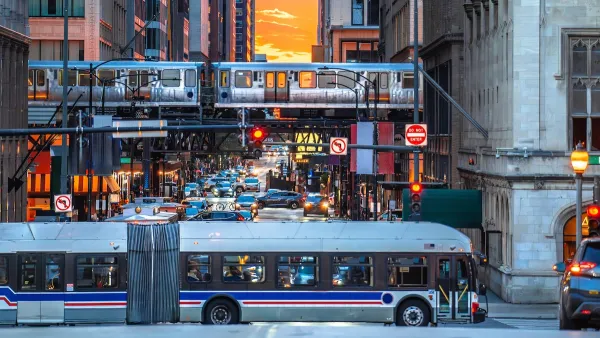
Chicago Transit Agencies on Brink of Major Crisis
Without additional funding, regional transit agencies will be forced to cut services by 40 percent.

Study: Most Chicago Rideshare Trips Could Be Made by Transit
Researchers found that 99 percent of rideshare trips could be made by buses and trains — but the time savings roughly equal an hour’s wage.

Planetizen Federal Action Tracker
A weekly monitor of how Trump’s orders and actions are impacting planners and planning in America.

The state-sanctioned urbicide of Austin
People don’t kill cities. Freeways do.

US to reduce Colorado River water deliveries to Mexico
A new Colorado Treaty amendment reduces Mexico’s Colorado River water allocation by 250,000 acre feet.

5 New England states march closer to 800 megawatt wind energy project
Securing federal approval for the project may be complicated under the Trump administration, which has historically been hostile towards domestic wind power.

Baltimore to break ground on $50 million Transit Priority Project
The project will bring faster bus trips, safer streets and better bike connections to Baltimore.

Airbnb launches $250 million 'last-dollar financing' housing accelerator, makes first investment in Austin
The company will put $6.4 million towards affordable housing development in Texas’ capital.

FREE Course: Walkable City 1: Why Walkability?
After describing his path towards focusing on walkability as the essence of good planning, Jeff Speck marches through his five principal reasons for making more walkable places.
Reinventing Malls: Planning Alchemy—Turning Gray Fields Into Gold
The course focuses on the opportunities and imperatives that shape reinvention of mall sites.

Eagle County Government
Harvard University Graduate School of Design
Nashville Planning Department
The Architects Foundation
University of Cincinnati Online
The Pocatello Development Authority
The Urban Renewal Agency of the City of Pocatello
Journal of the American Planning Association