Currently in its early stages, Project Sunroof tracks how much sun every roof receives. Then it estimates the costs and savings if rooftop solar were installed. Right now, the tool only covers the Bay Area, Fresno, and Boston.


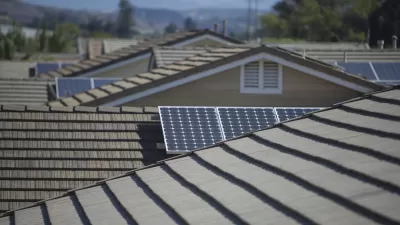
Google wants to make it easier for homeowners to think about going solar. A new map-based tool, Project Sunroof, lets users check whether their home (or any other structure within the coverage area) gets enough sunlight to warrant solar installation. Then it estimates costs and savings. In its current stage, the tool only covers the Bay Area, Fresno, and Boston.
Once you look up an address, "you can fine-tune the estimate to figure out whether solar panels on your roof make financial sense, by plugging in your monthly electric bill, choosing a financing option (leasing versus loans versus buying), and so forth."
Project Sunroof's estimates take local circumstances into account. "California, for instance, has high electricity prices, which means there are bigger potential savings from installing rooftop solar. The tool also factors in various regional policy incentives — like state tax incentives, local rebates, and what kind of net metering rules a state has [...]"
The article discusses how residents of multi-family dwellings can take advantage of community solar. "These are programs in which people who don't own suitable roofs can agree to 'subscribe' to electricity from a solar PV project elsewhere. They then pay a monthly charge that appears on their utility bill."
Read the full story: Are solar panels right for you? Google's new mapping tool can help you decide
Mapping Rooftop Solar to Make It a Social Norm
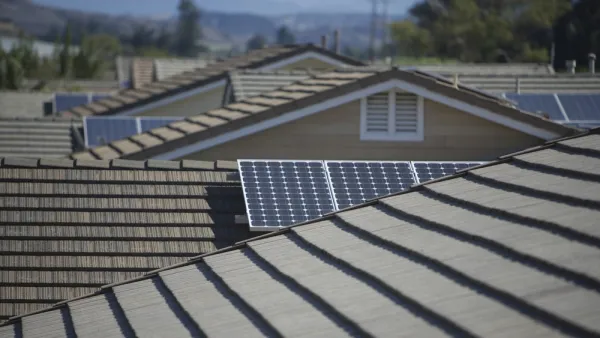
Debuted in 2015, Google's Project Sunroof is designed make it easier for homeowners to go solar. Now the tool is harnessing peer pressure to "create a social norm" around solar.
California Leads in Solar Rooftops
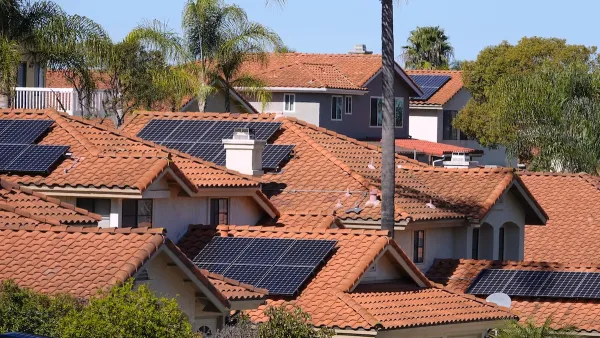
A combination of state and local incentives and building code mandates has helped California far outpace other states in residential rooftop solar permits.
Commercial Buildings, Parking Lots Offer Significant Potential for Solar Energy
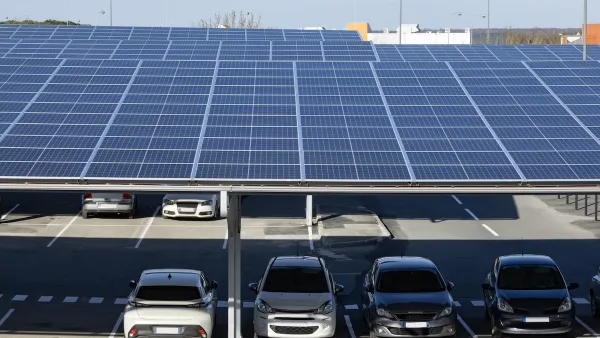
Massive swaths of flat rooftops, garages, and surface parking lots go underutilized. They could be producing renewable energy.

Planetizen Federal Action Tracker
A weekly monitor of how Trump’s orders and actions are impacting planners and planning in America.

California plans to bury El Niño’s downpour
If the state plays its cards right, it may be able to store a billion acre-feet of El Niño’s water in aquifers.

Desperate measures: Advocates weigh draining Lake Powell to fill Colorado River
Draining the reservoir could reduce evaporation losses by a couple hundred thousand acre-feet.

US buildings threatened, destroyed by fires set to triple by 2060
Researchers found a high fire risk for socioeconomically vulnerable neighborhoods in the American West.

LA residents may be allowed to paint their own crosswalks
Councilwoman Katy Yaroslavsky put out a motion instructing the Los Angeles Department of Public Transportation to study the feasibility of allowing volunteers to paint crosswalks.

Dallas moves to overhaul its zoning code
The city's zoning reform will allow more multi-family and mixed-use developments.

FREE Course: Walkable City 1: Why Walkability?
After describing his path towards focusing on walkability as the essence of good planning, Jeff Speck marches through his five principal reasons for making more walkable places.
Reinventing Malls: Planning Alchemy—Turning Gray Fields Into Gold
The course focuses on the opportunities and imperatives that shape reinvention of mall sites.

City of Rosemead
Rutgers University, Edward J. Bloustein School of Planning and Public Policy
One Hundred Miles
Hunter College, City University of New York (CUNY)
The Architects Foundation
University of Cincinnati Online
City of Cambridge
Montrose County
The Pocatello Development Authority