Virgil Bogue's 1911 Plan of Seattle called for a centrally-planned metropolis with efficient transit, parks, and a cap on building height. It was voted down, but remains an interesting study on planning for the long term.


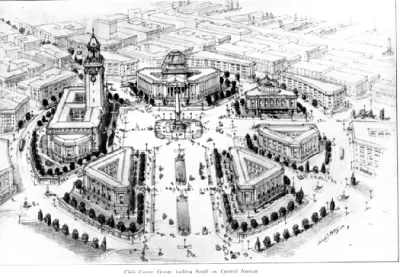
Seattle grew by leaps and bounds from the 1870s through the early 20th century. Expecting future expansion, engineer Virgil Bogue developed a comprehensive plan to accommodate over a million people. The ambitious project failed to garner enough support, but in today's transit-friendly climate it's an interesting piece of 20th-century planning that pays little attention to cars.
The 1911 plan's street layout has a European feel. "Downtown buildings are capped in height, much like Paris, so as to let light into downtown streets. Mercer Island is one big park, restricted from development. And city government offices are condensed in a grand civic center across Denny Way from where Seattle Center now sits."
The New York Subway got its start in 1904 (and Boston's in 1897), so it's not inconceivable to imagine a Seattle line. Bogue wrote, "The city's growth will be retarded with a tendency to develop congested, undesirable and unhealthful districts unless rapid transit facilities are provided."
Bogue's proposed mass transit seems like a missed opportunity these days. However, as historian Leonard Garfield puts it, "what we take from the Bogue plan is that ideas that are too grandiose won't have the support of the people."
Read the full story: What would Seattle be like today if the 'Bogue' plan passed in 1912?


A Cheer (Or Maybe Even Two) For Redundancy
Is government too efficient to protect us from epidemics?
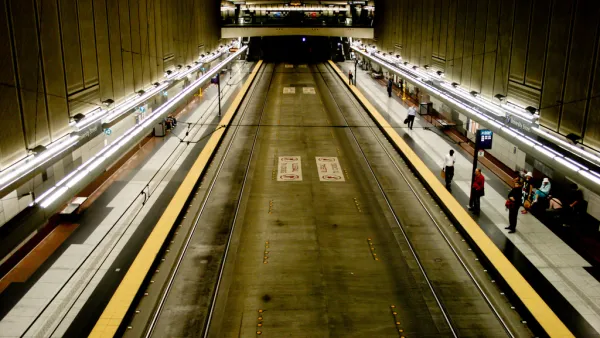
Light Rail Ridership Takes Off in Seattle After Expansion
Besting all expectations, ridership numbers have increased 83 percent since Seattle's Sound Transit light rail system added two new stations, connecting downtown to the city's Capitol Hill neighborhood and the University of Washington.
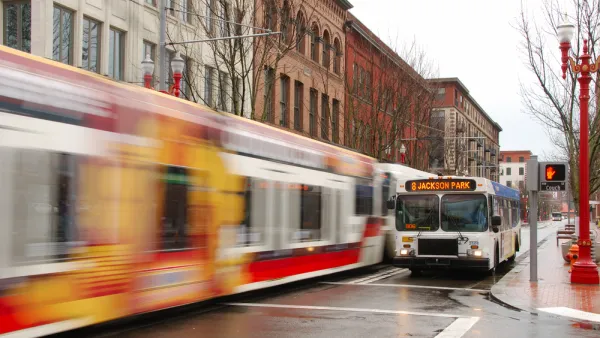
Rail Transit: You Get What You Pay For
Seattle Transit blog compares rail investments from five cities around the country.

Planetizen Federal Action Tracker
A weekly monitor of how Trump’s orders and actions are impacting planners and planning in America.

Amtrak, CN end decades-long dispute with eight-year agreement
The new operating agreement establishes an updated framework for the companies to work together, including processes to resolve disputes.

Judges permit Denver to divert 77,000 acre feet from the Colorado River for reservoir expansion
Overuse and climate change have caused the Colorado River’s water levels to plummet.

NYC DOT wants faster, more permanent street upgrades
The city is examining ways to build more concrete infrastructure without getting entangled in 'decades-long' projects.

'Something we’ve never seen before:' rising utility rates could strain city finances nationwide
Data centers, climate change and other factors have caused utility rates in the United States to increase by 38% since 2020.

Trump to overrule local leaders, lease millions of acres of America’s Pacific Island territories’ seafloors to mining companies
International law says that the Indigenous people of America’s territories have a right to prior and informed consent regarding projects that impact their countries.

FREE Course: Walkable City 1: Why Walkability?
After describing his path towards focusing on walkability as the essence of good planning, Jeff Speck marches through his five principal reasons for making more walkable places.
Reinventing Malls: Planning Alchemy—Turning Gray Fields Into Gold
The course focuses on the opportunities and imperatives that shape reinvention of mall sites.

Harvard University Graduate School of Design
KFH Group Inc.
Greater Baltimore Committee
The Architects Foundation
University of Cincinnati Online
The Pocatello Development Authority
The Urban Renewal Agency of the City of Pocatello