For the first time, full-color videos of the earth's surface will be made available to the public, with added options for paying customers. The imagery comes from two cameras on the International Space Station.



The satellite imagery company Urthecast "operates two cameras on the International Space Station that cost $35 million to develop. Today, it unveiled the first full-color video of earth taken from space."
The video content, which will be the first of its kind made available to the public (rather than military intelligence), gives viewers a bird's-eye view of cities, with moving traffic visible. "The company plans to offer the imagery in several tiers, from a free video feed on its website to an API that will allow customers, including corporations, governments and individuals, to purchase imagery data from its database or make real-time requests for a look at a given spot on the earth."
Urthecast seems keen to address privacy concerns: "And if you're freaked out about being filmed from above, Urthecast's executives say that their cameras can't see faces or identify license plates–but also that 50 or more cameras on government satellites could be taking pictures of you every day." See the article for several clips of the footage.
Read the full story: These are the first full-color HD videos of earth from the International Space Station

Visualizing the Coronavirus Pandemic
Mapping of the crisis is producing a fascinating and important trove of cartographic records.
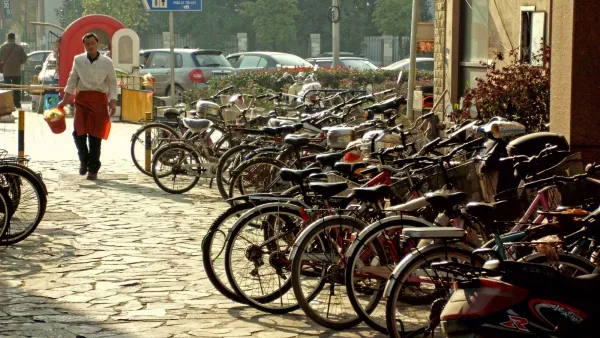
Friday Eye Candy: 195 Gigapixels of Urban Glory
An incredibly detailed bird's eye view of Shanghai.
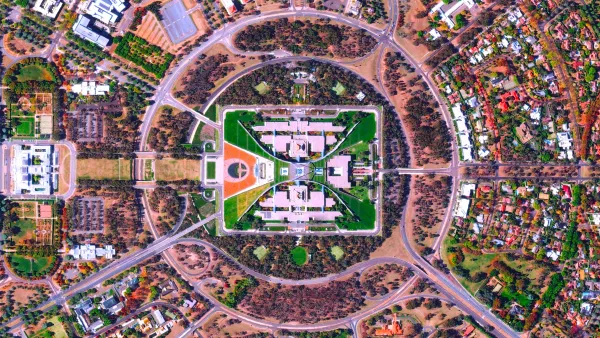
Looking for Inspiration? Try a Daily Dose of a Satellite's Perspective
Here's a strange idea that just might work: viewing the planet from afar might offer the perspective necessary to care for and protect our place in the universe.

Desperate measures: Advocates weigh draining Lake Powell to fill Colorado River
Draining the reservoir could reduce evaporation losses by a couple hundred thousand acre-feet.

Eastern Nebraska is running out of electricity
Data centers and electrification are straining eastern Nebraska’s grid, throttling economic development.
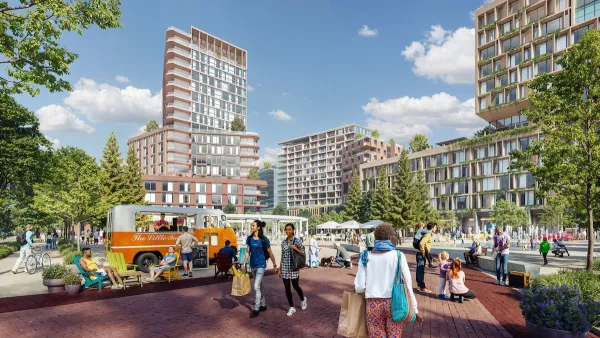
Malls are becoming the midtowns of the future
Mall and office park redevelopments are a generational opportunity to create new nodes of urbanity.

NYC breaks ground on anti-flooding infrastructure project
New York City's new system will reduce stormwater flows to local sewers by 90%.

One Kentucky town’s secret to affordable housing
The Smoketown Community Land Trust has already built seven affordable homes for community members.

Houston gains petal-shaped cooling infrastructure to make streets more ‘delightful’
The city has installed the pavilions along 15 blocks in Houston.

FREE Course: Walkable City 1: Why Walkability?
After describing his path towards focusing on walkability as the essence of good planning, Jeff Speck marches through his five principal reasons for making more walkable places.
Reinventing Malls: Planning Alchemy—Turning Gray Fields Into Gold
The course focuses on the opportunities and imperatives that shape reinvention of mall sites.

City of Rosemead
Rutgers University, Edward J. Bloustein School of Planning and Public Policy
One Hundred Miles
University of Michigan School for Environment and Sustainability (SEAS)
Hunter College, City University of New York (CUNY)
The Architects Foundation
City of Cambridge
Montrose County
The Pocatello Development Authority