Until advocates and agencies find positive stories to tell about multi-modal decision-making the car will continue to dominate the messaging and branding of contemporary culture.


"Better streets, transit lines, and bike lanes are wonderful things. But for communities hoping to kick the car habit, good marketing and public relations matter just as much as the infrastructure itself," writes Dan Malouff.
Malouff is inspired by the StreetsCamp event held last weekend. One of the event's panels focused on how marketing influences perceptions of transportation. According to Malouff, "about 100 years ago one of the most effective public-relations campaigns in the history of mankind convinced everyone that streets belong to cars, and walking is dangerous."
A century later, writes Malouff, "we're still dealing with the consequences." The article follows with several examples of advertising and messaging campaigns that make cars seem like the only viable option for mobility.
The key to changing the pitch for alternative transportation: positive, personal stories. Examples cited by Malouff include the car-free diet and Be a PAL campaigns in Arlington, Virginia.
Read the full story: Why positive storytelling matters to transportation


Two Popular Business Books for Planners
Mining the business world for lessons about the planning profession.
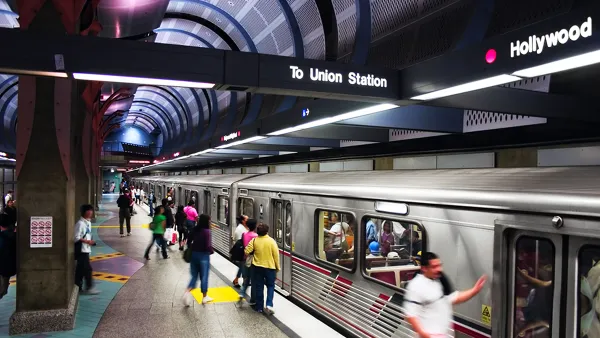
Making Metro Cool
Michael Lejeune is the creative director for the Los Angeles County Metropolitan Transportation Authority, and as such he's tasked with making transit cool in a city that long worshipped the automobile.
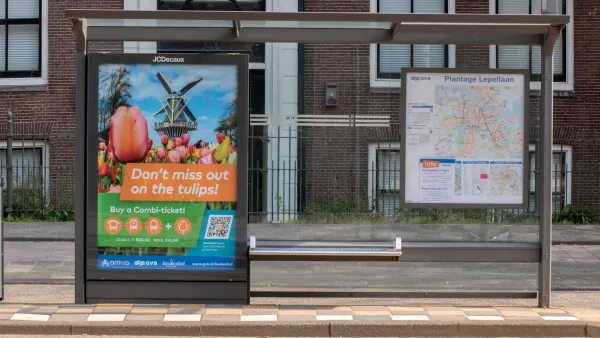
Amsterdam is First World Capital to Ban Ads for Fossil Fuels on Public Infrastructure
Several other Dutch cities have banned advertising for harmful or polluting industries on city-owned properties.

Planetizen Federal Action Tracker
A weekly monitor of how Trump’s orders and actions are impacting planners and planning in America.

Amtrak, CN end decades-long dispute with eight-year agreement
The new operating agreement establishes an updated framework for the companies to work together, including processes to resolve disputes.

Judges permit Denver to divert 77,000 acre feet from the Colorado River for reservoir expansion
Overuse and climate change have caused the Colorado River’s water levels to plummet.

Idaho may see an 18% drop in federal surface transit funding — the largest estimated cut in the US
Transit systems in rural communities are much more reliant on federal funding to provide their services.

How ‘post-disaster gentrification’ alters neighborhoods after natural calamities
After hurricanes, fires or other calamities, the original residents of a community are often replaced by younger, wealthier residents.

Maryland local governments examine if they should have more power to raise property taxes
Maryland’s housing market is out of reach for the majority of moderate-income residents.

FREE Course: Walkable City 1: Why Walkability?
After describing his path towards focusing on walkability as the essence of good planning, Jeff Speck marches through his five principal reasons for making more walkable places.
Reinventing Malls: Planning Alchemy—Turning Gray Fields Into Gold
The course focuses on the opportunities and imperatives that shape reinvention of mall sites.

Harvard University Graduate School of Design
KFH Group Inc.
Greater Baltimore Committee
The Architects Foundation
University of Cincinnati Online
The Pocatello Development Authority
The Urban Renewal Agency of the City of Pocatello