The diversity gap between the population of Washington, D.C. and the membership of its model bikeshare system is well established, but it's also getting worse.


"A new survey suggests that an increasing number of Washington area residents are dumping their cars and Metro and hopping on bikes to get to and from work," reports Luz Lazo.
Although membership rose from 24,800 to 31,500 last year, the survey also noted a disappointing trend in the diversity of the system's users. Lazo explains:
"Bikeshare users tend to be are young, professional, and the vast majority of them are white. What’s more troubling in this latest set of data is that the percentage of white users has widened since the system started in 2010..."
The numbers to back up that statement:
"About 85 percent of users are white; 5 percent of survey respondents identified themselves as Hispanic and 3 percent African American. In 2012, 80 percent of users were white."
Lazo goes on to cite more data from the survey suggesting other trend toward affluent, white males and away from everyone else.
Read the full story: Who uses Capital Bikeshare?

'Community Partners Program' Offers $5 Memberships for Capital Bikeshare
The new Community Partners Program will help Capital Bikeshare respond to concerns about the system's lack of access for low-income and minority residents.
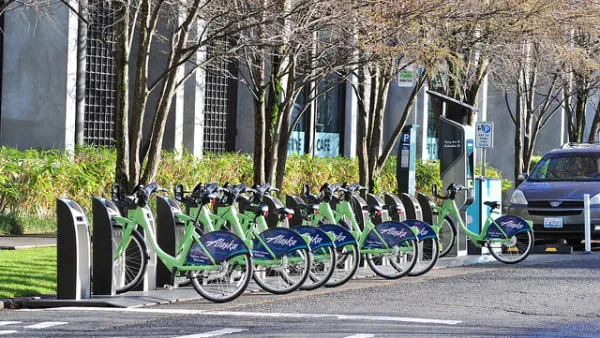
Why Bikeshare Doesn't Appeal to Low-Income Commuters
While bikeshare garners a lot of attention from the white and wealthy, it is a less obvious choice for low-income communities. Difficulties include weather, time constraints, and overall demand for non-auto modes.
The Right to Mobility
As we consider how to decarbonize transportation, preserving mobility, especially for lower- and middle-income people, must be a priority.

Planetizen Federal Action Tracker
A weekly monitor of how Trump’s orders and actions are impacting planners and planning in America.

Amtrak, CN end decades-long dispute with eight-year agreement
The new operating agreement establishes an updated framework for the companies to work together, including processes to resolve disputes.

Judges permit Denver to divert 77,000 acre feet from the Colorado River for reservoir expansion
Overuse and climate change have caused the Colorado River’s water levels to plummet.

NYC DOT wants faster, more permanent street upgrades
The city is examining ways to build more concrete infrastructure without getting entangled in 'decades-long' projects.

'Something we’ve never seen before:' rising utility rates could strain city finances nationwide
Data centers, climate change and other factors have caused utility rates in the United States to increase by 38% since 2020.

Trump to overrule local leaders, lease millions of acres of America’s Pacific Island territories’ seafloors to mining companies
International law says that the Indigenous people of America’s territories have a right to prior and informed consent regarding projects that impact their countries.

FREE Course: Walkable City 1: Why Walkability?
After describing his path towards focusing on walkability as the essence of good planning, Jeff Speck marches through his five principal reasons for making more walkable places.
Reinventing Malls: Planning Alchemy—Turning Gray Fields Into Gold
The course focuses on the opportunities and imperatives that shape reinvention of mall sites.

Harvard University Graduate School of Design
KFH Group Inc.
Greater Baltimore Committee
The Architects Foundation
University of Cincinnati Online
The Pocatello Development Authority
The Urban Renewal Agency of the City of Pocatello