The First Hill line's streetcars are set to begin service in summer of 2015, and the city is already assembling funds for an extension.


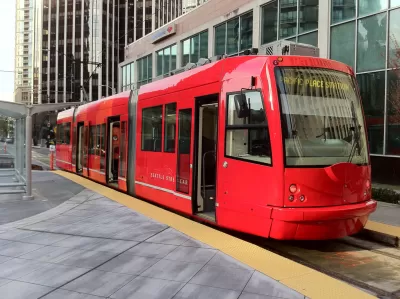
Preliminary tests are in progress for Seattle's new baby-blue First Hill streetcars. A total of six cars will serve central Seattle, part of a broad vision to extend streetcar service throughout the city. Previous mayor Mike McGinn envisioned the streetcar project as a tool to revitalize Broadway.
From the article: "Delivery of the streetcars has caused multiple delays for the more-than-$130 million project, but passenger service is expected to start this summer. The First Hill line is expected to serve about 3,500 riders a day, making 10 stops on its 2.5-mile route through Capitol Hill, First Hill, the International District and ending in Pioneer Square. Eventually, the city plans to connect the First Hill and South Lake Union routes."
Plans are currently in the works for an estimated $25 million Broadway extension of the streetcar route, "showing an additional half-mile north to Roy Street that would significantly change the landscape of Broadway by cutting multiple left turns and improving the streetscape."
Read the full story: Streetcar Plans On Track
Seattle Streetcar Extension Looks Unlikely to Proceed
A proposal to extend the First Hill Streetcar along Broadway in Capitol Hill has lost the support of some of its key stakeholders and now looks very much in doubt.
Doubts Raised About Revenue Model for Seattle's Expanded Streetcar
Can an expansion of Seattle's streetcar system somehow outperform its previous iterations, and all other public transit modes in the city?
Seattle's First Hill Streetcar Delayed by Late Arrival of Trains
It's not a mishap on the scale of the Bertha tunnel-boring machine stuck under Seattle's Downtown waterfront, but contractors underestimated the amount of time necessary to build seven trains for the city's new streetcar line.

Planetizen Federal Action Tracker
A weekly monitor of how Trump’s orders and actions are impacting planners and planning in America.

California plans to bury El Niño’s downpour
If the state plays its cards right, it may be able to store a billion acre-feet of El Niño’s water in aquifers.

Desperate measures: Advocates weigh draining Lake Powell to fill Colorado River
Draining the reservoir could reduce evaporation losses by a couple hundred thousand acre-feet.

Chicago voters approve permanent festival grounds, penalty for vacant property owners
Currently, major summer and fall festivals take over public parks for weeks at a time, drawing criticism from nearby residents

NYC votes to cut outdoor dining red tape, speed up permitting
New York City also voted to allow the Department of Transportation to begin work on urgent projects before notifying elected officials.

California appears to reject Prop. 45
The proposition would have expanded the projects that qualify for a streamlined environmental review, effectively paring down the California Environmental Quality Act.

FREE Course: Walkable City 1: Why Walkability?
After describing his path towards focusing on walkability as the essence of good planning, Jeff Speck marches through his five principal reasons for making more walkable places.
Reinventing Malls: Planning Alchemy—Turning Gray Fields Into Gold
The course focuses on the opportunities and imperatives that shape reinvention of mall sites.

City of Rosemead
Rutgers University, Edward J. Bloustein School of Planning and Public Policy
One Hundred Miles
Hunter College, City University of New York (CUNY)
The Architects Foundation
University of Cincinnati Online
City of Cambridge
Montrose County
The Pocatello Development Authority