Cory Booker has introduced a railroad bill that will, among other things, expand financing for transit-oriented projects near train stations. The new law would also make it easier for TOD developers to apply for federal loans.


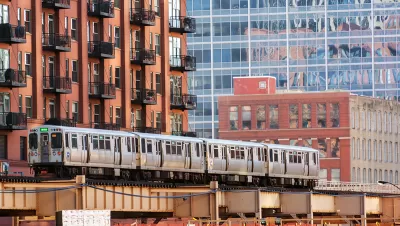
According to this piece from Smart Growth America, "A new bill in Congress would help make it easier to finance TOD projects. On Thursday, Senator Cory Booker (NJ) introduced the Railroad Infrastructure Financing Improvement Act (RIFIA). This legislation would expand the scope of the Railroad Rehabilitation and Improvement Financing program, which currently provides financing for railroad infrastructure development, to include TOD projects near passenger rail stations."
Many leaders in Washington, D.C. now look favorably on rail-based urbanism, once the cornerstone of American economic growth. From the article: "'The areas around our country’s passenger rail stations are often economic sleeping giants,' said John Robert Smith, co-chair of Transportation for America. 'Finding ways to finance and catalyze smart development in and around them is a proven strategy to boost local economies.'"
RIFIA provides for reinvestment for loan payments back into development around rail lines. "In addition to providing financing for TOD, the new program would invest loan repayments back into rail infrastructure to help fund capital and operations expenses. This presents a unique opportunity for private-public partnerships between real estate developers and passenger rail agencies."
Read the full story: A new bill in Congress would create new financing option for transit-oriented development
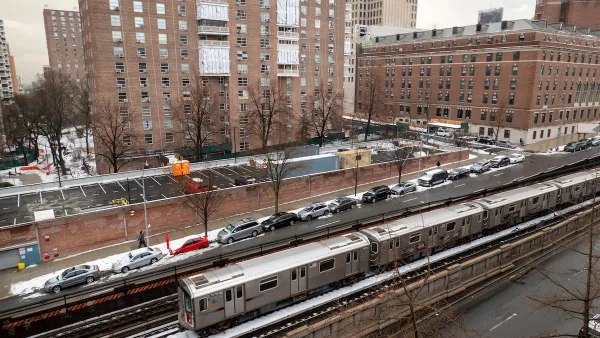
Federal Loan Programs Offer Billions for TOD
USDOT is encouraging developers to take advantage of loans aimed at supporting the building of multifamily buildings near transit lines.
House Transportation Bill Misses Mark on Transit
Transit advocates have little good to say about the recently-passed Surface Transportation Reauthorization and Reform Act. While it doesn't cut transit funding, it does nothing to expedite transit-based solutions.
DC Streetcars to Be a Shot in the Arm
It was nearly 50 years ago, when streetcars were seen on the roadways of downtown Washington, DC. Dan Tangherlini, the former transportation director for the District discusses why streetcars matter in the United States capital.

Planetizen Federal Action Tracker
A weekly monitor of how Trump’s orders and actions are impacting planners and planning in America.

California plans to bury El Niño’s downpour
If the state plays its cards right, it may be able to store a billion acre-feet of El Niño’s water in aquifers.

Desperate measures: Advocates weigh draining Lake Powell to fill Colorado River
Draining the reservoir could reduce evaporation losses by a couple hundred thousand acre-feet.

Mamdani’s pied-à-terre tax survives legal challenge
A panel of judges found that the plaintiffs failed to demonstrate injury as a result of New York City's implementation of the tax.

Eastern Nebraska is running out of electricity
Data centers and electrification are straining eastern Nebraska’s grid, throttling economic development.

Seattle passes record-breaking transit services expansion
Proposition 1 will double the city’s transit tax to add 95,000 more bus trips and preserve 180,000 bus trips annually.

FREE Course: Walkable City 1: Why Walkability?
After describing his path towards focusing on walkability as the essence of good planning, Jeff Speck marches through his five principal reasons for making more walkable places.
Reinventing Malls: Planning Alchemy—Turning Gray Fields Into Gold
The course focuses on the opportunities and imperatives that shape reinvention of mall sites.

City of Rosemead
Rutgers University, Edward J. Bloustein School of Planning and Public Policy
One Hundred Miles
University of Michigan School for Environment and Sustainability (SEAS)
Hunter College, City University of New York (CUNY)
The Architects Foundation
City of Cambridge
Montrose County
The Pocatello Development Authority