A planned streetcar line in Seattle will have its own dedicated lane, but perhaps even more interesting is that the existing South Lake Union Streetcar could also get a lane dedicated to transit. Is Seattle's leadership a way forward for streetcars?


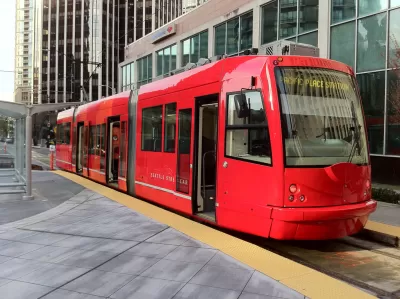
Yonah Freemark traces the evolving record of Seattle's South Lake Union Streetcar for lessons in how to move streetcars beyond the current acrimony and loss of political support has crept into the current debate over streetcars in cities around the country.
Freemark notes that after steady growth since its launch in 2008, ridership declined on the streetcar for the first time in 2013.
"The problem may have something to do with the way the streetcar runs: In the street, sharing lanes with cars. The results have been slow vehicles—the line’s scheduled service averages less than eight miles per hour—often held back by traffic and a lack of reliability. This can produce horror stories of streetcars getting stuck for half an hour or more behind other vehicles and, combined with infrequent service, it certainly reinforces the sense that streetcars are too slow and unreliable to provide any serious transportation benefit.
"This is a problem shared by every existing and planned modern streetcar line in the country,* suggesting that the streetcar designed to run in the street with cars may, over the long term, simply fail to attract riders who grow increasingly frustrated with the quality of service provided."
Freemark also notes that the construction of a new streetcar line—the 1.1-mile Center City Connector—might set a new precedent for lane configurations on streetcar routes. As reported, the Center City Connector would have a dedicated lane, but, according to Freeemark, "even more interesting is the fact that the city is considering giving dedicated lanes to the existing South Lake Union line."
The study that could enable what Freemark reports would be the first time a modern streetcar line has been converted to dedicated lanes. "As part of the contract for the Center City Connector, the Seattle Department of Transportation asked a consultant to study designated lanes for streetcars and buses as well as right-turn restrictions along Westlake Avenue, the primary right-of-way for the South Lake Union line." That would allow the route to handle up to 20 buses and trains per hour. Freemark goes on to detail more of the technical details of the projects in question and poses the question of whether other cities could follow Seattle's example.
Read the full story: Does Seattle offer the path forward for the national streetcar movement?

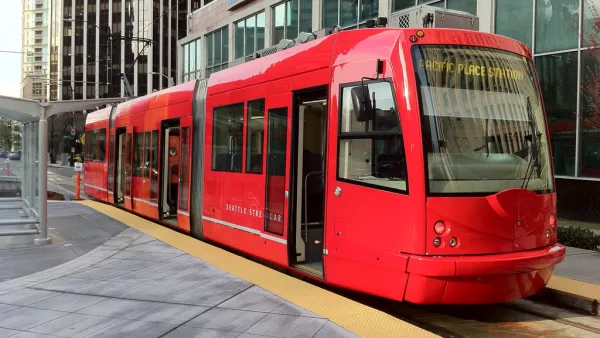
Central City Connector Streetcar Inches Forward in Seattle
In the first signs of life for the beleaguered transit project in over a year, Seattle officials found some of the money they need to proceed with the Central City Connector streetcar project.

Opinion: Ban Cars From South Lake Union in Seattle
A Seattle Times columnist says it's time to ban cars from the congested and dangerous South Lake Union street.
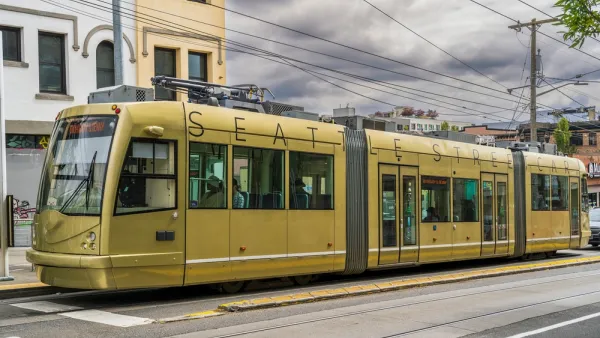
Boosters Hope Streetcar Could Breathe New Life into Downtown Seattle
Supporters of a stalled streetcar project say reviving the line would create more transit connections and boost economic development in the area.

Planetizen Federal Action Tracker
A weekly monitor of how Trump’s orders and actions are impacting planners and planning in America.

Amtrak, CN end decades-long dispute with eight-year agreement
The new operating agreement establishes an updated framework for the companies to work together, including processes to resolve disputes.

Northwest rail fans eager for Sept. 30 debut of Amtrak’s Airo fleet
Get ready for that new train smell and more seats. But they won’t go faster or run more frequently on the Cascades route in Washington and Oregon.

Brightline Florida files for bankruptcy
The transit company is over $5 billion in debt.

St. Louis Metro to test if single-car trains can reduce operating costs, maintain rider satisfaction
The pilot program will run from October to spring 2027, and begin with one single-car train operating on Metrolink’s Red and Blue lines.

Pennsylvania is building data centers in abandoned mines
Housing data centers in mines provides an alternative to destroying local forests and may spare residents from data centers’ noise and air pollution.

FREE Course: Walkable City 1: Why Walkability?
After describing his path towards focusing on walkability as the essence of good planning, Jeff Speck marches through his five principal reasons for making more walkable places.
Reinventing Malls: Planning Alchemy—Turning Gray Fields Into Gold
The course focuses on the opportunities and imperatives that shape reinvention of mall sites.

City of Thousand Oaks
City of Wisconsin Rapids
Harvard University Graduate School of Design
The Architects Foundation
University of Cincinnati Online
The Pocatello Development Authority
The Urban Renewal Agency of the City of Pocatello