A Seattle Times columnist says it's time to ban cars from the congested and dangerous South Lake Union street.


The South Lake Union streetcar is slow and likely to get slower, Danny Westneat argues in the Seattle Times. "It ding-dings 15 hours a day through the hottest job center in the nation, yet it’s gotten so slow it carries 20 percent fewer riders today than it did six years ago," he writes. There have been some proposals to make streetcar-only lanes for sections of the trip, but Westneat says this doesn't go far enough. He argues that cars should be banned from South Lake Union.
The influx of commuters into the area has come from the growth of Amazon, "… seriously: Seattle’s glittering new neighborhood has grown so fast it’s choking on itself," Westneat writes. The streetcar is not just slow, it's unsafe. "The car and pedestrian interactions have become so comically dangerous that a recent time-lapse video of the mayhem made by an Amazon engineer from his office window made the news," Westneat reports.
Westneat takes this pro-streetcar stance without referencing the precedent for a very similar course of action currently on display on King Street in Toronto, where automobile traffic was limited to benefit streetcar service.
FULL STORY: Getting clearer all the time: City should ban cars from South Lake Union

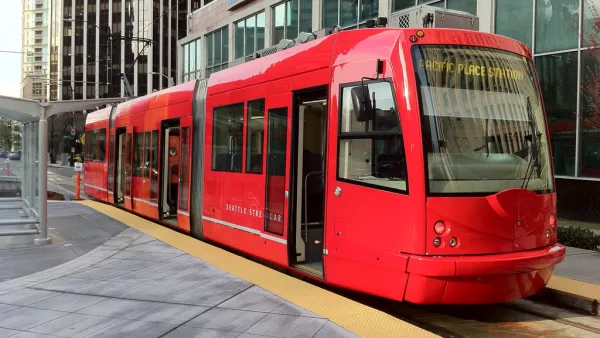
Has Seattle Found the Way Forward for Streetcars?
A planned streetcar line in Seattle will have its own dedicated lane, but perhaps even more interesting is that the existing South Lake Union Streetcar could also get a lane dedicated to transit. Is Seattle's leadership a way forward for streetcars?
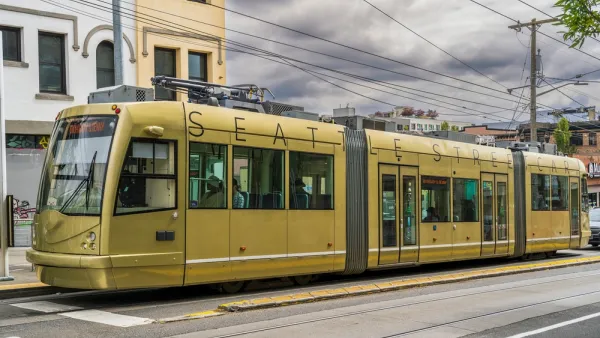
Boosters Hope Streetcar Could Breathe New Life into Downtown Seattle
Supporters of a stalled streetcar project say reviving the line would create more transit connections and boost economic development in the area.
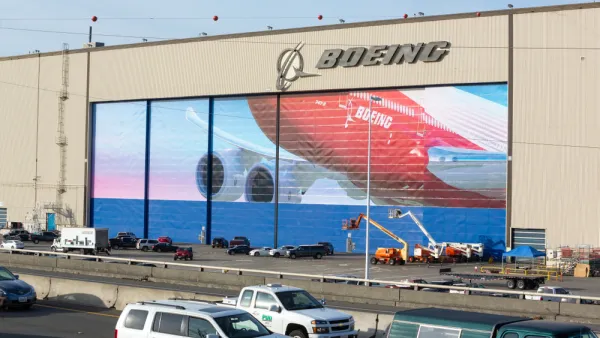
Jet Fuselage to Become Part of Seattle High-Rise
A Boeing 747 will serve as the atrium between two South Lake Union office buildings.

Planetizen Federal Action Tracker
A weekly monitor of how Trump’s orders and actions are impacting planners and planning in America.

The state-sanctioned urbicide of Austin
People don’t kill cities. Freeways do.

US to reduce Colorado River water deliveries to Mexico
A new Colorado Treaty amendment reduces Mexico’s Colorado River water allocation by 250,000 acre feet.

5 New England states march closer to 800 megawatt wind energy project
Securing federal approval for the project may be complicated under the Trump administration, which has historically been hostile towards domestic wind power.

Baltimore to break ground on $50 million Transit Priority Project
The project will bring faster bus trips, safer streets and better bike connections to Baltimore.

Airbnb launches $250 million 'last-dollar financing' housing accelerator, makes first investment in Austin
The company will put $6.4 million towards affordable housing development in Texas’ capital.

FREE Course: Walkable City 1: Why Walkability?
After describing his path towards focusing on walkability as the essence of good planning, Jeff Speck marches through his five principal reasons for making more walkable places.
Reinventing Malls: Planning Alchemy—Turning Gray Fields Into Gold
The course focuses on the opportunities and imperatives that shape reinvention of mall sites.


Eagle County Government
Harvard University Graduate School of Design
Nashville Planning Department
The Architects Foundation
University of Cincinnati Online
The Pocatello Development Authority
The Urban Renewal Agency of the City of Pocatello
Journal of the American Planning Association