Streetsblog NYC analyses one of the street design standards in place in New York City that will make it impossible to achieve zero pedestrian fatalities under Vision Zero.


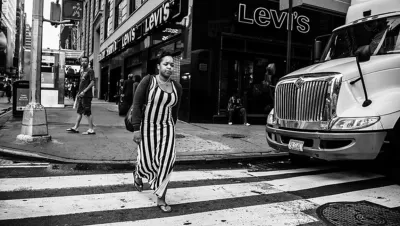
Brad Aaron provides detailed analysis of one particular design standard that negatively impacts the safety of pedestrians in crosswalks around New York City. The risk comes from street designs that allow drivers to park "right at the edge of this crosswalk, blocking sight lines for pedestrians as well as drivers turning right…"
According to Aaron, "[parking] right up against the crosswalk is dangerous enough that some states and cities, including New Jersey and Portland, forbid it. Drivers hurt and kill thousands of people in New York City crosswalks every year, and most victims are crossing with the signal. Poor visibility at intersections contributes to the problem, but NYC law makes it perfectly legal to obstruct sight lines with parked cars."
Aaron goes on to suggest a solution that would allow the daylighting of intersections around the city, citing the example of the flex-post protected corners implemented by Hoboken, New Jersey.
Read the full story: The New York City Parking Rule That Makes Intersections More Dangerous

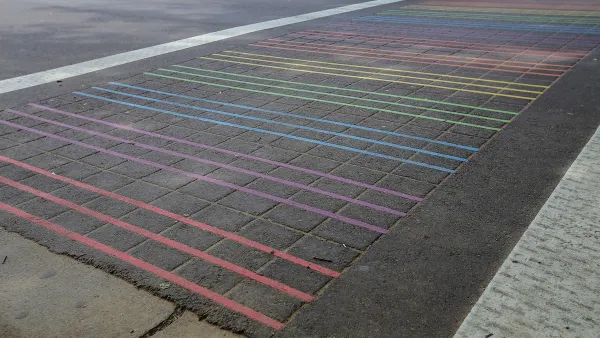
Sacramento Isn’t Giving up on Rainbow Crosswalks
A city program will fund artist-created crosswalks near two elementary schools as part of its effort to eliminate traffic deaths.
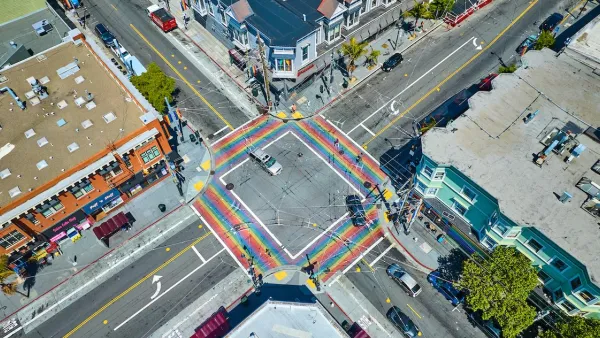
San Francisco Implements ‘Daylighting’ at Intersections
Vehicles are prohibited from parking within 20 feet of a crosswalk as part of the city’s Vision Zero efforts to eliminate traffic deaths and make roads safer.
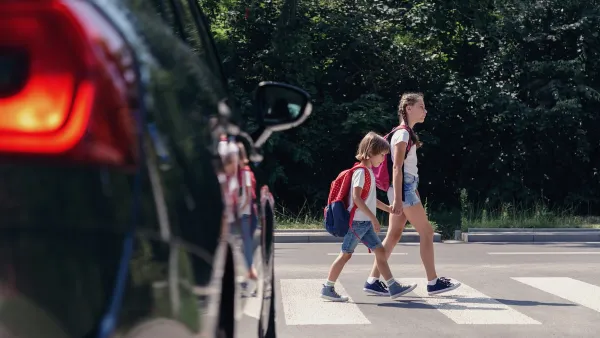
US Street Design Manual Inches Toward Safer Roads
The guiding document for U.S. road design is starting to recognize the needs of people walking and biking, but safe streets advocates say more significant changes are needed to reduce the high number of pedestrian deaths and improve connectivity for all road users.

Planetizen Federal Action Tracker
A weekly monitor of how Trump’s orders and actions are impacting planners and planning in America.

The state-sanctioned urbicide of Austin
People don’t kill cities. Freeways do.

US to reduce Colorado River water deliveries to Mexico
A new Colorado Treaty amendment reduces Mexico’s Colorado River water allocation by 250,000 acre feet.

Nation's most wind-powered state turns to coal as data centers increase energy demand
For the first time in decades, Iowa has increased its generation of coal power.

NYC cools commuters with city's first rain garden above a bus stop
New York City officials say the plants in the rain garden can absorb 16 gallons of rainwater during heavy storms.

Brightline West’s future may rely on $6 billion federal loan
The company has until Nov. 2 to make a $400 million equity investment into its proposed high-speed rail line.

FREE Course: Walkable City 1: Why Walkability?
After describing his path towards focusing on walkability as the essence of good planning, Jeff Speck marches through his five principal reasons for making more walkable places.
Reinventing Malls: Planning Alchemy—Turning Gray Fields Into Gold
The course focuses on the opportunities and imperatives that shape reinvention of mall sites.

Greater Baltimore Committee
Eagle County Government
Harvard University Graduate School of Design
The Architects Foundation
University of Cincinnati Online
The Pocatello Development Authority
The Urban Renewal Agency of the City of Pocatello
Journal of the American Planning Association