The Little Free Library movement is a well-intentioned overture to literate neighborliness. In spite of lacking obvious drawbacks, certain officials argue it should undergo more stringent permitting.



Conor Friedersdorf asks the simple question: why must they pick on the Little Free Library? These freestanding wooden boxes, cozily situated on private property to encourage impromptu book sharing, have drawn the gaze of city regulators. Citing safety statutes, they say Little Free Library owners should go through a rigorous permitting process.
Friedersdorf disagrees: "The power to require permits is the power to prevent something from ever existing. This lovely movement would've never begun or spread if everyone who wanted to build a Little Free Library recognized a need to apply and pay for a permit. Instead they did good and asked permission never."
The article concedes that permitting is necessary in many cases, but questions whether Little Free Libraries could ever be one of them. After all, an urban devil's advocate would be hard-pressed to find someone the libraries actively harm. In the face of crime, pollution, and aging infrastructure, is this fine-toothed regulation a valid use of city resources?
Read the full story: The Danger of Being Neighborly Without a Permit
LA may place emergency ban on karaoke room permits
If Councilwoman Heather Hutt’s proposal passes, the moratorium would last between 45 days and one year.
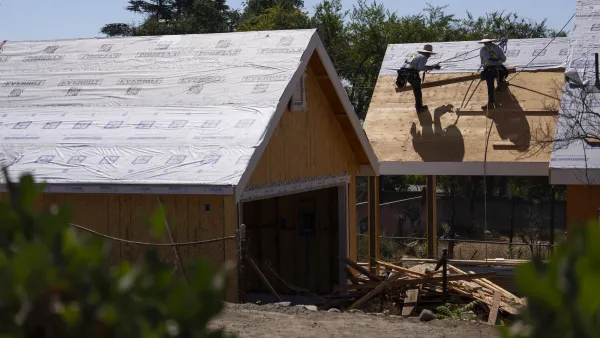
One Year After the LA Fires, Just 13% of Damaged Homes Have a Rebuilding Permit
After a slow start, permitting is starting to pick up.

Street Vendors Rally for Rent Cancelation in Los Angeles
Street vendors gathered in front of the Los Angeles County Department of Public Works in a May Day action to their make demands heard.

Planetizen Federal Action Tracker
A weekly monitor of how Trump’s orders and actions are impacting planners and planning in America.

California plans to bury El Niño’s downpour
If the state plays its cards right, it may be able to store a billion acre-feet of El Niño’s water in aquifers.

Desperate measures: Advocates weigh draining Lake Powell to fill Colorado River
Draining the reservoir could reduce evaporation losses by a couple hundred thousand acre-feet.

Housing is the top priority of Seattle’s sole new councilmember
Jenks campaigned on building 1,000 new units of affordable housing.

New tax cuts may slash $1.5 billion in funding for Miami transit, public parks
Amendment 3 will save Miami-Dade homeowners $2,700 in 2028.

Arizona, Wisconsin, Pennsylvania hope to finally advance climate goals post-midterms
The three states have spent years under Republican or divided control.

FREE Course: Walkable City 1: Why Walkability?
After describing his path towards focusing on walkability as the essence of good planning, Jeff Speck marches through his five principal reasons for making more walkable places.
Reinventing Malls: Planning Alchemy—Turning Gray Fields Into Gold
The course focuses on the opportunities and imperatives that shape reinvention of mall sites.

City of Rosemead
Rutgers University, Edward J. Bloustein School of Planning and Public Policy
One Hundred Miles
University of Michigan School for Environment and Sustainability (SEAS)
Hunter College, City University of New York (CUNY)
The Architects Foundation
City of Cambridge
Montrose County
The Pocatello Development Authority