An op-ed column for The Buffalo News explains the thinking behind Buffalo's new Green Code—especially its benefits for walking, bicycling, and public transit.


Daniel Baldwin Hess writes the special column for the The Buffalo News. After explaining some of the local context and national precedents that have informed Buffalo's new Green Code, Hess provides this final flourish to describe the potential impact of the plan:
"After years of stagnant growth and languishing development, Buffalo is now at the cusp of leading American cities in reinventing how citizens and residents interact with urban space and the relationship between economic development and urban vibrancy. These potential changes are significant and analogous to the decisions made in Portland, Ore., in the 1970s that ushered in a new model of regional governance, setting the stage for urban growth and envied by urbanists from around the world."
"When the Green Code is adopted, Buffalo could topple Portland from its long-seated throne as the 'best' planned city, and may help Buffalo regain its glory days as a hotbed for civic engagement, walkable and connected neighborhoods, and urban vibrancy."
Read the full story: Going green: Pedestrian accessibility enhances urban vitality in Buffalo

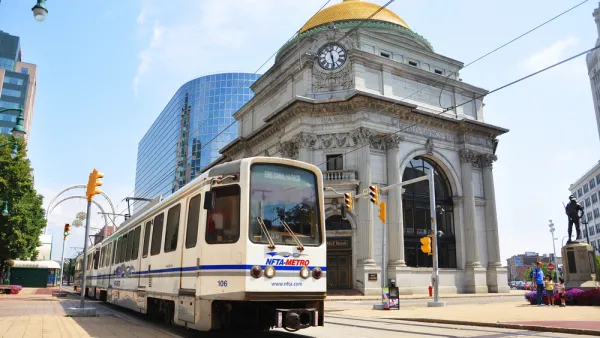
Buffalo's Green Code Signed Into Law
After six years and 242 meetings, Buffalo's Green Code was signed into law Tuesday. The Green Code is the first rewrite of the city's zoning ordinance since 1953, and one of only three citywide form-based codes implemented in North America.

Expected for Approval Today: The New Buffalo Green Code
The Buffalo Common Council is expected to approve a highly anticipated overhaul of its zoning code. Known commonly as the Buffalo Green Code, city planners tout the new code as deliberately contemporary and progressive.
Checking In on the Buffalo Green Code
Buffalo Mayor Byron Brown provides insight into one of the nation's most significant planning efforts.

Planetizen Federal Action Tracker
A weekly monitor of how Trump’s orders and actions are impacting planners and planning in America.

Amtrak, CN end decades-long dispute with eight-year agreement
The new operating agreement establishes an updated framework for the companies to work together, including processes to resolve disputes.

Northwest rail fans eager for Sept. 30 debut of Amtrak’s Airo fleet
Get ready for that new train smell and more seats. But they won’t go faster or run more frequently on the Cascades route in Washington and Oregon.

Brightline Florida files for bankruptcy
The transit company is over $5 billion in debt.

St. Louis Metro to test if single-car trains can reduce operating costs, maintain rider satisfaction
The pilot program will run from October to spring 2027, and begin with one single-car train operating on Metrolink’s Red and Blue lines.

Pennsylvania is building data centers in abandoned mines
Housing data centers in mines provides an alternative to destroying local forests and may spare residents from data centers’ noise and air pollution.

FREE Course: Walkable City 1: Why Walkability?
After describing his path towards focusing on walkability as the essence of good planning, Jeff Speck marches through his five principal reasons for making more walkable places.
Reinventing Malls: Planning Alchemy—Turning Gray Fields Into Gold
The course focuses on the opportunities and imperatives that shape reinvention of mall sites.

City of Thousand Oaks
City of Wisconsin Rapids
Harvard University Graduate School of Design
The Architects Foundation
University of Cincinnati Online
The Pocatello Development Authority
The Urban Renewal Agency of the City of Pocatello