A guest column on the Saporta Report offers a reminder of the many critical public needs that compete with transportation funding for state dollars.


"As much as the business community and many in the general public seem to be in accord that Georgia can’t wait any longer to fix transportation, it’s important to keep in mind that the economic health of the state depends on other important public investments, including quality schools and a viable health care system," according to a guest column by Alan Essig, executive director of the Georgia Budget and Policy Institute.
Essig makes the case for providing new funding for education and health care as necessary components in the overall economic health of the state, and even throws in an argument in favor of raising the state's lower-than-average gas tax. In the end, Essig's argument isn't so much that these three areas of public investment are mutually exclusive of each other, but that the state has new, fair opportunities to embark on a post-recession era of state funding.
Read the full story: Georgia has transportation needs as well as education and healthcare

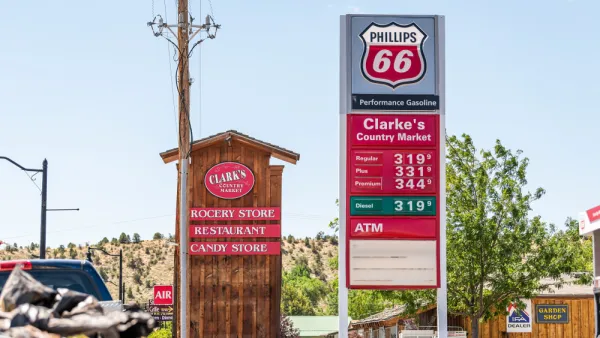
Utah Officials Want to Replace the State Gas Tax
The state auditor and the transportation chief argue that the gas tax is an unsustainable funding source caused by a projected increase in electric vehicle adoption and an increase in fuel efficiency of gas-powered vehicles.
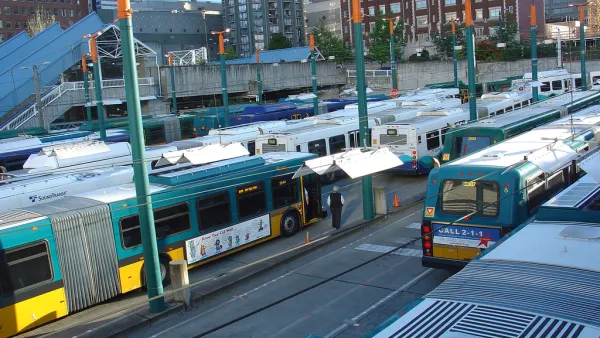
Charting a Better Transportation Future for Washington State
The state gas tax cannot provide the funding that Washington needs for its transportation system, according to a recent opinion piece published by the Seattle Times. But state legislators can look to bold, progressive revenue options for the future.
Michigan Gov. Whitmer Proposes 45-Cent Gas Tax Hike in First Budget
Gretchen Whitmer has outdone the new Democratic governor of Minnesota, Tim Walz, who proposed a 20 cents tax hike. Like Walz's budget, gas tax revenue would replace some general funds directed to road spending, thus benefiting other state programs.

Planetizen Federal Action Tracker
A weekly monitor of how Trump’s orders and actions are impacting planners and planning in America.

The state-sanctioned urbicide of Austin
People don’t kill cities. Freeways do.

Colorado’s Largest Data Center Could Rise Next to Homes — Without a Public Hearing
The proposed campus would consume 11 times the power of Denver International Airport; as it has across the country, opposition mounts.

Nation's most wind-powered state turns to coal as data centers increase energy demand
For the first time in decades, Iowa has increased its generation of coal power.

NYC cools commuters with city's first rain garden above a bus stop
New York City officials say the plants in the rain garden can absorb 16 gallons of rainwater during heavy storms.

Brightline West’s future may rely on $6 billion federal loan
The company has until Nov. 2 to make a $400 million equity investment into its proposed high-speed rail line.

FREE Course: Walkable City 1: Why Walkability?
After describing his path towards focusing on walkability as the essence of good planning, Jeff Speck marches through his five principal reasons for making more walkable places.
Reinventing Malls: Planning Alchemy—Turning Gray Fields Into Gold
The course focuses on the opportunities and imperatives that shape reinvention of mall sites.

Greater Baltimore Committee
Eagle County Government
Harvard University Graduate School of Design
The Architects Foundation
University of Cincinnati Online
The Pocatello Development Authority
The Urban Renewal Agency of the City of Pocatello
Journal of the American Planning Association