In more proof of how far perceived safety goes in establishing the speed of drivers, the California Highway Patrol is dealing with the unintended consequences of changes on the Golden Gate Bridge.


According to an article by John King, "since [a] more secure movable median barrier was installed [on the Golden Gate Bridge], the average speed of drivers on the approach from the north has jumped even though the speed limit was lowered from 55 to 45 miles per hour.
One driver this week, for instance, was caught going 81 miles per hour.
The article focuses on plans by the CHP to ramp up enforcement of speed limits on the bridge, but King subtly raises the salient point about the speeding trend on the bridge. Could it be "the possibility that drivers feel safer knowing a car won’t come barreling at them from the opposite direction"?
Read the full story: Golden Gate Bridge barrier leads to rampant speeding, new rules

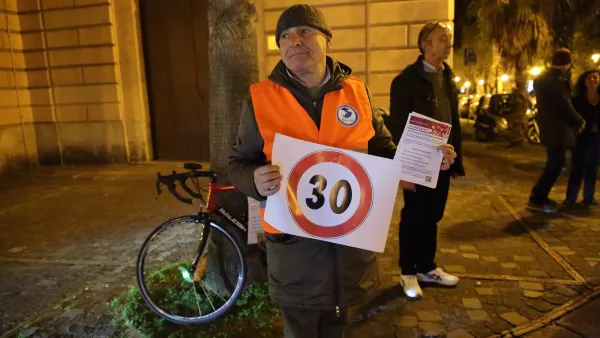
Rome is Latest European Capital to Drop Speed Limit to 30KPH
Traffic fatalities in Bologna, the first major Italian city to lower their speed limit, dropped by 50 percent in the first year.
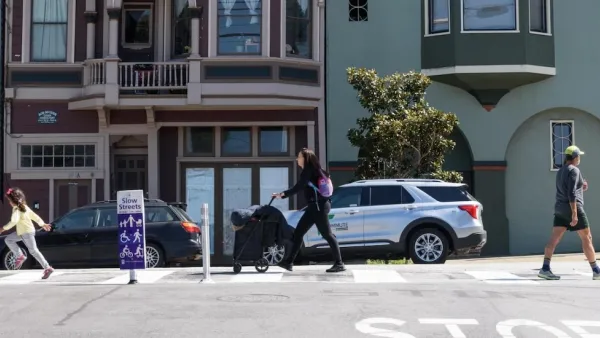
San Francisco Slow Streets Bucks Citywide Trend, Reducing Injuries by 61 Percent
Low-cost interventions aimed at slowing traffic are making a major impact on road safety.

Philly Speed Camera Program Cuts Fatalities in Half
Excessive speeding along dangerous segments of Roosevelt Boulevard dropped by 90 percent after the city installed automated enforcement cameras.

Planetizen Federal Action Tracker
A weekly monitor of how Trump’s orders and actions are impacting planners and planning in America.

Amtrak, CN end decades-long dispute with eight-year agreement
The new operating agreement establishes an updated framework for the companies to work together, including processes to resolve disputes.

Nation's most wind-powered state turns to coal as data centers increase energy demand
For the first time in decades, Iowa has increased its generation of coal power.

Alabama scores up to $2.5 billion federal loan for largest infrastructure project in state’s history
The Mobile River Bridge and Bayway Project aims to ease congestion at Alabama’s worst bottleneck.

Trump is considering data centers on 6 states' public land — some state officials say they had no idea
If the administration approves the proposed projects, data center and data center-related developments will cover 17,600 acres of public land.

Despite court ruling, Trump is keeping nearly all wind projects in the US on hold
At least 110 wind energy projects have not heard from the government since a federal judge ruled that the Trump administration's freeze on wind turbine clearances was likely illegal.

FREE Course: Walkable City 1: Why Walkability?
After describing his path towards focusing on walkability as the essence of good planning, Jeff Speck marches through his five principal reasons for making more walkable places.
Reinventing Malls: Planning Alchemy—Turning Gray Fields Into Gold
The course focuses on the opportunities and imperatives that shape reinvention of mall sites.

KFH Group Inc.
Greater Baltimore Committee
Eagle County Government
The Architects Foundation
University of Cincinnati Online
The Pocatello Development Authority
The Urban Renewal Agency of the City of Pocatello