"A five-year, $82 million project to replace seven bridges over the Vine Street Expressway will also remodel the cultural spine of the city," reports Paul Nussbaum.


Nussbaum reports that construction is scheduled to begin in February 2015 on the bridges used by "18th, 19th, the Parkway/20th Street, 21st, and 22d Streets, as well as the pedestrian bridges in front of the library and the old Family Court building." The project includes improvements for the "death-defying" pedestrian bridge between the Free Library and the Franklin Institute, new park space, a reconfiguration of Winter Street to reduce conflicts with pedestrians, and new pedestrian infrastructure.
James Pezzotti, a consultant for PennDot on the project is quoted in the article describing the project's planning approach: "PennDot certainly was aware that this is the cultural boulevard through Philadelphia, and it couldn't be done as a pure highway project…"
Nussbaum also notes: "PennDot decided it was too costly and difficult to cap the below-grade highway, much to the despair of those who see I-676 as an intrusive ditch that splits the cultural heart of the city."
"The one area that will be capped is a 5,625-square-foot wedge between 20th Street and Shakespeare Park in front of the library. The cap will be landscaped and added to the park," adds Nussbaum.
Read the full story: Plans beyond just replacing seven Vine Street bridges

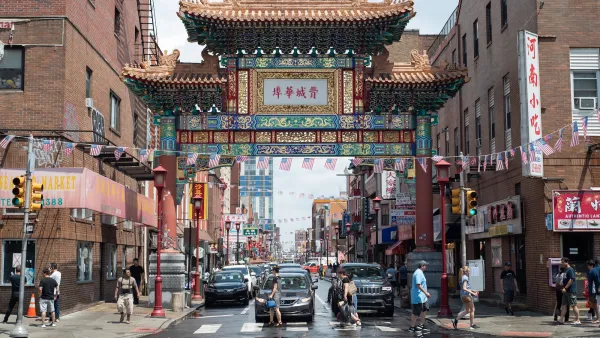
Philadelphia’s ‘Chinatown Stitch’ Freeway Cap in Danger After Feds Retract Funding
A project 15 years in the making would reconnect Philadelphia’s Chinatown neighborhood after decades of being split in half by a roadway.
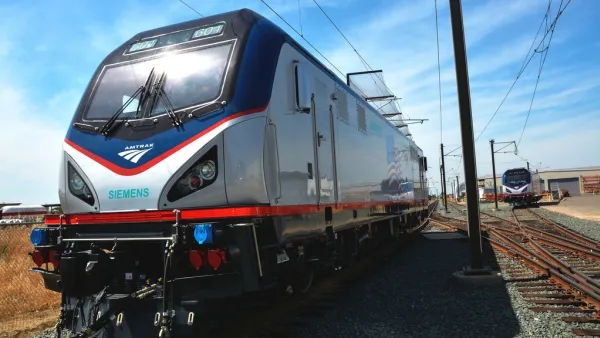
Increasing Passenger Rail Service from Pittsburgh Would Be Costly, Studies Show
Transportation advocates are calling for expanded rail service to the east, but studies indicate the needed infrastructure improvements would be pricey.
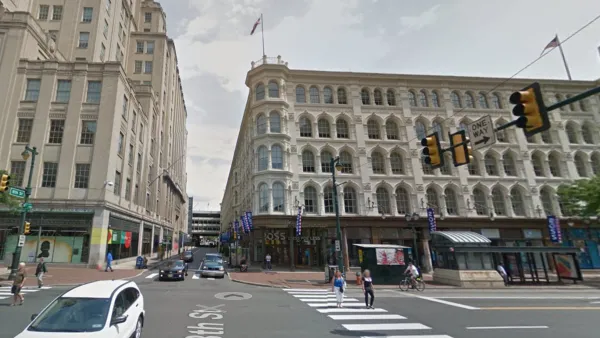
Billboards Having a Moment in Philadelphia
A proposal to add billboard advertisements to a pair of city-owned buildings come at a time when residents, and the federal government, are already concerned about the proliferation of billboards in the city.

Amtrak, CN end decades-long dispute with eight-year agreement
The new operating agreement establishes an updated framework for the companies to work together, including processes to resolve disputes.

Judges permit Denver to divert 77,000 acre feet from the Colorado River for reservoir expansion
Overuse and climate change have caused the Colorado River’s water levels to plummet.
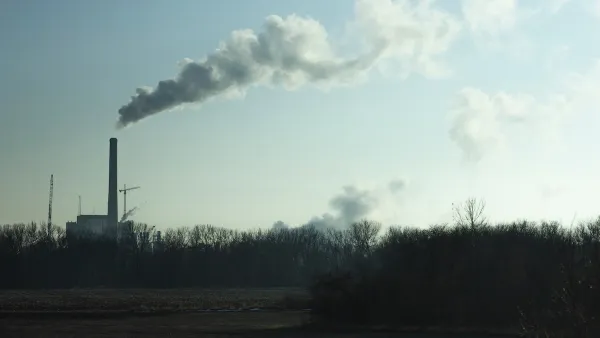
Nation's most wind-powered state turns to coal as data centers increase energy demand
For the first time in decades, Iowa has increased its generation of coal power.

Boston has spent millions making the Green Line more accessible — and there’s no end in sight
While the city has invested millions into expanding and adding platforms to the Green Line to make it more accessible, new train cars set to arrive next year will be too tall for disabled passengers to board without raising the current platforms.

Idaho may see an 18% drop in federal surface transit funding — the largest estimated cut in the US
Transit systems in rural communities are much more reliant on federal funding to provide their services.

How ‘post-disaster gentrification’ alters neighborhoods after natural calamities
After hurricanes, fires or other calamities, the original residents of a community are often replaced by younger, wealthier residents.

FREE Course: Walkable City 1: Why Walkability?
After describing his path towards focusing on walkability as the essence of good planning, Jeff Speck marches through his five principal reasons for making more walkable places.
Reinventing Malls: Planning Alchemy—Turning Gray Fields Into Gold
The course focuses on the opportunities and imperatives that shape reinvention of mall sites.

City of Wisconsin Rapids
Harvard University Graduate School of Design
KFH Group Inc.
The Architects Foundation
University of Cincinnati Online
The Pocatello Development Authority
The Urban Renewal Agency of the City of Pocatello